|
Forever Godard by Michael Temple
An excellent collection of essays which provide a reassessment and redefinition of Godard’s career and its influence on contemporary culture.
Explore this book:
Everything is Cinema: The Working Life of Jean-Luc Godard by Richard Brody
A thorough
and detailed account of the life and working methods of the most important director of the second half of the twentieth century.
Explore this book:
Godard on Godard by Jean-Luc Godard
Essays and interviews by Godard himself which illuminate his own and other’s films.
Explore this book:
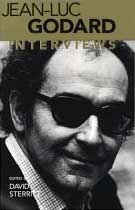 
Jean-Luc Godard: Interviews (Interviews With Filmmakers Series) by David Sterritt
A first-hand insight into the great man’s thoughts on cinema and life.
Explore this book:
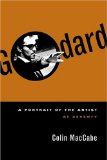 
Godard: A Portrait of the Artist at Seventy by Colin MacCabe
An idiosyncratic but fascinating biography and analysis of Godard’s work.
Explore this book:
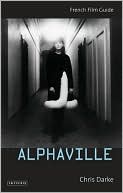 
Alphaville by Chris Darke
Chris Darke's monograph is a thought-provoking spin through the conceptual depths of Godard's masterpiece. Highly recommended.
Explore this book:
|
Jean-Luc Godard (3 December 1930 - 13 September 2022) was a Franco-Swiss filmmaker and a leading member of the "French New Wave”. Known for stylistic innovations that challenged the conventions of Hollywood cinema, he is universally recognized as the most audacious, radical, as well as the most influential of the Nouvelle Vague filmmakers. His work reflects a fervent knowledge of film history, a comprehensive understanding of existential and Marxist philosophy, and a profound insight into the fragility of human relationships.
|
|
|
This is the most complete Jean-Luc Godard biography available on the internet. We have broken it into chapters to make for easy reading, but if you think it would be easier to print, you can access a printer-friendly version here.
A Happy Childhood
Jean-Luc Godard was born on December 3, 1930, in the seventh arrondissement of Paris. His father, Paul Godard, a Swiss doctor, moved the family to Switzerland four years later. His mother Odile Monod was from a wealthy protestant French background. Her father Julien Monod was one of the most prominent bankers in France and a well-connected figure in literary circles whose closest friend was the writer Paul Valery. The couple had three other children: Rachel, born January 1st 1930, Claude, born in 1933, and Véronique, born in 1937.
The family settled in Nyon on the shores of Lake Geneva. Paul Godard worked in a private medical clinic nearby. The family was prosperous and cultured – Godard later described his childhood as being like 'a kind of paradise'. During World War II the family remained in Switzerland, though they would make occasional trips across to the French side of the lake to visit Julian Monod’s estate. Young Jean-Luc was already an avid reader who, by the age of fourteen, had graduated from children’s adventure stories to works by authors such as André Gide and André Malraux. He was also a keen sports fan who played tennis, skied and enjoyed football.
The Black Sheep
In 1946 Godard went to study at the Lycée Buffon in Paris where he intended to study advanced mathematics with the intention of entering engineering school. Instead, he became hooked on the ciné-club boom in the capital and began watching movies day and night. As a result he failed his baccalaureate exam in 1948 and returned to Switzerland where he studied at a high school in Lausanne and lived with his parents. Relations between father and son were strained so Godard spent most of his spare time hanging around with other cinema enthusiasts in Geneva. He also tried his hand at painting after becoming interested in modern art.
After finally passing his baccalaureate, Godard returned to Paris and enrolled at the Sorbonne in 1949. He took courses in ethnology but soon abandoned his studies and applied to become a student at the city’s leading film school IDHEC. The school rejected his application, so instead he studied film by watching movies at Henri Langlois’ Cinématheque Francais and the Ciné-club Quarter Latin where he first became friends with two other film fanatics: Francois Truffaut and Jacques Rivette. It was standard practice for them to see three or four films per day, or to spend an entire day in a single theatre. As Godard later wrote, 'the cinema screen was the wall we had to scale to escape from our lives'.
What Is Cinema?
Post-war Paris was a place of great philosophical and political debate. The dominant intellectual figure was Jean-Paul Sartre, a prolific writer and advocate of Existentialism, who poured forth novels, plays, philosophical essays, literary criticism and political commentary. Sartre believed it essential, after the experience of the war, that writers become engaged with politics, taking sides if necessary. In his case that meant siding with the far left. As a keen filmgoer and commentator on cinema himself, Sartre was opposed, along with most of the left, to the great influx of American films that flooded Paris after the war, seeing it as a sign of American cultural imperialism. Orson Welles’s Citizen Kane was one of the films he criticised for abandoning the 'realist naiveté' of pre-war Hollywood, accusing Welles of making an abstract, intellectual film not rooted in the concerns of the masses.
One critic who opposed this view was André Bazin, who, in an essay entitled The Technique of Citizen Kane, praised the film for its artistic richness, arguing that Welles reinvented the artform with techniques such as deep-focus to tell the story. Bazin, who believed passionately in the 'objective reality' of the film image, believed that long takes and the use of deep focus, as opposed to the use of editing and montage, produced a more faithful vision of the world. His emphasis on film technique and the aesthetic and spiritual qualities of cinema put him in opposition to leftists like Sartre who were more concerned with film’s social message.
While both these thinkers influenced Godard, a younger critic proved even more of an inspiration. Maurice Schérer, born in 1920, was a teacher and film enthusiast. He had made his name as a critic with three articles for the magazine La Revue du cinema in which he attempted to formulate an ambitious and comprehensive theoretical definition of the cinema. In these articles he rejected Bazin’s emphasis on the depiction of uninterrupted three-dimensional space, instead arguing that it was the way a director placed objects within that space, including actors, which gave it meaning. He also commended the use of actor’s speech and gesture as a crucial element in bringing the filmed image to life. Having read these essays, Godard began attending the Ciné-Club du Quartier Latin where Schérer, often introducing the evening’s films and presiding over the energetic debates that followed, was the main presiding figure. Towards the end of 1949 Schérer began publishing a magazine called La Gazette du cinema writing under the pseudonym of Eric Rohmer.
La Gazette du cinema lasted for only five editions before it folded. Godard contributed to almost every issue. Still only nineteen years old, he was already writing complex articles and reviews, which revealed an assured and original view of cinema. In his longest article, entitled Towards a Political Cinema, he argued that cinema was not just a representation of reality but part of the reality itself. In another piece, he stated: 'At the cinema, we do not think, we are thought'. For him, cinema had become a transformational experience in which the distance between the viewer and what occurred on the screen no longer existed; by watching films you were already part of them.
A Bohemian Life
But it wasn’t enough for Godard and his friends to simply watch and write about cinema, they wanted to make films themselves. Godard began by assisting Rohmer and Rivette with their first short films. In the case of Rivette’s Quadrille, Godard provided the money to make it, later admitting that the funds came from stealing and selling books from his grandfather Julien Monod’s collection of Paul Valery first editions. In the meantime, he lived a bohemian existence in the left bank Saint-Germain-des-Prés area, moving regularly between the apartments of family friends and cheap hotel rooms. Among his closest friends was the charismatic Paul Gégauff, a flamboyant right wing writer whose devil-may-care way of living his life exemplified a kind of daring individuality that Godard admired and aspired to at this time.
In December 1950, in order to avoid the draft, Godard claimed Swiss citizenship and joined his father on a trip to New York and from there on through the West Indies to South America. Far from relishing these new experiences, by all accounts he spent most of his time abroad alone in his room reading. Nevertheless his wanderings in South America, which he never spoke about, lent him an air of mystery and adventure when he returned to Paris in April 1951. Truffaut was one of those who noticed Godard appeared more taciturn and withdrawn than he had been before though passion for cinema was just as strong as ever. He threw himself into helping others make films, in particular working closely with Eric Rohmer on a short entitled Présentation (later re-titled Charlotte et son steak), in which he starred as Walter, a young man who introduces one young woman to another in the hope of making each jealous of the other.
Cahiers Du Cinéma
For the time being Godard held back from making his own movies; instead he devoted his artistic energies to writing for the new magazine set up by Andre Bazin and his associate Jacques Doniol-Valcroze. Amongst his most important contributions to Cahiers du cinéma was an article that came out in the September 1952 issue that amounted to a kind of personal theoretical manifesto, as well as a counter argument to an earlier article written by Bazin in which the critic attacked the 'obsolete play of shot-reverse shot' used in many Hollywood productions. In the piece titled Defence and Illustration of Classical Découpage, Godard, writing under the pseudonym Hans Lucas, praised the use of shot-reverse shot as crucial to conveying a character’s mental point of view and their inner life. He accused Bazin of wanting to sacrifice this essential technique, used so skilfully by directors such as Howard Hawks, in the interest of theoretical prejudice. It was a daring move from a young man to contradict the views of such an esteemed critic and reflected Godard’s already strong sense of self-belief.
Switzerland and the First Shorts
Towards the end of 1952, tired of living from hand to mouth and hoping for a more direct route into the cinema, Godard stole money from the Cahiers’ till and made his way back to Switzerland, where, with his mother’s help, he managed to get a job with Swiss television in Zurich. However, after stealing money from the company safe, he was sent, first to jail, then, after his father’s intervention, transferred to a psychiatric clinic where he spent a couple of weeks. Following his release he went to live with his mother, who, through a friend, managed to get Jean-Luc a job doing manual labour on a dam construction site. While working on the dam, Godard had the idea of making a film about it. He financed the film from his wages, hiring a cameraman to film it, and editing it and voicing the commentary himself. As he hoped, the corporation behind the building of the dam bought the film for publicity purposes and he was able to quit his job there.
With the money he earned Godard moved to Geneva and made a low budget short, Une Femme coquette. The film, based on the story Le Signe by Maupassant, tells the story of a married woman who imitates the gesture of a prostitute in order it pick up a man. It starred Godard’s close friend Roland Tolmatchoff as the man and Maria Lysandre as the woman. The theme of prostitution was one Godard would return to again and again in his career.
Rise of the Hitchcocko-Hawksians
With two films under his belt and some money in his pocket, Godard was ready to return to Paris. On arriving in the city at the start of 1956, he discovered things had changed profoundly for his circle of friends and colleagues. Lead by Francois Truffaut they had established Cahiers du cinéma as the leading film publication in the country. Truffaut’s article A Certain Tendency of the French Cinema had aroused shock and outrage amongst the film establishment and made a star of its young author who was now hammering out articles for a variety of publications. He and the other critics at the magazine, who included Claude Chabrol, Jacques Rivette and Eric Rohmer, were known for their love of American cinema, especially the work of hitherto unrecognised directors like Alfred Hitchcock and Howard Hawks, and their promotion of the 'politique des auteurs'.
Godard wasted no time in contributing articles of his own to Cahiers on some of his favourite auteurs such as Otto Preminger and Nicholas Ray. He also continued his theoretical debate with André Bazin within the pages of the magazine. While Bazin continued to commend the long take for its approximation to physical reality, Godard praised editing for rendering the subjective essence of reality. A well-edited film, he asserted, was more truthful to life than the uninterrupted scene – rather than portraying a close representation of reality, it seemed to provide the experience of reality itself.
Keen to establish himself as a filmmaker in his own right, Godard had returned to Paris with a 250-page screenplay under his arm entitled Odile (the name of his mother who had recently tragically died in a road accident), but the producer Pierre Braunberger read it and advised him it was unfilmable. Instead, in common with his Cahiers colleagues, he took advice from Roberto Rossellini, the Italian neo-realist director who had befriended the group, exhorting them to follow neorealist principles and base their films on the reality of their own lives.
Developing A Style
Working with Rohmer, Godard sketched out a series of short films revolving around a pair of young women, Charlotte and Veronique. The first of these, Charlotte et Veronique, ou Tous les garcons s’appellent Patrick (All the Boys are Called Patrick), was directed by Godard from a script by Rohmer and featured Anne Colette and Jean-Claude Brialy as a young man who picks up two women in quick succession. Unknown to him the two women are roommates who discover his duplicity the next day when they are walking in the park together and catch him picking up a third girl. A second film, Charlotte et son Jules (Charlotte and her Jules), again starred Anne Colette this time opposite Jean-Paul Belmondo, as the jilted Jules who berates his lover when he thinks she’s come back to him, only to discover that she only returned to pick up a toothbrush. Both films are full of personal references to Godard’s own life, although the womanizer of the first was inspired by the exploits of Paul Gégauff rather than from his own limited experiences.
Godard’s next short came to him unexpectedly. Truffaut had filmed an improvised comedy in and around the floodwaters that briefly surrounded Paris in February 1958. Embarrassed to be making a comedy amidst the devastation and unsure how to finish the film, Truffaut handed it over to Godard, who, later in the year, edited the footage into some kind of continuity, and wrote dialogue and a voice over which was later dubbed. This text, rich in puns, references and quotations, combined with unexpected editing and soundtrack juxtapositions, made the film a surprisingly prescient forerunner of his future film style.
A Waiting Game
While Godard experimented on shorts, his friends were making increasing inroads into the professional film business. Chabrol, who had been working in the publicity department of Twentieth Century Fox’s Paris office since 1955, quit his post after two year to make his debut feature Le Beau Serge. He arranged to have Godard hired in his place, a move that proved fortuitous in a number of ways. Working in the publicity department of a major studio, Godard learnt the strategies that would help À bout de souffle (Breathless) become an unexpected success on its release two years later.
He also met and befriended the producer Georges de Beauregard, an association crucial to his future career.
In the summer of 1958, after leaving Fox, Godard took over from Truffaut – who was about to make his own first feature – as film critic at the magazine Arts. Through other contacts he also picked up additional freelance work as an editor and scriptwriter. However, finding anyone willing to fund his own feature projects proved more difficult and as his Cahiers colleagues, including now Jacques Rivette and Eric Rohmer, went into production on their own full-length films, he become increasingly frustrated at his lack of progress.
Then, in the spring of 1959, everything changed overnight. At the Cannes film festival Francois Truffaut’s Les Quartre cents coups (The 400 Blows) was greeted with universal acclaim, winning the Best Director Award and endorsements from a number of high profile figures. Suddenly everybody was talking about a New Wave in French cinema. Sensing that Truffaut’s success could open doors for him, Godard immediately took the train down to thefestival.
Breathless
Two years before, Truffaut had sketched out an idea for a low budget film based on the true-crime story of Michel Portail, a petty criminal who had stolen a car, shot a motorcycle policeman who pulled him over, and hid out for almost two weeks until he was found in a canoe docked in the centre of Paris. One aspect of the story that had appealed to Truffaut was the fact that Portail had an American journalist girlfriend he had tried to convince to run away with him, who had instead turned him into the police. Truffaut had collaborated with both Chabrol and Godard on the story but had failed to interest any producers. Now Godard asked if he might revive the project as a feature. Truffaut not only agreed but also helped to convince Georges de Beauregard to produce the film. Beauregard, in debt after two flops, managed to persuade a distributor to come up with a small amount of money with which to make the film.
Returning to Paris, Godard immediately began casting for the film. He suggested to Beauregard that they hire Jean Seberg, the young actress who had made an uncertain start in pictures on Otto Preminger’s Saint Joan and Bonjour Tristesse, as the American woman. While most critics had disparaged both films, Godard had written admiringly about Seberg in the pages of Cahiers du cinéma. At their first meeting, Seberg was unimpressed by the aspiring young director, describing him as 'an incredibly introverted, messy-looking young man with glasses, who didn’t look her in the eye when she talked'. Nevertheless, she was encouraged by her husband, a French attorney with directing ambitions of his own, to accept the role. Persuading Columbia to lend her out for the film proved less easy, but again her husband stepped in and managed to convince the studio to accept a small cash payment for her participation. Opposite her Godard cast Jean-Paul Belmondo who ignored the warning words of his agent who told him 'you’re making the biggest mistake of your life', and accepted the part.
With his cast in place, Godard set about knocking Truffaut’s story outline into a screenplay. His original plan had been to use the outline as it was and merely add dialogue to it. Instead he rewrote the entire story, shifting the emphasis away from Truffaut’s portrayal of an anguished young man who turns to crime out of despair to that of a young hoodlum with an existential indifference to common morality and the rule of law. Most crucially, in Godard’s new version, the American woman comes into the narrative near the beginning and their love story dominates the film. On the page the screenplay resembled a classic American film noir, but Godard, after years of making films in his head, would transform it, principally through the way he filmed it, into something radically different.
Filming took place over the summer of 1959. Behind the camera was Raoul Coutard, originally a documentary cameraman for the French army’s information service in Indochina. Coutard’s background suited Godard who wanted the film to be shot, as much as possible, like a documentary, with a handheld camera and the minimum of lighting. This decision was taken for both aesthetic reasons – to make the film look like a newsreel – and practical reasons – to save the time setting up lights and tripod. Flexibility was very important to Godard who wanted the freedom to improvise and shoot whenever and wherever he wanted without too many technical constraints. He and Coutard devised ways – such as using a wheelchair for tracking shots and a specialist lowlight filmstock for night-time scenes – to make this possible.
Godard’s method of directing À bout de souffle was even more radical than his technical innovations. Much to the producer Beauregard’s disapproval, he often only filmed for a couple of hours a day. Sometimes, when lacking the necessary inspiration, he would cancel the day’s filming altogether. Early on in the shoot he discarded the screenplay he had written and decided to write the dialogue day by day as the production went along. The actors found this procedure strange and sometimes forgot their lines, however since the soundtrack was to be post-synchronized later, when the actor’s were lost for words, Godard would call out their lines to them from behind the camera. For Godard the act of making a film was as much a part of its meaning as its content and style. He felt a film reflected the conditions under which it was made and that a film’s technique was the method by which a director made a film personal.
Godard’s unorthodox methods continued in the editing suite. His first cut of À bout de souffle was two-and-a-half hours long but Beauregard had required he deliver a ninety-minute film. Rather than cutting out whole scenes, he decided to cut within scenes, even within shots. This use of deliberate jump cuts was unheard of in professional filmmaking where edits were designed to be as seamless as possible. He also cut between shots from intentionally disorienting angles that broke all the traditional rules of continuity. By deliberately appearing amateurish Godard drew attention to the conventions of classic cinema and revealed them for what they were: merely conventions.
It wasn’t only in the montage of images that Godard expressed his personality, but also through the rich depth of references to cinema and literature. À bout de souffle abounded with quotations of movies by directors such as Samuel Fuller, Joseph H. Lewis, Otto Preminger and any number of classic film noirs. The film is even dedicated to Monogram Films, an American B-movie studio. There were also quotations and references from 'high-culture' figures such as Faulkner, Dylan Thomas, and Louis Aragon, as well as painters like Picasso, Renoir and Klee.
À bout de souffle was an immediate success. In January 1960, just before its release, the film won the Jean Vigo Prize, awarded to young directors showing an independent spirit and stylistic originality. The critics were unanimous in their praise, describing the film as the greatest accomplishment yet to come out of the New Wave; one wrote: 'the terms ‘old cinema’ and ‘new cinema’ now have meaning… with À bout de souffle, the generation gap can suddenly be felt'. When it opened in four commercial cinemas in Paris, it immediately drew large crowds. In the end its profits were estimated to be fifty times the original investment. Part of the film’s success was due to a carefully orchestrated publicity campaign that made Godard himself the centre of attention. Journalists visiting the set had written articles about this young director’s unusual methods, building up a legend around Godard before the film was even released. After only one film he had established himself as an important new director and an auteur in his own right.
Anna and Le Petit Soldat
Even before the success of À bout de souffle, Godard had been anxious to sign up with Beauregard for a second film. He had already announced the project in the press: 'I’ll shoot my next film in Switzerland. With three times less money: an assistant, a cameraman, that’s all. It will be something about torture'. Beauregard stepped up the advance publicity by placing an ad in the trade journal La Cinématographie francaise proclaiming in Godard’s distinctive handwriting: 'Jean-Luc Godard, who has completed Breathless and is preparing Le Petit Soldat, seeks young woman between 18 and 27 to make her both his actress and his friend'. In fact the ad was more of a stunt than anything because the director already had a firm idea in mind of the actress he wanted to star in his next movie, a young woman who had rejected a role in À bout de souffle – Anna Karina.
Godard had first seen Danish-born Anna Karina, then a successful young model, in a soap ad for Palmolive in 1959. She had come to Beauregard’s office in response to his telegram for an interview but had turned down the small part he offered her in À bout de souffle (the role instead went to Liliane David) when she learned she would have to appear topless. Now Godard sent her a second telegram: ‘Mademoiselle, this time it’s for the principal role'. Anna was initially reluctant, but on the advice of a friend who had seen an early screening of À bout de souffle, she went to the audition, at which Godard looked her up and down and told her to come back the next day to sign a contract. She could not sign, however, because she was only nineteen and a minor under French law, so Godard arranged for her mother to fly down from Denmark to sign it on her behalf.
The film that Godard was preparing to make, and in which Karina would co-star, concerned France’s war in Algeria. A French colony since 1830, Algeria was in a state of revolt with militants fighting a guerrilla war for independence since 1955. The position of French citizens and soldiers in the country was becoming increasingly difficult as they came under sustained attack from these 'freedom fighters'. The army responded with escalating brutality as did the militantly nationalist OAS who were determined that Algeria would remain French. Godard’s total absorption in the cinema in the 1950s meant he'd remained largely oblivious to what was going on in Algeria until now. This lack of engagement did not go unnoticed by the intellectual left who attacked the early films of all the New Wave directors for their narrow concern with private and intimate matters. Truffaut, Chabrol and Godard's friendship with right-wing figures like Lucien Rebatet and Paul Gégauff had even lead to accusations from some quarters that they were supporters of extreme rightism. Godard himself had been attacked by at least one critic for À bout de souffle’s 'fascist arrogance'. Aware that at the very least the New Wave was perceived as lacking any political commitment, Godard took it on himself to make a film reflecting on the Algerian situation.
Le Petit Soldat (The Little Soldier) was shot in the spring of 1960 in Geneva. Its protagonist is Bruno Forestier, played by Michel Subor, a supporter of the right-wing OAS who is on the run in France and engaged in an undercover war in Switzerland. Anna Karina plays Veronica Dreyer, a pro-Algerian activist who falls in love with him. Bruno is blackmailed into committing an assassination but before he can carry it out, he is captured and tortured by Algerian militants. Inspired by Arthur Koestler’s anti-totalitarian novel Darkness at Noon, Godard’s theme was the nature of freedom, 'My prisoner is someone who is asked a thing and who doesn’t want to do it. Just doesn’t want to, and he resists, on principle. That’s how I see liberty: from a practical point of view. Being free is being able to do what you want, when you want'. It was this broader question, rather than the story’s particular political context, which he was most interested in exploring.
The production was long and drawn out with Godard often calling off the day’s filming owing to a lack of inspiration. Some observers believed Godard was taking his time so that he could spend more time with Karina. Things came to a head in the middle of the shoot when the whole crew came together for a dinner in Lausanne. Anna’s boyfriend, who had been employed as the unit photographer, was at one end of the table with Godard on his left and Anna on his right. Halfway through dinner Anna felt Godard's hand grasp hers under the table and put a piece of paper in it. He then stood up and said he was leaving. Rushing into the next room, desperate to see what he had given her, Anna read the message on the paper, which said: 'I love you. Rendez-vous at the Café de la Paix at midnight.' When she arrived at the café, Godard was reading a newspaper. She sat down in front of him and waited. Finally, lowering the paper, he said: 'So here you are. Let’s go.'
For the rest of the shoot the couple were inseparable and when it wrapped Anna moved into The Alesia, the hotel on the Rue Chateaubriand where Godard lived. After a few weeks, he asked her to find them an apartment. Their first year together was the happiest of their relationship; they would drive or walk around Paris at night, watch movies and visit friends. At the same time character traits emerged – Godard’s jealousy and Karina’s desperate need for affection – which would ultimately tear them apart. Anna later recalled that Godard wanted her to give up acting completely after they moved in together, however when the mainstream director Michel Deville offered her a leading role in the comedy he was about to start filming, she jumped at the chance and accepted. Godard was contemptuous of the screenplay for Ce Soir ou jamais (Tonight or Never, 1961), nevertheless he drove her to the set each day and when he saw the rushes realized that she would be perfect for his next film too.
Une Femme est une Femme
After a crime thriller and a spy film, Godard’s next film was a surprising change of mood. Une femme est une femme (A Woman is a Woman) was a musical comedy with a realistic setting and an unsentimental storyline about a stripper who is determined to have a baby and blackmails her boyfriend into committing to marriage and parenthood by having an affair with his friend. The film was budgeted at 2,177,00 francs (more than four times the budget of À bout de souffle), and would be Godard’s first Cinemascope and colour film. Taking the three staring roles were Anna Karina, Jean-Claude Brialy and Jean-Paul Belmondo.
Production was originally to begin on November 21, 1960, in a real apartment on the Rue St. Martin, but when the owners discovered what changes were planned for their home they refused permission, and the shoot had to be relocated to a studio. Godard again wrote the characters' dialogue at the last minute, although this time he was unable to call out the lines to the actors from behind the camera because they were recording direct sound. This meant the actors had to learn their lines immediately, which, when combined with the pressure of limited studio time, made for a demanding shoot. The stress was further heightened by the stormy relationship between Godard and Karina. 'They tore each other apart,' Brialy later recalled, 'argued, loved each other, hated each other, screamed at each other.' Godard had sketched out the scenerio to the film long before he met Karina, originally intending it to be a light-hearted comedy, but the adjustments he made during filming made the story much more autobiographical, especially in regard to their relationship.
The parallels between real life and the movie were further underlined when Karina became pregnant. A wedding in Begnins, Switzerland on March 3, 1961, was hastily arranged, followed three weeks later by another in Paris for the benefit of the couple’s Parisian friends and the press. The couple now had a regular social life, frequently visiting friends like Agnes Varda and her husband Jacques Demy to play cards on Sundays, and joining Karina’s friends on trips to nightclubs. Godard often seemed uneasy in these gatherings and rarely spoke. Obsessed with work, he would spend his time at the Cahiers offices, or say he was going out for some cigarettes and return three weeks later. As a consequence Anna was often left alone in the apartment waiting for the phone to ring. One night in the spring of 1961, Godard returned home to find her in great distress and covered in blood. She had miscarried, and her health was in danger. After recuperating in hospital, she returned home. Unable to deal with the situation, Godard left her in the care of friends for several weeks. On his return, he tried to make amends by renting a villa in the south of France, but while driving there he turned the car around saying he didn’t have time for it as he had too much work to do.
End of the Honeymoon
Une femme est une femme premiered at the Berlin Film Festival in June 1961. Both Karina and the film won prizes. Positive reviews did not, however, translate into box-office success. Godard’s unorthodox approach to genre and audacious mix of sound and image perplexed mainstream audiences. Its failure came at a time when the New Wave was coming under increasingly hostile attacks in the press for being overhyped and willfully obscure. In this climate, Godard struggled to set up his next movie; a number of projects fell through, including a collaboration with Richard Burton and Jeanne Moreau. To add to his difficulties, Le Petit Soldat was banned from release in France and abroad by the Commission de contrôle on the grounds that it showed torture and because it was perceived to be pro-Algerian (the ban was finally lifted in December 1962 and the film released the following month).
While Godard battled the censors, Anna Karina continued to establish herself as an actress. In September 1961, she started work on Le Soleil dans l’oeil (Sun in the Eyes) directed by Jacques Bourdon. During the course of the shoot, she began an affair with her co-star Jacques Perrin and decided she wanted to marry him. When she told Godard of her intention to leave him, he destroyed all their possessions and left the apartment. Later that night she took an overdose of barbiturates. She was found by Perrin who called an ambulance. After a few days in hospital she was released. The papers reported that Godard and Karina would divorce and that Karina would marry Perrin. But in January of 1962, it was announced that Godard and Karina had reconciled and that he would direct her in a new film.
Vivre Sa Vie
Filming began just six weeks later on a low budget of 400,000 francs. The genre this time was tragedy: the bleak tale of a young woman’s descent into prostitution and eventual murder. Godard conceived the film as a showcase for Karina’s talent; an attempt also, perhaps, to save their marriage through cinematic collaboration. At the same time, after a year of indecision in which he had increasingly begun to question and criticize his own filmmaking methods and the content of his work, the movie provided Godard with the opportunity to redefine his new cinematic and philosophical vision.
From the opening scene, made up of long, carefully composed shots of Karina's character Nana, showing her only from behind at the bar of a café as she tells her husband she is leaving him, Vivre sa vie (My Life to Live, 1962) marked, for Godard, the start of a significant new technical and aesthetic approach to filmmaking. Feeling now that he had moved the camera too much in À bout de souffle, Godard, and long-time collaborator Raoul Coutard, used heavier equipment under more traditional conditions, lit locations correctly, and captured direct sound on location, rather than overdubbing later. These more conventional methods required a larger crew, which made each set-up more time consuming to prepare. To save time they shot longer takes, many lasting more than three minutes. Godard told an interviewer that he wanted 'to shoot on location, in natural settings, but without making a film of reportage. It will rather be a film in the theatrical spirit'. This way of filming, he knew would allow Karina to give a sustained performance, which the camera would frame and allow to unfold in its own time. The statement also acknowledges the key influence of the German playwright and theatrical theorist, Bertolt Brecht. Godard got the idea of dividing the narrative into twelve distinct chapters or theatrical tableaux from The Threepenny Opera and Brecht’s concept of epic theatre and his use of 'distancing effects' would become increasingly important in Godard’s work from this film onwards.
Vivre sa vie proved a breakthrough for Godard. It differed radically in subject matter, style, form and technique from his first three films, but in the long run would prove almost as influential as his much-heralded debut. At the 1962 Venice Film Festival, despite being booed after the screening, the film won the Critics Prize and the Special Jury Prize. Most critics immediately recognized the film’s achievement. One heralded the film as 'a new masterpiece' and ranked it alongside the films of Rossellini and Bresson, while another called it 'the first absolute flawless film by Godard'. The film’s brilliance put the director at the forefront of the New Wave and helped to re-establish the movement as an intellectual and aesthetic force just at the moment when its future seemed most in doubt.
Division and Collaboration
At the same time the original members of the New Wave were no longer as close as they had once been, a fact acknowledged by Godard in a postcard he sent to Truffaut sometime in 1962 in which he wrote: 'We never see each other any more, it's completely stupid. Yesterday I went to see Claude shoot, it was terrible, we had nothing to say to each other. Like in the song: in the pale light of dawn there isn't even any friendship. We've each taken off for our own planet and we no longer see each other in close up but only in long shot.'
In a variety of publications a debate took place between Truffaut and Godard over what in fact the New Wave was and what could and should be done to rescue it. Truffaut argued that the application of the Hollywood formulas that he and the other Cahiers critics had adsorbed was the only way for the New Wave to reach the mainstream. For Godard, the historical and critical orientation that defined the New Wave was a contradiction. 'At the moment that we can do cinema, we can no longer do the cinema that gave us the desire to do it,' he wrote. For him the cinematic canon defined by Hitchcock and Hawks was a point of departure, a lost paradise that could never be regained. One of the former colleagues who Godard did continue to see regularly was Jacques Rivette who was at this time attempting to raise money for a cinematic adaptation of Diderot’s La Religieuse (The Nun). Wanting to help Rivette and promote his wife's desire to become a serious actress, Godard paid for a theatrical staging of the work at the Théatre des Champs-Elysées in the autumn of 1962. Anna's performance was a triumph, winning prizes and compliments from leading theatrical lights.
In order to pay for the staging, Godard had signed contracts with three different producers and now proceeded to film the three commissions in quick succession. The first was a short film Le Nouveau Monde (The New World) for an Italian compilation called RoGoPaG (1963) after the four directors involved – Rossellini, Godard, Pasolini, and Gregoretti. Godard’s contribution, set in Paris after a nuclear explosion, tells the story of a man who notices strange changes in all the people around him, including his girlfriend. The second film, Les Carabiniers (1963), based on a stage play and co-written with Rossellini, was about the horror and pointlessness of war and again showed the influence of Brecht. Its two peasant protagonists enlist in the army of the king to pillage the world. They send postcards home to their wives telling tales of their exploits but gradually become disillusioned as they find themselves still poor and now wounded. The third project – a medium length film, Le Grand Escroc (The Great Swindler) – was made for another compilation film Les Plus Belles Escroqueries du monde (The Greatest Swindles in the World, 1963) and featured Jean Seberg as a cinema verité director who is arrested for passing on a counterfeit note.
Bardot and Le Mepris
Towards the end of 1962, Georges de Beauregard learned that France’s biggest movie star, Brigitte Bardot, had expressed a desire to work with Godard. The producer offered her the lead role in Godard’s adaptation of Alberto Moravia’s novel Le Mepris (Contempt), about a screenwriter and his failing marriage. Bardot signed the contract in January of 1963 to play the part of Camille, the screenwriter’s wife. With such a huge star attached Beauregard and his Italian partner Carlo Ponti were able to raise a budget of $1 million, much of it from the American producer Joseph E. Levine. For Godard the sum was unprecedented but meant working within the constraints of a normal production, as well as dealing with the intense press and media activity that surrounded Bardot.
In the event, the shoot, which took place in and around Rome and Capri, proved much more difficult than anyone could have anticipated. Bardot was the principle target of Italy’s paparazzi who created relentless commotion around the set. Meanwhile the mutual appreciation between star and director soon turned to disillusionment. Bardot felt unable to forge any kind of personal relationship with Godard and detached herself by locking herself in her hotel with her friends and entourage. Godard’s relations with Jack Palance, who played the fictional producer Prokosch, were even worse. The American actor became frustrated by Godard’s hands off method of directing actors and openly voiced his exasperation to a journalist, 'We never know in advance what we’re going to do. There’s almost no dialogue. It’s the worst experience I’ve ever had! It’s madness!' Palance eventually refused to speak to Godard, passing his remarks through an Italian set decorator who spoke no English instead.
Godard’s stormy relationship with Karina added to his woes. During the shoot she visited him in Rome, where one evening they went to a nightclub. Someone invited Karina to dance and when she sat back down, Godard gave her a slap in the face in front of everyone. Their experience of marriage became the inspiration for the fictional characters in the film. Indeed the character of Camille was determined more by Karina’s personality than Bardot’s and many of the lines spoken by the character were things that Karina herself had said to her husband. In one scene Godard had Bardot wear the short dark wig that Karina had worn in Vivre sa vie and Godard even asked her to walk like Karina. At the same time Michel Piccoli, who played the husband, looked and behaved like Godard, even down to wearing his clothes.
When the producers saw the first cut of the film they were disappointed. In particular they were disappointed that Bardot was not shown in the nude often enough. After a protracted battle lasting several months during which the producers threatened to re-edit the film to their own satisfaction, Godard finally agreed to shoot some new scenes for the film. At a cost of twenty thousand dollars an exact studio replica of the apartment in Rome where he had filmed was created. Here he shot the opening scene in which Camille lies naked on the bed and names the parts of her body and asks her husband whether he loves them all.
Le Mepris was the closest thing to a conventional movie that Godard had made and has remained one of his best- known and most celebrated works. As a reflexive commentary on the end of Hollywood’s classic era, it represented Godard’s view that the golden age of auteur directors working within the studio system was over. 'Our tragedy,' he commented, 'was thinking that we were coming in the middle of something when in fact we were coming at the end of it.'
A Story of Gold
Late in 1963, Godard and Karina again separated and again sought reconciliation through a shared film project. It had been almost two years since they had worked together in Vivre sa vie. Since then she had appeared in a number of commercial vehicles and had become a well-known actress. However she was by no means a star, and despite the acclaim she had received for some of these roles, had failed to reach the artistic heights achieved through collaborations with her husband. The new film, Bande à part (Band of Outsiders), based on an American crime novel called Fool’s Gold, had much riding on it for Godard. Success would help to establish his new production company Anouchka Films, as well as re-establishing him as a commercial director. Even more importantly it would give Karina the kind of success she craved, and by doing so, he hoped, would help secure their marriage.
That winter, as Godard worked on pre-production for the new film, Karina tried again to commit suicide. This time she was alone for a whole weekend and would have died if the Italian painter who was decorating the house had not forgotten his keys and come back to retrieve them. At this point Godard had her committed to a mental hospital. After a nightmarish spell inside, she found herself talking with a doctor about why she wanted to die and for the first time began to come to terms with the death of her child. When Godard picked her up at the end of February, he told her they would begin shooting the new movie in three days.
Staring alongside Karina were Claude Brasseur and Sami Frey, as a couple of petty criminals searching for a big score. Shot in stark black and white on location in a grey, wintry Paris, the film is rooted in the concrete reality of billboards, cafés and the metro, and yet has an exuberance in keeping with the movie-inspired fantasies of the three lead characters. The film’s freewheeling, casual air was no accident however. According to Sami Frey, 'Everything was very precise, decided in advance – even the details'. This included the famous sequence in which the three leads dance 'the Madison' in a café (the actors, who were not skilled dancers, rehearsed daily for a month to get it right).
When the film was shown at the 1964 Cannes Festival, Godard, in his role as producer, promoted it dutifully but couldn’t disguise his personal feeling that he had compromised himself to please other people. In an ad in Le Film Francaise he wrote: 'What does the movie-going public want? said Griffith. A revolver and a girl! It is in response to this desire that I have shot and Columbia is distributing Band of Outsiders, a story of gold which will sell lots of tickets'. However, when the film was released in the summer of that year, not only did it fail at the box office, but it was rejected by critics, including those who had previously championed the director’s work.
During the making of Bande à part, Godard and Karina reconciled, moving into a new apartment in the Latin Quarter. Karina continued working, accepting a supporting role in Jean Aurel’s De l’amour, filmed in April 1964, and a starring role opposite Maurice Ronet in Le Voleur de Tibidabo (The Thief of Tibidado). During filming Ronet and Karina had an affair, and in the resulting fallout, Godard and Karina separated and filed for divorce.
A Modern Love Affair
While at Cannes the programmer of the Venice Film Festival had told Godard how disappointed he was that Bande à part had premiered there instead of at his festival. In response Godard offered to make another film that would be finished in three months in time to debut at Venice. He then took a germ of an idea he had about a married woman having an affair who becomes pregnant and wonders who the father is, and, according to Raoul Coutard, made Une Femme mariée (A Married Woman) – from first day of pre-production to final edit – in a month.
Taking the classic love triangle as his theme for the film, Godard created an unequivocally modernist film, substituting melodrama for a startlingly abstract style of filmmaking. It was his most openly philosophical film to date, depicting ideas familiar from the work of Antonioni, such as communication breakdown and identity crisis, and setting them against the modern malaise of consumerism and advertising. It also represented Godard’s own anguished feelings about infidelity and contained a number of personal references to his own marriage.
When Une Femme mariée was shown at the Venice festival it was very well received. French critics fell over themselves to hail the film as a major achievement. When it was released nationally in December 1964, Georges Sadoul of Les Lettres francaises praised the film extravagantly and proclaimed Godard to be both a great artist and one of the most important thinkers of the age. He wrote: 'It is even more by his ideas than by his rhetoric that Godard belongs, profoundly and consciously to our times. Yesterday, he asked himself questions. Today, he answers them'. Yet, ironically, despite the acclaim, Godard felt increasingly lost as a filmmaker. Just at the moment when he was becoming progressively more engaged with the political, social and intellectual concerns of the time, he was becoming increasingly unsure of how best to portray them on screen.
American Acclaim
In America Godard’s reputation was in the ascendent too. The esteemed critic Pauline Kael had praised his early films, as had Andrew Sarris whose influential 1962 article in Film Culture, 'Notes on the Auteur Theory', was inspired by the Cahiers du Cinéma critics and their view that popular directors such as Hitchcock, Hawks, Samuel Fuller and Nicholas Ray were as much artists as any of the more traditionally revered art film directors. In September 1964, Godard came to New York to present Une femme est une femme and Bande à part at the Philharmonic Hall to great acclaim. Les Mépris and Une femme mariée were released for the first time in America soon after.
Many young filmmakers in America were already looking up to Godard as the most important director of his generation. Two of them – Robert Benton and David Newman – asked him to direct their screenplay about the outlaws Bonnie Parker and Clyde Barrow. Godard liked the script and was ready to commit to begin filming almost immediately but it turned out the producers didn’t have the money in place and Godard had to return to France to make his next film (it eventually went into production two years later with Arthur Penn as director and its star Warren Beatty as producer).
City of Pain
The film that Godard made instead of Bonnie and Clyde was Alphaville (1965) an audacious mix of the Sci-Fi and Film Noir genres that would become one of his most iconic movies. The film starred Eddie Constantine as the trench-coat wearing secret agent Lemmy Caution, who travels to the dark, dystopian city of Alphaville, where life is governed by a giant computer and emotion is a crime punishable by death. Although set in the future, the film was actually shot in various locations in contemporary Paris such as the studios of French national radio, the vast computer research complex of Bull, the new modern office and residential complex of La Défense, and on newly built roads running through tunnels glowing with eerie banks of lights. Adding to the otherwordly atmosphere, Godard asked Raoul Coutard to create a look of extreme high contrast without using any lights regardless of low-light conditions. Indeed much of the film was shot at night adding to the sense of alienating darkness. 'I wanted an expressionistic style,' Godard explained. 'In filming things that we see every day, I wanted them to arouse fear. Without cheating. The things are there. One looks at them. And suddenly, one discovers that they are not at all as one thought.'
Just a few weeks before filming began on Alphaville, Godard and Karina’s divorce was finalized. Despite this Karina remained as the film’s female lead, Natasha, and once again Godard instilled the story with his own personal concerns. Lemmy Caution, the tough guy secret agent, turns out to be a romantic who seeks to liberate a ruthlessly logical, yet misguided woman, from the external forces that have control over her mind, and in so doing, teach her what it feels to truly love someone. In other words, it was an allegory for how Godard saw his own struggles with Anna Karina. His next film would be an even more explicit outpouring of his feelings about his ex-wife.
Pierrot le fou
Pierrot le fou (1965) was based on a novel by Lionel White. Jean-Paul Belmondo took the title role of Ferdinand/Pierrot, who runs away from his comfortable but boring bourgeois life in Paris with the family babysitter played by Anna Karina, who herself is being pursued by Algerian gangsters. Travelling south in stolen cars they reach the sea where they find sanctuary on an island, but their idyllic life is soon threatened by their conflicting desires.
Godard declared that, in making Pierrot le fou, he felt as if he were making his ‘first film’; tearing up the old road map and setting out for unknown territory. Despite this declaration of a new beginning, however, Pierrot was in many ways a culmination of everything that had come before. Once again the story concerned a love affair that leads to disillusionment and death, and featured quotations from literature, other movies, musical interludes, self-referential jokiness, coloured filters and car crashes. Characteristically Godard filmed the genre elements of the story with a conspicuous lack of interest, focusing instead on the creation of unforgettable images and arresting sequences. He described the creation of the film as ‘completely unconscious’ and the shoot as ‘a kind of happening’. The freedom of this approach allowed Godard to turn a standard pulp thriller into a deeply personal and emotionally raw statement about the state of the world, the nature of art, and most importantly, the breakdown of his own marriage.
That the film turned out as well as it did was something of a miracle considering the difficulties of the shoot. Godard later recalled: 'When I began Pierrot le fou, one week before, I was completely panicked. I didn’t know what to do. Based on the book, we had already established all the locations, we had hired the people… and I was wondering what we were going to do with it all'. Complicating matters, Godard had chosen to film in Techniscope, a new widescreen process that brought with it many inconveniences, including the need to shoot with high-contrast side-lighting in order to give the image definition. The resulting constraints slowed down the production and restrained Godard’s spontaneity. The director, known for his irritability on set even at the best of times, was unusually bad-tempered throughout the shoot. He was particularly venomous towards Karina – at one point during a scene she asked him what she should do and he answered: 'You have a mouth to talk with, don’t you?' Belmondo described them as 'like a cobra and a mongoose, always glaring at each other.'
Pierrot le fou was booed when it premiered at the Venice Film Festival and unsuccessful at the box office when released in Paris in 1966, though it was not without its supporters. Michel Cournot described it as ‘the most beautiful film I’ve seen in my life'. Andrew Sarris, writing in 1969, called it ‘the kind of last film a director can make only once in his career'. With the benefit of hindsight, the film now looks like Godard’s fond farewell to the first part of his career, a last madcap romantic escapade before engaging with more serious concerns. It is also a farewell to Karina, and in a way a resigned acknowledgement that they were never meant to be together. Although Marianne betrays Ferdinand there is no malice in her portrayal, and in the final voice-over there is a suggestion that perhaps they are together in eternity.
The Children of Marx and Coca-Cola
Underlining the fact that Pierrot marked a break with the past, Godard’s next film found him working with a new producer (Anatole Dauman), new actors (Jean-Pierre Leaud and Chantel Goya) a new cameraman (Willy Kurant) and production team. Masculin Féminin (1966) was based on two Guy de Maupassant short stories, but for Godard, the real motivation for making the film was the chance to explore the lives and attitudes of the younger generation. 'I chose young people because I no longer know where I am from the point of view of cinema. I am in search of the cinema. I have the sense of having lost it. Chatting with young people to find myself again was easier than with adults, because adults have too many personal problems and to get to the bottom of things there is an immense amount of work that one doesn’t have time to do in the course of a film… This film is thus a need to speak with people who are more open. Who have their lives before them.'
Godard cast Jean-Pierre Léaud, the star of Truffaut’s Les Quatre Cents Coups (1959), as Paul, a romantic young idealist and writer who chases budding pop star, Madeleine (Chantel Goya, a real life Yé-yé girl). Despite markedly different musical tastes and political leanings, the two soon become romantically involved and begin a ménage à quatre with Madeleine’s two roommates, Catherine (Catherine-Isabelle Duport) and Elisabeth (Marlène Jobert). Within the simple narrative framework, the film mixed off-the-cuff reportage, inventive mise en scène, satire and tragedy, to create a strikingly honest portrait of youth and sex in mid-60s Paris. Pauline Kael, writing in the New Republic, pointed out the difference from the earlier films: 'Using neither crime nor the romance of crime but a simple kind of romance for a kind of interwoven story line, Godard has, at last, created the form he needed. It is a combination of essay, journalistic sketches, news and portraiture, love lyric and satire.'
Double Visions
Soon after Masculin Féminin, Godard made another film with producer Anatole Dauman that took this new conception of cinema another stage further. Deux ou trios choses que je sais d’elle (Two or Three Things I know About Her, 1967) was inspired by a magazine story about a new breed of part-time amateur prostitutes – women living in the vast housing complexes springing up around Paris – who had begun selling themselves to help pay for bills and the consumer goods, which, according to advertisements, were absolute necessities of modern life. The story Godard outlined for the film was built around a day in the life of a young woman, Juliette, who lives in a new apartment complex with her husband and young children, who prostitutes herself by picking up men from a luxury hotel. Marina Vlady, an established star, was cast as Juliette.
As the project advanced toward production, Godard was approached by Georges de Beauregard to make another film. Beauregard was deeply in debt but eligible for loans and credits if he made a film, therefore he needed to start shooting something immediately. He flattered Godard with the claim that he was the only director capable of conceiving and setting up a film quickly enough. Godard took up the challenge, disappearing into a bookshop and emerging with a detective novel by Richard Stark called The Jugger about a tough criminal named Parker who goes looking for an old associate who knows too much. Godard described the film, renamed Made in USA, as 'the conjunction in my mind of three desires: to do a favor for a friend, to highlight the Americanization of French life, and to make use of one of the episodes in the Ben Barka affair'. This last reference was to a left-wing Moroccan dissident who had disappeared from the streets of Paris. The rumors were that the French secret police had conspired with the criminal underworld to deliver Barka to Moroccan agents.
Both films went into production almost simultaneously in the summer of 1966. For several weeks Godard was shooting Made in USA in the morning and Deux ou trois choses in the afternoon. While Made in USA was a conscious farewell to Anna Karina who stars as the trenchcoat-wearing detective hero of the story, Deux ou trois choses que je sais d’elle had been planned as a showcase for the new woman in Godard’s life, Marina Vlady. However the actress – used to working in the mainstream cinema – found Godard’s style of direction very difficult. He wanted her to behave as naturally as she did in real life. When he called ‘cut’ she relaxed and became more open, but he was unable to get her in this state during the shoot. Instead she appeared tense and unconvincing on camera. The best scenes in the film didn’t feature her at all but focused instead on cityscapes and objects. The film’s most famous scene was a series of extreme close ups of a cup of bubbling espresso, seen from above, evoking a cosmos in microcosm with Godard himself speaking the voice over.
Despite the problems of its production, Deux ou trous choses received good reviews when it was released. One reviewer recognized it as 'a painful confession, a contained rage, an anguished reflection'. Godard later referred to it as his first film not dominated by the previous history of cinema. Made in USA was also well received in most publications with one commentator comparing it to Picasso’s Guernica. However Godard himself felt the film had been rejected by the audience he most wanted to reach: the young left. They included the new generation at Cahiers du cinéma whose response had been much more reserved. The young Bernardo Bertolucci called Made in USA 'a film that betrays politics, that is paralyzed in its great liberty by ideological conformism'. With hindsight the film can be seen as less about politics and more of an allegory of Godard’s romantic trials with Anna Karina. Paradoxically, despite his great bitterness towards her, the only images in the film that he put real creative energy into were the many extreme, beautifully composed colour close-ups of her. Nevertheless the mood on set continued to be difficult and many bitter words were spoken between them; their troubled relationship was finally over.
Anne Wiazemsky and Le Chinoise
Godard’s close relationship with Marina Vlady also came to an end when she had turned down his proposal of marriage. Consolation came in the form of Anne Waizemsky, the eighteen-year-old star of Robert Bresson’s Au Hasard Balthazar. Godard had first seen a photograph of her on the set of Bresson’s film and was intrigued enough to arrange a visit to the set to meet her. She was wary at first but became fascinated by him after seeing Pierrot le fou and Masculin Féminin. By the late summer of 1966 they were a couple. He would drop her off and pick her up each day from Nanterre University on the outskirts of Paris where she was studying philosophy. In the evenings he would take her to the cinema where they would watch movies. Through Wiazemsky, Godard met a new breed of radicalized students deeply dissatisfied with the society in which they lived and the university in which they studied. Some of these labeled themselves Anarchists. Others were turning to the teachings of Mao Tse Tung, whose Cultural Revolution in China they saw as being closer to true Marxist-Leninism than the Soviet Union’s brand of communism. Godard, who now defined himself as an artist of the left, in opposition to the Vietnam War and American influence in politics, economics, and culture, became intrigued by these students and their beliefs and decided he would make his next film about them with Anne Wiazemsky as the star.
La Chinoise (1967) focused on five university students lead by Veronique (Wiazemsky) and Guillaume (Jean-Pierre Léaud), who spend their summer vacation in Paris holed up in an apartment borrowed from a friend’s wealthy parents. They spend their time studying political texts, delivering lectures to each other, and eventually plan and carry out an assassination. The film was shot with a wildness unusual even for Godard. Many scenes were improvised and reshot a number of times, allowing a wide range of choices in the editing room. Godard explained in an interview that the film was 'exclusively a film of montage', and added that 'I shot autonomous sequences, without any order, and I organized them later'. It was an approach that worked perfectly for the film’s subject matter, emphasizing the rebellious attitude and moral confusion of the five protagonists.
Stylistically La Chinoise was exhilarating and provocative. Portraits of Marx and Mao, modernist paintings, political slogans and an engraving from Alice in Wonderland are just some of the flood of images cut into the action like some kind of cinematic Pop Art montage. In line with Brecht the fourth wall is frequently broken as actors address the camera head on. Adding to the reflexivity, Godard’s own voice can be heard offscreen on several occasions asking the actors questions, the opening slate is left in a number of shots and Raoul Coutard is shown onscreen filming the action. It was, in every way, a radical work of cinema and marked a turning point in Godard’s work. The romanticism and genre playfulness of his earlier films would henceforth be replaced by a commitment to exploring political ideology in an increasingly abstract and fragmented style.
In between shooting La Chinoise in the spring of 1967 and its screening in Venice in August, Jean-Luc Godard and Anne Wiazemsky were married in Begins in Switzerland. The marriage hit the headlines when Wiazemsky’s mother announced it in the populist newspaper Le Figaro. The prospect of the 36-year-old revolutionary of French cinema who had recently been revealed to be an extreme leftist, getting married to the teenage daughter of Francois Mauriac, a scion of right wing Gaullism, lead to much comment in the press. Wiazemsky hated the intrusion into her personal life, having already dropped out of university to pursue her acting career, she accepted an invitation to go to Italy to act in Pier Paolo Pasolini’s new film, Teorema.
While making La Chinoise, Godard said that the most important thing about it was 'what young people will make of it'. It soon became clear that those he had most wanted to impress were less than happy. The Marxist-Leninist students who had inspired it were furious with Godard for making them look ridiculous; others called the film 'a provocation', which showed Maoists to be irresponsible terrorists. Older critics were more enthusiastic: Jean de Baroncelli in Le Monde wrote that the film illustrated 'the eternal revolt of youth, of that irresistible élan for an ideal of purity, propriety, and nobility, that is the trait of all the adolescents of the world (at least, of those who have some soul and some heart)'.
End of Cinema
After contributing two politically charged shorts to the compilation films Far From Vietnam and Vangelo 70, Godard began shooting his next feature entitled Weekend in September 1967. If La Chinoise took a romantic view of how idealists might change future society, Weekend offered a nightmarish vision of contemporary society on the verge of total collapse. The story follows a bickering bourgeois couple traveling by car from Paris to the countryside to ensure their inheritance through murder. Along the way they encounter cataclysmic traffic jams, rape, murder, pillage and cannibalism. Godard called the film 'closer to a cry' than a movie. It depicts a France in which people murder each other over right of way or the latest consumer goods, where blood-soaked automobile wrecks are commonplace and people are as indifferent to the suffering of others as they are to the music of Mozart. The film was indeed a cry of pain and despair at the casual cruelty of contemporary society from a man who felt he’d reached the end of the road.
Weekend concluded with the statements 'end of story' and 'end of cinema'. This was no act of mere artistic provocation; Godard was serious. At the end of the shoot he gathered his crew together and told them they should look for other work, because he was going to stop making films for a while. He had come to the conclusion that the world as it was had to change and as the commercial film industry was part of that world he no longer wanted to contribute to it. The years of uncertainty and despair in which he had increasingly questioned the value of what he was doing were over. Now he had a cause to believe in and a renewed sense of purpose in his work. A chapter in his life had ended and a new one was about to begin. As it turned out this was true, not just for Godard, but also for France and the rest of the world too.
1968
The events of 1968 gave Jean-Luc Godard the opportunity to prove both his commitment to the radical politics he espoused and his allegiance to the young activists he now associated himself with. Despite his avowed withdrawal from cinema, he in fact went on making films at an even faster rate than before. However the films he now produced, often in collaboration with his comrade-in-arms Jean-Pierre Gorin under the nom de plume 'Dziga Vertov', were made at the service of his political beliefs – alienating many, inspiring some.
Lessons in Aesthetics
The first of these films came about as the result of a commission from an unexpected quarter: French television. Le Gai savoir (Joyful Knowledge, 1968) was based on Jean-Jacques Rousseau’s Emile – though bore very little resemblance to its source material. It starred Jean-Pierre Léaud and Juliet Berto as two students engaged in a series of discussions about the creation, analysis and re-composition of some basic images and sounds in an effort to understand cinema better. This concern with the language of cinema would be a central theme of Godard’s work in the years to come, as would the film’s funding and ultimate rejection by a television company.
A Supportive Friend
Paradoxically, Godard’s withdrawal from commercial cinema came at a time when the other best-known New Wave filmmakers – Truffaut, Chabrol, Rohmer and Rivette – were enjoying new levels of success and stability in their careers. Godard’s friendship with Truffaut was still strong at this time and he continued to see Rivette regularly. His vigorous defence of the latter’s breakthrough film Le Religieuse, which was initially banned by the French censor for its perceived anti-catholic sentiment, saw him orchestrate a campaign in support of the film and publish a letter to Minister of Culture, André Malraux, in which he described the celebrated writer as a coward for not speaking out against the ban.
Early in 1968, Godard joined his erstwhile colleagues in the crusade to reinstate Henri Langlois to post as director of the Cinémathèque, after he was sacked by government officials unhappy with his disregard for administrative norms. This resulted, the officials claimed, in deficits, unexplained expenses and chaotic warehousing of films. Within hours of Langlois’s sacking, filmmakers from France and abroad made their support for Langlois clear by refusing to allow their films to be shown at the Cinémathéque. On February 14, 2,500 people protested the removal of Langlois, with Godard and Truffaut in the front lines. Police charged and in the ensuing mêlée Truffaut was clubbed on the head and Godard’s glasses were broken. At a press conference two days later, Godard suggested that if the new administrators dared to reopen the Cinémathèque audience members should engage in 'perpetual sabotage'. The mounting pressure from all parts of the motion picture industry finally paid off: on 22 April an extraordinary general assembly reinstated Langlois.
Ideals into Action
In late February Godard, accompanied by his wife Anne Wiazemsky, flew to New York to begin a lecture tour of American universities organized by the documentary filmmakers Richard Leacock and D.A. Pennebaker. Godard was the cinematic idol of American university students, and the tour, coinciding with screenings of La Chinoise, was a great success. A young George Lucas interviewed by a Newsweek correspondent voiced what many felt: 'When you find someone who’s going the same direction as you, you don’t feel so alone'. At Berkeley, La Chinoise played to twelve sold-out houses and Godard was cheered for commenting that he wouldn’t try again to get a visa to go to North Vietnam 'because I think that the North Vietnamese will have won the war before I get it'.
During May 1968, as France erupted in a series of strikes and violent confrontations between students, workers and the police, Godard threw himself into the centre of the action. He took part in demonstrations and filmed them, contributing to the multi-authored Film-tracts – short 3 minute films of still photographs designed to contribute directly to the struggle. He also made a film called Un Film comme les autres (A Film Like The Others, 1968), which recorded workers and students discussing their views on the political situation.
Cannes 68
The Cannes Film Festival became part of the protests when most of the filmmakers in competition withdrew their films and Louis Malle, Roman Polanski, Monica Vitti, and Terence Young resigned from the jury. Godard and Truffaut were amongst those who took part in a debate in the main hall calling for the festival to be shut down. Godard argued that instead of showing festival films, the forum should be used to screen militant films and documentary footage of the events taking place. When the festival administration decided that a screening of Carlos Saura’s Peppermint Frappé would go ahead as planned, Godard, Truffaut and Saura himself jumped up on the stage and held onto the curtain to prevent it from opening.
Ultimately their protest succeeded and the festival was abandoned, but this would be the last time Godard and Truffaut would join together in a common cause. That summer there was a very violent argument between them when Godard tried to persuade Truffaut to lend his backing to the campaign to close the Avignon festival. Truffaut refused, citing his friendship with the director of the festival Jean Vilar, and pointing out that he could not support bourgeois students against working-class National Guardsmen. Godard became furious saying: 'I thought you were a brother, you are a traitor'. He also broke off relations with old friends and collaborators Antoine Bourseiller and Suzanne Schiffman at this time.
Postcards from the Counter-Culture
In between taking part in demonstrations in Paris, Godard prepared his next project: a film set in London examining the rock and roll culture that fascinated him. Originally he wanted to work with The Beatles but the project fell through when a suspicious John Lennon vetoed the idea. The Rolling Stones proved more enthusiastic and a deal was struck with producers Iain Quarrier and Michael Pearson to make a film centered around the musicians. Godard spent five days in Olympic Studios In London during the summer of 1968, filming the band writing and recording the track Sympathy for the Devil. These scenes were juxtaposed with a series of other fabricated sequences showing Black Power revolutionaries in a car junkyard, readings of Mein Kampf in a pornographic bookshop and a series of interviews with a character called Eve Democracy played by Anne Wiazemsky.
The production was marked by conflict between Godard and producer Iain Quarrier. In Godard’s final cut of the film, which he titled One Plus One, we never see a full and final version of Sympathy for the Devil. This was intentional – he wanted it to be incomplete so that the audience might participate in the creative process themselves. This, however, proved too radical for the producers who retitled the film Sympathy for the Devil and re-edited it with a complete take of the song at the end.
On the opening night of the London Film Festival, Godard disowned the producer’s cut and invited the audience to see his own version of the film being projected outside. On the way out he punched Quarrier in the face.
As the protests lost momentum in France, Godard travelled back to the United States where a new project brought him back together with the Direct Cinema documentary pioneers Richard Leacock and D.A. Pennebaker. Their aim was to capture a portrait of an America on the threshold of revolution. The film featured recitations by actor Rip Torn dressed as a Native American and interviews with Black Panther Eldridge Cleaver, a Wall Street banker and a student activist. It all culminated in a performance by Jefferson Airplane on the roof of the Schuyler Hotel. Leacock and Pennebaker financed the project through their production company and acted as cameramen on the shoot. Godard complained that he didn’t know which camera was shooting what and later in the editing room found himself unable to finish the film which had the working title One A.M. (One American Movie). Pennebaker later re-edited the footage himself to create his own version, One P.M. (One Parallel Movie).
The Dziga Vertov Group
Godard’s next eight films were made under the collective identity of the Dziga Vertov Group, named after the 1920s-30s Soviet filmmaker David Abelevich Kaufman who went under the pseudonym Dziga Vertov and whose work emphasized both editing and the importance of the class struggle. The Dziga Vertov Group films were defined primarily for Brechtian forms, Marxist ideology and a lack of personal authorship. By any criteria these films were unconventional and for some unwatchable; a recurring theme was of the image as an unreliable representation of reality, while sound is foregrounded, not merely as a complement to the image, but as an autonomous element.
The first film, British Sounds (1969), was made in Britain, financed by television and composed of six long sequences: a car production line; a naked woman walking around a house as a feminist text is read out on the soundtrack; a right-wing condemnation of immigration; workers discussing capitalism; a group of students trying to produce radical lyrics for a Beatles song; and a bloody hand reaching for a red flag. Throughout sound takes precedence over image, carrying as it does the lecture or message that Godard wanted to convey.
Godard shot his next film in Czechoslovakia and this time the commission came from a West German television station. Pravda (1969), after the Russian word for truth, featured shots of Western billboards and company logos with a highly acerbic commentary critical of the revisionism occurring in the country. This reflected Godard’s increasingly hardline communist ideology, while his refusal to translate the conversations of Czech workers showed a disdain for conventional documentary practice.
While editing British Sounds and Pravda, Godard spent a great deal of time discussing them with a young Maoist, Jean-Pierre Gorin. The two men had met at a party two years previously and had since spent a great deal of time together discussing cinema. Gorin was a brilliant student and a passionate cinephile, thoroughly versed in the radical new philosophies coming out of the universities. Godard considered him 'better than me in thinking and philosophy'. Godard invited Gorin to come to Italy to help him on his next project Vent d’est (Wind from the East, 1970), which starred Anne Wiazemsky and Gian Maria Volonté.
Originally envisioned as a leftist spaghetti western by anarchist revolutionary Daniel Cohn-Bendit – who originally proposed the idea to Godard – the production of Vent d’est had quickly descended into chaos. The money to make the film had been provided by a radical Italian millionaire but much of it was being siphoned off to unrelated causes, including a transsexual bar in Milan. Most disastrously, it had been decided to make the film 'democratically', that is, by mass meeting. At these meetings the anarchists, led by Cohn-Bendit, generally opposed the approach of the Maoists and vice versa.
The stalemate was resolved when Godard and Gorin took control of the film. Under Gorin’s influence, the film was elevated from fiction to a manifesto asking the question: 'what it is to represent any strike in images?' The final section, headed Civil Violence, featured footage that Godard and Gorin shot in Paris, teaching militants how to buy weapons and assemble the materials needed to make homemade bombs.
So enthusiastic was Godard about the collaboration with Gorin that he decided to continue the partnership. It was the beginning of several years of intense discussion, experimentation and close collaboration between the two filmmakers. Gorin brought a new philosophical perspective to Godard’s work, encouraging him to reconsider cinema from a historical perspective and placing increasing emphasis on sound over image. Meanwhile Godard and Wiazemsky’s marriage was falling apart – although they wouldn’t finally break up until 1971. She blamed Godard’s complete immersion in Maoist politics and the influence of Gorin. 'Gorin brought out the worst in him, dragged him toward a cinema that was not his own,' she later claimed.
In December 1969, Godard and Gorin received financing from Italian television for a film called Luttes en Italie (Struggles in Italy), which they filmed almost entirely in Godard apartment. The story, divided into three parts, was based on a text by Louis Althusser and concerned a young woman’s realization that her political commitment is less revolutionary than she had come to believe. Each of the three parts is almost identical in content, although the soundtrack differs. The sequences of the young woman in her home are deliberately banal and unrelentingly dull to watch, unsurprisingly therefore it was never broadcast on Italian television.
Dziga Vertov’s next project was a commission from the Arab League to make a film about the Palestinian struggle for independence. The title Jusqu’à la victoire (Until Victory) was taken from a Palestinian militant slogan. Godard and Gorin and cameraman Armand Marco travelled to Jordan, the West Bank, and Lebanon, several times throughout 1970, collecting footage, much of it consisting of military parades, children reciting propaganda, and soldiers receiving orders. Unable to complete the film due to lack of funds, the pair agreed to a month-long lecture tour of American universities, but Godard found the students much more hostile this time than on his previous trip. In Berkeley, where he showed British Sounds and Pravda, he and Gorin were pelted with tomatoes.
By contrast, some of America’s leading film critics were effusive in their praise for Godard’s recent output at a time when he was largely ignored in France. Le Gai Savoir played to great acclaim in New York in September 1969, and Two or Three Things I Know About Her was praised highly when it opened in April 1970. The same month One Plus One garnered excellent reviews in The New York Times and Newsweek, and in May British Sounds and Pravda opened and received an in depth analysis from Penelope Gilliatt in The New Yorker. Later in the year Vent d’est played at the New York Film Festival captivating Vincent Canby of The Times amongst others.
While in America the pair also managed to find a new source of financing from publisher Barney Rosset, who gave Godard a five-picture deal for an investment of twenty-five thousand dollars per film. The first project to come out of the agreement was Vladimir and Rosa (1970), a film about the trial of the Chicago Eight, which had begun that spring. Filmed mostly in the filmmakers’ editing room in Paris, it featured a series of simple Brechtian skits against blank walls satirizing the ongoing trial of the American militants. Despite the unrealistic approach, this was the first time since denouncing mainstream filmmaking that Godard had managed to convey characters as complex human beings rather than just ideological abstractions.
One of the driving ideological forces behind Dziga Vertov was the importance of continuous production, but up until now their films had been largely unseen. Early in 1971, with the help of the producer Jean-Pierre Rassam, they set up the much more commercial feature Tout va bien (All’s Well, 1972), financed by Gaumont and starring Yves Montand and Jane Fonda. Such was the actors’ respect for Godard that they agreed to work for no fee upfront and a share of the profits. However, just weeks before production was to begin, disaster struck. Godard was involved in a serious motorcycle accident that left his pelvis broken, his skull fractured and his body lacerated. It took six days for him to recover consciousness and he would be in and out of hospital for another two years receiving physiotherapy.
For a while it looked like Jane Fonda would back out of the film but Gorin flew to meet her and persuaded her to
honour her commitment by explaining that if she dropped out the movie would collapse and Godard’s medical bills would no longer be covered. By December Godard was ready to start shooting, but because of his poor physical state Gorin did most of the directing. The plot centred on a strike at a sausage factory witnessed by an American reporter and her French husband, a filmmaker, who, along with the manager of the factory, are held hostage by the workers. The film is among Godard’s most pessimistic, implying that nothing, not even left wing idealism, can prevent modern society descending into soulless commercialism. Again the style is explicitly Brechtian in its formal qualities featuring a factory set consisting of a cross-section of the building across which the camera tracks back and forth from room to room. However, despite the star names, the film was a critical and commercial disaster.
After completing Tout va bien, Godard and Gorin made a fifty-two minute cinematic essay to accompany it at the New York Film Festival. Titled Letter to Jane: an investigation about a still, it consisted of an exhaustive critique of a still photograph of Jane Fonda taken in Vietnam on her visit to advocate peace during the Vietnamese War that had originally been published in L’Express. The commentary spoken by Godard and Gorin analyses the photograph in terms of the contemporary media’s depiction of the world, while also referencing film history, in particular Fonda’s resemblance to her father Henry, an actor synonymous with liberal America at the time of Roosevelt’s New Deal. It was the last time Godard and Gorin worked together. They briefly set up a company together but the venture fell through after Gorin’s debut as a solo director, Ailleurs, collapsed during production. Gorin fled to California and the Dziga Vertov group was history.
Starting Over
Anne-Marie Miéville was born on 11 November 1945 in Lausanne, Switzerland. She moved to Paris as a young woman where she enjoyed a brief career as a singer. Godard met her in 1970, by which time she had become a photographer and had a young daughter. Their close relationship deepened after Godard’s crash, when she gave him much needed support. They became partners, both personal and professional -- an alliance that has continued to the present day.
Between 1972 and 1974, Godard’s usual rate of productivity stalled as he recuperated from his accident, set up a new production company called Sonimages, relocated to the provincial town of Grenoble with Miéville, and began putting into practice the video techniques and methods that would inform his work in the future. Godard’s fascination with the possibilities presented by video would transform his work from this time forward. He believed video was a superior medium because editing on film was limited to placing images sequentially, whereas video allowed the possibility of superimposing multiple images. This, he felt, was essential to visual analysis, since it permitted 'thinking two aspects together, to think montage, to think mixing'. Video was also a cheaper medium to work in and would therefore allow him to make more personal stories.
The brilliant inventor Jean-Pierre Beauviala, whose company Aaton was based in the town, became an important collaborator at this time. Godard was so impressed with Aaton that he planned to make a film about the company but financing fell through. Instead, he and Miéville began trawling through abandoned footage from Jusqu’à la victoire shot by himself and Gorin in 1970. The film they created from the fragments, Ici et ailleurs (Here and Elsewhere) took the form of a conversation between a man and a woman as they discuss the images that unwind on the screen. Intercut with the scenes from the Middle East, Miéville and Godard added footage of contemporary France: a working-class man, woman and their children in a mundane modern apartment. The implied suggestion being, that in order to understand the 'elsewhere', we need to first understand the reality of 'here'. In form and substance, Ici et ailleurs marked a transition from the radical-era films to the more personal, video-centred work that was to follow.
Feeling that he had become isolated from the wider filmmaking community, Godard sought out a dialogue with Francois Truffaut, but if his wish was to reconcile with his old cinephile comrade his approach was singularly unsuccessful. In a three-page letter he called Truffaut a 'liar' for what he had chosen to leave out of Day for Night (1973), and demanded money to make a film in response. 'You should help me, so that viewers don’t think that films are only made your way,' he wrote. Truffaut responded with a twenty-page letter in which he gave vent to years of unexpressed bitterness towards Godard. He brought up offhand remarks Godard had made years previously that had stung him, accused Godard of hypocrisy and political publicity-seeking, criticized him for his treatment of actresses and crew, of not turning up at film festivals he had promised to attend, of calling producer Pierre Braunberger a 'dirty Jew', and of chickening out of selling the newspaper La Cause du people when there was danger of arrest. He reproached Godard for being both jealous and envious of him, despite his own desire to remain friends, and offered a ruthless critique of Tout va bien, which he compared unfavourably to A bout de souffle. The two men were never on friendly terms again.
Towards the end of 1974, the producer Georges de Beauregard went to Grenoble to meet Godard and to propose they remake À bout de souffle (Breathless). Godard accepted. Beauregard raised the money from distributor René Pignières who had financed the original film. Godard, however, had no intention of filming a remake. In an interview with a French publication in March 1975 he talked about the project: 'To the contrary of what has been announced, the film will not be called Breathless Number Two but rather Number Two (Breathless). I am not doing a remake, but I am posing a reflection on the basis of Breathless'. As it turned out the film was as far from the director’s 1960 debut as anyone could have imagined. Using non-professional actors and video technology, Godard made what amounted to a home movie on the subject of modern family life, examining the relationship between love, work, sex, gender and children. Shot on video and then transferred to film, multiple images and voices are shown and heard, often simultaneously on the screen, leading to multiple interpretations of the story.
After completing Numéro Deux, Godard and Miéville made a second film financed by Beauregard, Comment ca va? (How’s It Going?), which examined, through a long discussion between a communist newspaper editor and his typist, the use of the image in society. Their disagreements about how to edit a video for their newspaper leads onto an extended conversation about how images are chosen by the media and the differences between words and pictures.
Television
While Godard and Miéville’s three recent films received approval in the pages of the newly revitalized Cahiers du cinéma, their failure to produce anything resembling a remake of À bout de souffle, or any degree of commercial success, signalled the end of Beauregard’s support. Instead Godard accepted a commission from French non-commercial television channel, FR3, to make six 100 minute programs within a very short space of time in order to fill slots in the schedule in the summer of 1976.
Godard’s initial idea was to do six live interviews and discussions, but he was told the programs had to be recorded. Instead he divided each time slot into two parts, the first 'a little more composed', the second 'simply someone talking'. He called the whole series Six fois deux/Sur et sous la communication. Each of the films was based on a different theme: unemployment, montage, journalism, photography, childhood, and love. The first part of each program took the form of a video essay, while the second featured an interview with an unemployed person. FR3 were pleased with Six fois deux which, despite low ratings, gained the station a lot of publicity. Le Monde published a long interview with Godard, and Cahiers du cinema and Libération discussed the series at length.
When Henri Langlois died in 1977, Godard took over the classes he had been teaching at a university in Montreal and it was here he first established his approach to the subject of cinema history that would bear fruition 20 years later in the epic Histoire(s) du cinema. His plan was to analyze cinema utilizing video editing effects, which would crucially allow him to show images within images and to write directly onto the screen – techniques he had been experimenting with for some years already. The intention was to produce ten hour-long videocassettes that would be bought and used by universities teaching cinema studies.
For the moment this project was put on hold as Godard and Miéville accepted a commission from a television channel, Antenne 2, to make an adaptation of a children’s book first published in 1877 called Le Tour de la France avec deux enfants (All Around France With Two Children). The adaptation was to comprise twelve broadcasts of 26 minutes each, which would be shown each evening during the 1977 Christmas season. Although the commission was for a dramatic film based on a fictional period piece, Godard, who renamed the project France detour deux enfants (France Tour Detour Two Children), re-envisioned it as a documentary about two children who would not be travelling around France, but would instead be living in one place: Paris. Each of the films consisted of in depth interviews with the two children and documentary footage focusing on the minutiae of the their lives. He later said he made it in order to understand children better, but the programs also offer a consistent critique of modern family life, especially the pervasive cultural influence of TV in the family home.
Return to 'Cinema Cinema'
For ten years, between 1968 and 1978, Godard spoke of television as a preferable alternative to film. But now, encouraged by Miéville to make a return to cinema, Godard accepted an invitation from Francis Ford Coppola to join him in America at Zoetrope Studios, where the director of The Godfather and Apocalypse Now was attempting to put together a studio built on talent rather than a desire for profit. Godard had become obsessed with the story of Bugsy Siegel, the mobster who built Las Vegas, and proposed a film project inspired by his life and nefarious career. He produced a number of scripts for the film, which he called 'The Story', however the project fell through due to a lack of commitment from initially enthusiastic stars such as Diane Keaton. Instead, Godard returned to Europe where he was already preparing the film that would re-establish him as a leading director.
In mid-1977, Godard and Miéville had moved to the town of Rolle in Switzerland, midway between Geneva and Lausanne. Having failed in his attempt to make a film in Hollywood, Godard teamed up with a young cinephile producer, Alain Sarde, and raised the budget for a deeply personal feature film drawing on aspects of his own life. Collaborating with acclaimed screenwriter Jean-Claude Carrière on the script and gathering three admired young actors – Isabelle Huppert, Nathalie Baye, and Jacques Dutronc – in the lead roles, Godard set himself on course for a return to what he called 'cinema cinema' – movies with stories and stars. The film would be called Sauve qui peut (la vie) (Everyman For Himself / Slow Motion, 1980).
The star of the story, in this case, is one Paul Godard, an inactive filmmaker, separated from his wife and daughter and breaking up with his long-time girlfriend Denise. A parallel storyline revolves around a prostitute played by Isabelle Huppert, who, while plying her trade and looking for a flat to live in, becomes involved in the filmmaker and his girlfriend’s lives.
Prior to production Godard used video as a kind of sketchpad: researching locations, practicing gestures, shooting tests. This attention to detail resulted in a more classical, composed kind of cinema in contrast to the more impressionistic style of his 60s work. At the same time Godard’s new editing method – the decomposition of motion into successive freeze-frames – added an almost surreal element. He described this technique as 'Slowing down in order to see'.
As unorthodox in his methods as he had been on À bout de souffle, Godard was intent on making the film on the basis of an ongoing dialogue between its participants. After much hesitation he decided to shoot on film rather than video and hired two cameramen: longtime collaborator William Lubtchansky who had worked on all his productions since Ici et ailleurs, and Renato Berta. This unusual decision, he hoped, would mean that during the shoot he 'could listen calmly, ask them some questions, and even see them each give a different answer, like doctors to a sick person'.
Despite his best intentions, however, Godard was often extremely difficult with his cast and crew, arguing bitterly with Lubtchansky on a number of occasions and reducing Nathalie Baye to tears. Nevertheless, the result that emerged from this fractious collaboration proved to be amongst the director’s most original and coherent works. Wonderfully acted, cinematically inventive and often very funny, it’s portrayal of three characters trying to come to terms with their disordered lives in a society in which nobody is free but everybody is trying to save themselves, is both deeply pessimistic and visually stunning.
However at its premiere at Cannes on May 21, 1980, Sauve qui peut was booed. Some spectators responded angrily to the film’s sexually provocative scenes shouting 'Filth!' and 'Degenerate!' at Godard during the post-screening press conference. when the film was released that October, the French critics declared it a masterpiece. Le Monde featured three rave reviews on the same day. It was also a great financial success, rivalling that of À bout de souffle. In the US, the film was equally well received, Andrew Sarris of The Village Voice wrote: 'No Godard film since Pierrot le fou has excited me as much as Sauve qui peut (la vie)... it is more like a piece of music than a movie'. Godard promoted the film enthusiastically in the press and on television and was rewarded with his biggest hit in America since his debut.
Art and Commerce
After the success of Sauve qui peut (la vie), Godard again spent time in Los Angeles at the new Zoetrope Studios where Coppola still planned to produce Godard’s next film, although the two mooted projects: the long awaited The Story, and an adaptation of Jack Kerouac’s On The Road, never made it to the green light. While there, in January 1981, Godard first met the German actress Hanna Schygulla and persuaded her, on the basis of a three page synopsis, to star in what would become his next feature film, Passion.
The original scenario for Passion was set around a small factory behind a train station and involved a German woman, a French woman and a foreign man 'neither refugee nor immigrant' who is killed at the end by a stray police bullet. Over the course of the year the story developed into something far more ambitious, bringing together work and love, politics and art.
The inspiration for this reimagining came out of the experience of a day filming on the set of Coppola's new film One From The Heart. when he was given the opportunity to use the studio and crew to film several tableaux vivants, or living pictures, inspired by famous paintings. Godard decided to incorporate the staging of historical and mythological scenes from classic paintings into the centre of his new film. Video taped interviews and extensive rehearsals with the three lead actors – Hanna Schygulla, Jerzy Radziwilowicz and Isabelle Huppert – provided Godard with enough ideas to sketch a loose narrative involving a Polish film director making a film in France whose lack of inspiration is reflected in the film he is trying to make.
Filming finally began in December of 1981 and reunited Godard with Raoul Coutard for the first time in a decade after a number of other cinematographers refused to accept Godard’s insistence on shooting using available light. Despite a budget of twelve million francs, the shoot again proved difficult. Coutard found Godard more indecisive than he had been in the 60s and lacking 'the certainty he had before that things should be made in this or that way'. In the end filming took four months.
Passion premiered at Cannes and immediately went on general release. Reviews were harsh. The critic for Le Monde called it 'the profoundly discouraging film of a solitary man, jealously closed in on himself'. Audience figures were also disappointing, considering the budget and the stars involved. Godard blamed the cast and crew for the failure.
A change in government in France in June 1981 brought about new policy regarding the arts that proved highly favourable to the New Wave directors who were held in high esteem by Francois Mitterrand’s government. Minister of Culture, Jack Lang, idolized Godard and his patronage boosted the director’s status to that of an artist of great prestige. Suddenly financing was easier to come by for Godard and his pace of filmmaking accelerated from this time onwards. His next project, an adaptation of Carmen, was to have starred Isabelle Adjani, but after one week of filming she left the set in tears, complaining to journalists that Godard wouldn’t let her wear make-up and Raoul Coutard 'was a misogynist and didn’t know how to photograph women'.
Maruschka Detmers, an inexperienced twenty-year-old Dutch actress, was hastily recast in the title role. Initially enthusiastic, Godard soon became disappointed by her traditional approach to acting. As a director he discouraged any form of psychological interpretation from the actors he worked with, preferring precise physical behaviour and a performance that reflected the actor’s real personality. Another cast member, Jacques Bonnaffé, described the conflict between the director and his cast, 'if we tried to understand, to analyze our character’s psychology, Godard got angry, he stopped us at once. He said that destroyed expression, which should remain intuitive and free. We lived in a climate of tension. Wanting us to share his concerns, his creative anxieties, he left us on the tightrope'.
The film that resulted from this climate of tension was Prénom Carmen (First Name: Carmen, 1983), which intercut parallel stories concerning a quartet rehearsing Beethoven and a gang of youths robbing a bank to get the funds to make a movie. Designed to resemble a string quartet in cinematic terms, the film explores the lives of young people in the 1980s and the eternal incompatibility between art and commerce. Godard himself makes an appearance as a burnt out filmmaker languishing in a lunatic asylum. Resembling, in its freewheeling style, the director’s classic New Wave films of the 60s, Prénom Carter ends with the epitaph: 'In memoriam small movies'. Its qualities were recognised by the 1983 Venice Film Festival jurors who awarded it the Golden Lion. Audience response was correspondingly enthusiastic.
Yet, despite his success with Prénom Carmen, making it had been another painful experience for Godard; the kind of collaborative effort he was looking for still eluded him. In an interview he gave to the magazine American Film soon after Venice, he made his feelings clear, 'the crew were against the movie, so we made the movie against the crew. Like the captain of a ship, like Captain Ahab'.
More than anything, Godard wanted more time while making a film to reflect and experiment but found it impossible because of the pressure of working with a tight budget.
In time, as he built up his own stock of equipment and resources, his dream of a more considered filmmaking method would become possible.
Mystery Stories
For some time Godard had wanted to make a film about fathers and daughters. 'Since I have no daughter, I’ve wanted to have a daughter,' he explained. 'I thought for a while that I would make a film about Freud and his first patient: on the problem of the father. Then, I looked at it with regard to God the Father. And I came upon the story of Mary'. Godard himself would be the powerful off-screen presence of God the Father, Joseph would be played by a young inexperienced actor named Thierry Rode, and Myriem Roussel, who had appeared in supporting roles in Passion and Prénom Carmen, would play Mary.
At this time, Godard and Myriem Roussel were extremely close. He later grouped her with Karina and Wiazemsky as 'those who had counted in the image'. Their preparation for the film was intensive. He had her keep video equipment in her Paris apartment where he filmed her living her daily life. He also had her read the Bible, gave her dossiers of images and text to think about and instructed her to watch films by directors such as Dreyer, Scorcese and Rohmer. At the same time, he wrote to her constantly, between three and five letters a day. 'Through working, rehearsing scenes, and rigorously questioning ourselves about these relationships, it ended up resembling an authentic psycho-analysis,' Roussel later recalled. 'It was exhilarating and exhausting'.
Godard himself was having trouble getting started on the film; the grandeur and significance of the story appeared to have inhibited his self-belief. Again he sought a dialogue about the subject matter with his cast and crew but was disappointed and blamed this failure for his difficulties in making the film. He shot everything repeatedly, doing many more takes than he usually did and refilming the entire story four or five times. He was meticulous in his framing, demanding that cameraman Jean-Bernard Menoud replaced framings with 'centers' – places in the frame on which to focus.
All the reshooting and indecision inevitably upset the actors. He kept Roussel in isolation, driving her to the location himself. She recalled: 'He picked me up every day by car, and would talk to me. He put me in the state of mind for the scene we were going to shoot. It might be gentle, it might be violent. He did not like actors who... had training. He wanted to put me back in the state of acting for the first time'. In the end he got what he wanted. By avoiding traditional actor direction and wearing her down through numerous retakes, Godard removed any trace of theatrical expression from Roussel’s performance and returned her to the completely naturalistic presence she had been when he first met her.
Updating the virgin birth story from the New Testament to the present day, Je vous salue, Marie (Hail Mary) offended some Christians. At a pre-release screening at a ciné-club in Versailles on January 22, 1985, members of a protest group were there. When Mary’s naked body appeared on screen, they disrupted the showing, shouting and throwing stink bombs. Catholic groups insisted that the government either outlaw the film or excise scenes showing Mary naked. Jack Lang defended the film but still a lawsuit was filed to ban it. Finally, on January 28, the courts ruled that the film was free to be shown without cuts.
The protests continued with demonstrations in the streets of Paris and Versailles. Pope John Paul II criticised the film saying it 'deeply wounds the religious sentiments of believers'. Controversy spread abroad, leading to further protests in Germany, Spain, Greece and Australia. In America, angry crowds surrounded the theatre in New York when the film premiered there at the New York Film Festival and tried to prevent anyone entering. Police parted the crowd and ticket holders had to brave the wrath of jeering protestors.
Many reviewers were also scathing, although most acknowledged the film’s stunning cinematography. For Godard, the film merely added to his already legendary status. Although remote from the machinations of the French film industry, he had little trouble finding favourable sources of finance. He could now take more time developing his films, meditating on his approach and making changes along the way.
Even before Hail Mary had gone into production, Godard’s producer Alain Sarde had proposed he make a much more commercial project – a neo-noir thriller featuring big name stars. Godard agreed, partly out of the need to pay for the long, drawn out production schedule of Hail Mary. The film, titled Detective (1985), takes place in a Parisian hotel where two detectives are investigating a murder which took place two years before. It reunited the director with Claude Brasseur, Jean-Pierre Leaud and Nathalie Baye, and featured 60s Rock and Roll legend Johnny Halliday. Godard managed to create an original spin on the conventions of the genre, employing a battery of cinematographic devices to upset any semblance of a linear narrative. However, unsurprisingly, considering his lack of interest in the story, many of these techniques felt like tired imitations of his earlier work and resulted in an already complicated story becoming virtually incomprehensible.
Detective’s premiere at the 1985 Cannes Film Festival began inauspiciously when Noel Godin, a philosophical provocateur, threw a cream pie in Godard’s face. The director managed to take it in good humour and at the subsequent press conference called the assault 'a homage to silent film'. However, Detective received a similar fate in the screening, being booed by viewers expecting a more traditional film noir. Critics were similarly disapproving. A film undertaken as a commercial venture proved, in the end, a failure at the box office.
At Home with the Godards
Whilst filming Hail Mary, Godard had also agreed to make a project for Channel Four in the UK, who had invested one hundred thousand dollars towards the film’s completion. To fulfil that commission, Godard and Miéville now made a fifty-two minute video at home in Rolle called Soft and Hard (1985). It showed the couple in their apartment engaged in tasks such as arranging flowers, ironing, miming with a tennis racket, watching television, reviewing footage from Detective, and talking on the phone to a producer. In between the couple discuss at length the meaning and mythology of cinema and their, often differing, views of the medium. It was the first in a series of explicitly biographical projects that Godard would produce in the coming years.
Screwball
Godard’s next film was the closest he ever came to making an out and out comedy. Soigne ta droite (Keep Your Right Up, 1987), inspired by the cinema of Jacques Tati and Jerry Lewis, starred Godard himself as a director guaranteed financing for a film as long as he delivers it within 24 hours. His character, known as both 'the Idiot' and 'the Prince' (in homage to Dostoevsky), in a desperate effort to deliver the film on time, takes a surreal plane journey that ultimately ends with the film handed over but the director lying dead on the runway. Intercut with this main storyline are two others. In one, a pop band, Rita Mitsouko, rehearse and record their latest album. In the other, a Belgian man called only 'the individual' (played by French comedian Jacques Villeret) is deported from the country by the secret police.
Soigne ta droite was well received by critics and audiences in France. Michel Boujut described the film as 'a filmed poem, a soft electroshock, a Dadaist collage where what remains on the retina is nothing but light, movement, and emotion'. It was number one at the Paris box office in its first week and shared the Louis Delluc prize – the most prestigious French film award – with Louis Malle’s Au revoir les enfants.
Though often hilariously funny, a number of the characters in Soigne ta droite end up dying. Godard’s preoccupation with the subject may have been prompted by the recent deaths of two of his once closest colleagues. In September 1984 Breathless producer Georges Beauregard died and Godard wrote an enigmatic memorial to him in Le Film Francais. When Francois Truffaut died from a brain tumour the following month Godard wrote another eulogy in which he praised Truffaut as a critic, but disparaged him as a filmmaker. He wrote: 'We knew that a film had to be made alone... but we were four... so it took us some time to admit it... then some of us recanted... in our case, the screen was the judge'. It was Truffaut’s passion for books that lead him astray, Godard suggested, even implying that this had caused his death as both a filmmaker and a person: 'too much information... it went to his head.'
Powerplay
From the moment Godard and genre producer Menahem Golan signed a contract on the back of a napkin at the Cannes Film Festival in 1985, King Lear was an unlikely proposition. The film's long and often tortuous path to the screen was beset by frequent clashes of will and often calamitous misunderstandings. Such difficulties were highly appropriate considering the events of the play and, knowing this, Godard made the making of the film an intrinsic part of the film itself, so that the behind the scenes struggles became part of the onscreen action.
When he first pitched the idea 'to do King Lear as King Leone, as a sort of patriarch-gangster... like a godfather' to Menahem Golan, the producer agreed as long as he work with a high-profile screenwriter. Godard suggested Norman Mailer and Golan gave his approval.
Although reluctant at first, Mailer agreed as part of a two-picture deal with Cannon Films that would enable him to direct an adapation of his own novel Tough Guys Don’t Dance. Preliminary meetings between the celebrated director and the celebrated writer did not go well. Mailer found his discussions with Godard vague and unproductive. “He would just sit there in this depression that was so heavy you could almost reach out and touch it,' Mailer recalled, 'and then at the end of the lunch he’d say: "I think I’m going back to France again, I will see you all in another month or so, and then we will go look for a place to shoot the film".'
In September 1986, without a script and with little idea of Godard’s plans, Mailer flew with his daughter Kate to Switzerland where it had been decided that the film would be shot. Godard’s plan was to feature Mailer in the film and he began shooting almost immediately after he arrived. Mailer felt uncomfortable, however, appearing as himself and speaking lines given to him by Godard. After only two days, director and writer had a terrible row. Filming was abandoned and Mailer and Kate flew back to America. According to assistant Hervé Duhamel, 'Godard had just begun and he didn’t really know what he wanted to do. He had to do something quickly, to calm Golan... A guy like Mailer asks a lot of questions. They had a long discussion, which Godard doesn’t like. Godard started out in a very bad mood'. Mailer later admitted he felt uncomfortable with the incestuous implications Godard appeared to be pursuing.
For some months, work on King Lear was halted. Godard approached other actors to play Don Learo including Tony Curtis, Lee Marvin and Rod Steiger, but each either made unreasonable demands or backed out. Then Tom Luddy, the American associate producer of the film, had the idea to bring in theatre director Peter Sellars, an expert on Shakespeare, who he felt could be Godard’s guide to the play. It proved an inspired decision as Sellars motivated Godard to take the film in a new offbeat direction. In Godard’s new conception Sellars played 'William Shakespeare Junior the Fifth', who has been commissioned by the Queen of England and the Cannon Group to attempt to rediscover the works of his ancestor, which have been lost in the catastrophe of Chernobyl. Godard’s King Lear would be a symbolic, rather than literal adaptation of the play, drawing out those themes and elements that interested him most.
Filming began again in January 1987 with veteran Burgess Meredith in the title role and Hollywood teen star Molly Ringwald as Cordelia. By now Godard was on a tight schedule having promised Golan that he would premiere the film at that year’s Cannes Film Festival. Fortunately filming went far more smoothly this time thanks to Sellars’ efforts. The diverse cast included director Leos Carax as Edgar (Poe), Julie Delpy as Virginia (Woolf), and an uncredited cameo by Woody Allen as a film editor named Mr Alien. Footage of Norman Mailer was also incorporated. Godard himself played Professor Pluggy, a gravel-voiced inventor with a headdress of video wires, for what he calls 'the first image'.
Initial reactions to King Lear at Cannes were mixed. While some recognised the imaginative conception behind Godard’s playful adaptation, the majority found it incomprehensible. Menahem Golan was outraged by the inclusion of his private telephone conversation in the film, complaining that Godard had 'spit in his own soup', while Norman Mailer later commented that working for Godard on King Lear was 'probably the most disagreeable single experience I’ve had in all these years as a writer'. The film had its commercial premiere in New York on January 22, 1988. American critics were also harsh in their assessment: Vincent Canby called it 'lifeless'; Time magazine correspondent Richard Corliss described it as 'cynical'. After one week in a mostly empty theatre, the film closed.
In more recent years King Lear has been reappraised by some of Godard’s more perceptive critics and is considered by some to be one of his true masterworks. In particular the complex soundtrack, mixed down to a flat mono on its original release but later restored, has been praised for its richness and beauty.
Magnum Opus
From the mid-70s onwards Godard had been talking about making a personal history of cinema but did not start work on the project until after signing a contract with Gaumont in 1985. By then his conception of the project had developed to include key historical events of the twentieth century, in particular the Holocaust and World War II 'because that’s where everything (the cinema) came to a halt'. This historic break in the history of cinema came about, in his view, because 'nobody filmed the concentration camps, no one wanted to show them or to see them'. This failure, he contended, resulted in 'the death of the European cinema and the triumph of the American cinema'. Documentary realism and the recording of history had been superseded by the grand spectacle of Hollywood. This rejection represented, in Godard’s view, the end of cinema – an assertion that became the central theme of the eight episodes of Histoire(s) du cinema.
With full access to the Swiss film archives, Godard assembled a vast quantity of film clips and still photographs, which he then edited, using the latest in video technology and optical effects, with on-screen texts, music, and shots of himself and others speaking or reciting. The result, created over a period of ten years, was an extraordinary and very personal rumination on the concept and meaning of cinema and its interrelationship with 20th century history.
The culmination of years of thought and experimentation, Histoire(s) du cinema, released two episodes at a time between 1989 and 1998, was a poetic funeral oration to cinema whose dense, superimposed layers, and interplay between alternating images was both a search for truth and a homage to the those cinematic forebears, such as Henri Langlois, who had influenced Godard so much as a young man. Critic Jonathan Rosenbaum declared it to be 'the culmination of 20th century filmmaking'. Other critics were similarly impressed when the first two episodes were broadcast on Canal Plus in 1989 so that, despite low viewing figures, Godard was commissioned to continue his creation of the series to its conclusion and further acclaim.
A Twice Told Tale
At the 1987 César Awards, France’s equivalent of the Oscars, Godard was given an honorary award in tribute to his contribution to French cinema. The same day, at the suggestion of producer Marin Karmitz, he agreed to write and direct a feature film about an actor that would star Marcello Mastoianni. It would be another three years before the film was released, by which time the producer, actor and story concept had changed. In the interim, Godard took what he described as 'a vacation from fiction', by creating promotional videos for the fashion designers Marithé and Francois Girbaud, the appliance store chain Darty, France Télécom, and Le Figaro. With running times of between thirteen and fifty minutes, these were more than mere commercials, resembling in style Histoire(s) du cinema, and making only oblique mention of their clients who were happy to simply have somebody of Godard’s cultural status associated with their company. The last film, Le Dernier Mot (The Last Word), a promotional film for Le Figaro, was a particularly striking short film, based on a true story about a violinist shot by German troops during the Second World War.
Filming of Nouvelle Vague, now starring Alain Delon, began on September 4th 1989 in a large mansion on the shores of Lake Geneva. The story, about a man who may or may not have returned from the dead and his love affair with a wealthy industrialist, suggested an allegorical reading in which the man’s first incarnation represents the Old Wave (Classic era directors like Griffiths and Welles, revered and then disposed of by the system), while his later incarnation is the New Wave (directors like Godard himself, all too aware of the fate of their predecessors). Opposite these two incarnations is the woman, representing the movie business.
The shoot, lasting two months, was as fraught as usual. Delon, used to learning his lines well in advance, had to adjust to Godard’s method of changing dialogue at the last minute, leading to bitter arguments between the two of them. Relations with his cinematographer William Lubtchansky were even worse. Nevertheless, together they produced some of the most beautiful visuals in all of Godard’s work. He modelled the estate on the chateau in Jean Renoir’s The Rules of the Game, as well as his own childhood home, creating an isolated place of grace and grandeur that recalled the Hollywood studios of yore, as did the sweeping camera movements. His expectation was that 'the fluid aspect of social and worldly movements, transmitted by the motion of the camera, would bring out the love relationship as a solid entity, a little as if music brought forth sculpture'. The soundtrack was similarly eloquent, combining resonant music, ambient sounds, and dialogue loaded with quotations from classic writers such as Hemingway and Faulkner, to create a dense stereophonic soundscape.
Nouvelle Vague, shown for the first time at the 1990 Cannes Film Festival, was immediately hailed a masterpiece. Its reception at the New York Film Festival later that year was similarly enthusiastic, though its commercial fortunes in America died after Vincent Canby of the New York Times gave it a damning review, calling the film 'featherweight', comparing it’s visual style to 'a feature-length lipstick commercial', and stating that that there was little 'to occupy either the mind or the eye'.
The Last Spy
Godard’s next film, Germany Year 90 Nine Zero (1991), reunited him with Eddie Constantine, once more in the role of Lemmy Caution, in a film commissioned for television exploring the subject of solitude. 'I didn’t want to make a film on a lover’s or a drug addict’s solitude,' he explained later. 'I rather wanted to concern myself with the solitude of a country, of a state, of a group. I said to myself: why not East Germany?'
Taking to the road with a small crew of eight people, a loose narrative – 'I had this idea of an old spy from the West who finds himself all alone in the East after the fall of the Wall, and who tries to return to the Occident' – and a notebook full of sketches, Godard improvised scenes based on locations they came across on their journey, many of them significant places of German culture such as the statue of Schiller in Leipzig and Goethe’s oak in Buchenwald. The dialogue and voice over commentary were comprised of literary references from German literature or from writings about Germany by foreigners. Later, in the edit, Godard used clips of classic German films and newsreel as a kind of visual punctuation. Ending poignantly with Lemmy Caution returning to the West where he must face the banality of consumerist culture, Godard appears to view the overthrow of the Soviet Union with regret rather than celebration.
A Failed Experiment
In 1986 culture minister Jack Lang had sought to revitalize the French national film school IDHEC by renaming it La Fémis (Foundation Européenne des metiers de l’image et du son – the European Foundation for Image and Sound Trades) and inaugurating a curriculum that would teach, not just the trade of filmmaking, but the art as well. As a great admirer of the New Wave, Lang hired Godard to lecture there, and sought to further formalize his involvement by brokering a five year deal for Godard and Miéville to establish a studio on the school’s premises in Paris for the purpose of producing films in which students would participate. Their company would receive three million francs as part of the deal.
Lang’s hope was that Godard would create 'a sort of studio for experimentation'. Godard developed ideas for projects on which to work with the students, including a four part series called Science sans conscience (Science Without Conscience) and an adaptation of Racine’s Bérénice, as well as a planning his studio that would include an editing room, an office, and a library with a wall against which to hit tennis balls. Ultimately, however, the studio and Lang’s other plans to relocate France’s film institutions never materialized due to lack of funds and institutional resistance. Godard blamed the breakdown of his project with Le Fémis on its failure to live up to the title of European: 'The day that every television station in Europe regularly broadcasts a Greek, Portuguese, or Slovakian film, whether insipid or not, Europe will be made. Otherwise, it will remain American.'
'Quit Talking, Start Chalking'
Godard first met Gérard Depardieu after seeing his performance in Maurice Pialat’s 1987 film Under the Sun of Satan and writing him a letter praising his performance. They agreed to work together on a future project, and after completing Germany Year 90 Nine Zero, Godard approached him again. Once Depardieu agreed, financing came easily; Godard, however, had yet to come up with a script.
His source of inspiration came in the form of the Greek myth telling the story of Amphitryon in which Zeus assumes the shape of the eponymous hero, so that he can experience the pleasure of physical love by sleeping with his wife Alcmene. In Godard’s version, titled Helas Pour Moi (1993), a character called Klimt arrives at a bucolic, lakeside Swiss village to explore rumours of a divine visitation involving a couple, Rachel and Simon, and in a series of flashbacks attempts to piece together what has happened to them. His perplexity is mirrored in the confusion felt by the viewer as Godard introduces layer after layer of philosophical quotations, deliberate non-sequiturs, and references to film, painting, poetry and history.
The production was a difficult one even by Godard’s standards. Lead actress Joanne Ter Steege was let go prior to filming amidst rumours that Miéville had intervened after the actress had fallen in love with her director. Godard replaced her with Laurence Masliah, but he was dissatisfied. He had also lost faith in his own detailed screenplay and had no idea what he wanted to do. He told his producers that the production was heading toward 'a sure catastrophe' and that he wanted to delay, but Depardieu had other commitments so he was forced to press on. Relations between director and his cast and crew turned from bad to worse. Godard complained that Depardieu 'could not stay in one place. He makes phone calls, he moves around, he can’t work'. After Godard lost his patience with supporting actor Roland Blanche, Depardieu told him, 'If you talk like that again to Roland, I’ll hang you up on that tree'. At the end of the shoot, Godard was so displeased with the footage that he cut it down to a mere one hour. To augment it, he shot further scenes to create the framing story featuring the character of Klimt.
Hélas pour moi was released in September 1993 to surprisingly favourable reviews. Jean-Michel Frodon of Le Monde praised its philosophical exploration and its 'melancholy beauty'. However, although Godard did extensive publicity for the film, it fared poorly with the public. While audiences remained fascinated by Godard the man, they were becoming less and less interested in his films, which they often found incomprehensible. For his next project the director decided to take advantage of this interest by pointing the camera at himself.
Self Portrait
To coincide with a retrospective of Gaumont productions at the Museum of Modern Art in New York in 1994, the French company commissioned Godard to make a film about himself to premiere there. The result was JLG/JLG, a sixty-minute cinematic self-portrait filmed mostly in the director’s own home, in which he watches films, reads, writes, engages in business, plays tennis, and reflects on the state of cinema and the world. It is a funny and often moving film that fulfils Godard’s ambition to create, not autobiography, but something more akin to a painter’s self-portrait. Constantly referring back to an image of himself as a young boy, Godard wonders why he appears so sombre, 'I was already in mourning for myself, my sole companion, and I suspected that the soul had stumbled on the body and that it had left again without offering its hand'. His mourning, he speculates, was an unconscious mourning for the murdered victims in the concentration camps.
Godard’s preoccupation, indeed obsession, with the Holocaust had become a central feature of his work. His belief that the failure of cinema to document the concentration camps was its greatest failing had been a central theme of L’Histoire(s) du cinema, while questions of Jewish identity and history had infused Helas pour moi and would become even more central to Eloge de l’amour (1991). Paradoxically, he and Miéville’s longstanding support for the Palestinian cause, opposition to Isreali government policy and his reported remarks about Jewish producers caused some, then and now, to label the director anti-semitic.
The truth suggests something much more complex: raised during the war in Vichy occupied France and neutral Switzerland in a family where anti-semitic viewpoints were commonplace, Godard as a young man remained resolutely apolitical. His conversion to radical leftist politics during the 60s went hand in hand with a fierce anti-Americanism that found an outlet in the Palestinian cause and attacks on Hollywood. At the same time, as early as 1963, Godard had talked of making a film about the concentration camps but thought that it could never be made because 'it would be intolerable'. He had publicly criticised Claude Lanzmann’s epic Shoah because of its lack of footage of the camps themselves and the killing of inmates. He was even more hostile towards Steven Spielberg’s Schindler’s List (1993) for recreating the camps in a fictional representation of events. His response to both was L’Histoire(s) du cinema’s lament for cinema’s failure to stop the Holocaust at the time. As he said in his acceptance speech after receiving the Adorno philosophy prize for L’Histoire: 'The concentration camps have never been shown. Basically, they have been talked about, but nothing has been shown... No one wanted to show them. They preferred talking, saying: Never again. And it started again, so to speak, Vietnam, Algeria – it’s not finished – Biafra, Afghanistan, Palestine.'
Love and War
Godard got the idea for his next film after reading an article in Le Monde which criticised Susan Sontag for her 1993 production of Waiting for Godot in the besieged city of Serajevo. The journalist pointing out that 'they’re already miserable enough. She shouldn’t put on Beckett over there. She should do Marivaux'. This gave Godard the idea to make a film about a production of a Marivaux play in the city, although he later changed the author to Musset and his play One Doesn’t Trifle with Love.
The shoot for what would become For Ever Mozart began in January 1996 and proved gruelling. The weather was icy as Godard choreographed complex action scenes in a forest on the banks of Lake Geneva and around the decaying ruins of his maternal grandparent’s old house. His two lead actors, Fréderic Pierrot and Bérangère Allaux were stripped to their underwear and had to walk on the cold hard ground barefoot. Godard took charge of the battle scenes involving tanks and scores of extras; in one shot he can be seen firing off a mortar himself.
The second narrative strand – the making of The Fatal Bolero – took place near Bordeaux later that month. This was Godard’s most direct depiction of the travails of movie making since Le Mépris. Its portrayal of a grizzled old director’s attempt to make great cinematic art is both funny and deeply pessimistic. In one of the most cutting sequences, the director meets with his producer in a casino where slot machines are whirring and a woman is solemnly transcribing the spoken text of a violent porn film. Later, when the film opens, the people lining up are disappointed to discover that there are no bare breasts onscreen, leaving instead to see Terminator 4.
The film’s most beautiful scenes featured Bérangère Allaux on a beach in a crimson ball gown, shouting to make herself heard as she is buffeted by a driving wind.
By all accounts, during the shoot, Godard had developed a strong affection, if not obsession, for Allaux. They spent time together at her family home but she was uncomfortable with the situation. As she later recalled, 'I did not need either a father or a grandfather or a boyfriend, and he wanted to be all three'. Godard tried to set up another film that would keep them connected through work. The project the director had in mind was an adaptation of a novel called Truismes by Marie Darrieussecq in which a young woman who works in the perfume industry slowly transforms into a pig. Godard later abandoned the project when it seemed too expensive to make.
In Praise of Love
After the failure of For Ever Mozart at the box office, the close relationship between Godard and Allaux began to break down. Another project involving Allaux and other students from her acting class working on a film with Godard also foundered due to their lack of interest. The name 'Godard' meant little to their generation, with some complaining that they would rather make a film with Tarantino. The last film Godard tried to set up with Allaux was called Eloge de l’amour (In Praise of Love) in which 'an older man leaves a younger woman for an older one and is happier'. Ultimately this collaboration too would fail when, during an early casting session, Godard demanded that she strip naked. She complied but afterwards told the director she refused to do the film. They argued and did not see each other again. However she continued to inspire Godard, leading him to rework the screenplay that would become Eloge de l’amour so that it reflected on their close relationship.
Eloge de l’amour was as radical a departure for Godard as Sauve qui peut (la vie) had been in 1979. While continuing with many of the philosophical explorations and meditations flowing through Histoire, this time the medium was fictional and combined classical black and white cinematography with the most modern video technology. Again memories of the Holocaust were a central theme and his method of dramatizing it – in images rather than testimony, but without reconstructing real events – was, at last, his chance to creatively respond to Claude Lanzmann’s Shoah and Steven Spielberg’s Schindler’s List.
The long evolution of Eloge de l’amour, from original impulse to first screening, was unprecedented in Godard’s work. The screenplay went through a number of drafts during which the story changed drastically; preparatory work between director and actors was equally extensive, and for once mutually fulfilling for both parties. The shoot itself went on for longer than any in his career. This exacting development process and close attention to detail resulted in one of the boldest, most thought-provoking films in Godard’s long career.
And yet the story was relatively simple. Divided into two contrasting parts, it follows a young Parisian scriptwriter’s struggle to create a project about the four stages of love (meeting, passion, separation and reconciliation). He manages to get financial backing but struggles to find an actress to play the female lead. When he finally finds the right person, she dies soon after. This part of the film was shot in dazzling black and white, reminiscent not just of the early years of the Nouvelle Vague but the glamorous American cinema of the 1940s. In the second half, the writer looks into his own past and recalls a time two years previously when he met an elderly couple who were attempting to sell their wartime experiences in the French Resistance to Hollywood. It was here he met the young woman for the first time. In this second half, the visual style changes abruptly to stunning, almost otherworldly saturated colour.
The film’s dialogue and soundtrack is as rich as the visuals. There are some hilarious moments – the best example being the two young girls gathering a petition to get The Matrix dubbed into Breton – while the philosophical observations are as pointed and abundant as in any of the director’s films. The young writer at the centre of the story is a clear stand in for Godard and through his internal reflections we get an absorbing insight into the director’s views on art, life and cinema. The film's anti-Hollywoodism is explicit with one character commenting: 'the Americans of the North. They have no memory. Their machines do, but they have none personally. So they buy the past of others. Especially those who resisted'.
Expectations for Eloge d’amour ran high. It premiered in competition at the Cannes Film Festival in May 2001 where it received favourable reviews, though few seemed to comprehend quite what the director had achieved. The film’s controversial attacks on Spielberg became a key talking point at the expense of the romantic quest at the story’s heart. Godard and the film’s star, Bruno Puzulu, did extensive publicity for the film in advance of its release, and yet the film failed to draw in the crowds. Only in time, with the benefit of repeated viewings, has the film grown in stature and come to be seen as one of Godard’s best films.
Leading Roles
While editing Eloge de l’amour, Godard had taken time out to act in Anne-Marie Miéville’s film Après la reconciliation (After the Reconciliation, 2000) in which he and Miéville play a couple forced to confront the contradictions and suppressed desires threatening their relationship when they encounter a younger couple in a trip into the city. This followed their earlier collaboration Nous sommes tous encore ici (We’re Still Here, 1997), a similarly themed portrait of a fractious but deeply devoted couple. In both cases Godard played an irascible intellectual called Robert, stepping in to replace a more established actor who had pulled out at the last minute. Miéville did not hesitate to use her life with Godard as the raw material for her screenplays, laying bare the tensions at the heart of their own relationship. In both cases playing a character very close to himself, Godard proved himself an able and courageous actor, unafraid to reveal some of the more painful aspects of his private life.
Cine-poems
Godard and Miéville collaborated again on The Old Place, a commission from the Museum of Modern Art in New York to create an essay on the role of the fine arts at the end of the 20th Century. Drawing on a wide variety of imagery, including nature footage, classic film clips and famous photographs, as well as quotations from writers such as Simone de Beauvoir, Thomas Mann and Henri Bergson, the result was a perceptive insight into art and the politics of suffering. These themes were explored further in a second short film, Dans le noir du temps (In the Dark of Time), commissioned this time by British television producers for a series called Ten Minutes Older, in which a number of directors made a film of their choice exactly ten minutes long. Godard used clips from his own films to illustrate 'the last minutes' of essential qualities of existence. A third short, The Origin of the 21st Century, commissioned by the Cannes festival, utilised film clips, newsreel footage, quotation and a haunting soundtrack to explore the fantasy world of cinema and the political reality of the twentieth century, moving backwards in time from the final years to the euphoric beginning. In these three poetic essays Godard succeeded in creating some of the most compelling and lucid cinematic statements of his career.
'Violence Leaves a Deep Scar'
As so often the case with Godard, the film he titled Notre Musique (Our Music), went through a number of conceptual transformations before going before the cameras. When he originally announced the project at the premiere of Eloge de l’amour, it was to be about Manfred Eicher and his company ECM records who had been creating music for Godard’s films since Nouvelle Vague. He later changed his mind and decided the film would be a new adaptation of by Vercors, written in 1943, which had been the basis for Jean-Pierre Melville’s first feature film in 1947. However, rather than being about a German officer quartered in the house of a French family during World War II, it would instead take place in modern day Palestine.
Then, by chance, he was invited to attend a literary conference in Sarajevo in 2001, a city still trying to recover from the brutal civil war in the early 1990s. Here he presented Eloge de l’amour and held several seminars with young film students. He returned the following year to present the premiere of his new short film, Liberté et patrie (Freedom and Fatherland). This twenty-one minute adaptation of the Swiss novel, Aimé Pache, Painter from the Vaud by Charles Ferdinand Ramuz from 1911, was about a local artist who goes to Paris for his education and then returns home. Godard’s visits to Sarajevo made a strong impression on him, leading to a reimagining of Notre Musique.
Divided into three sections or 'kingdoms' – Hell, Purgatory and Heaven – Notre Musique opens with Hell, a fast-paced tableau of war scenes culled from documentary footage of twentieth century conflicts and clips of Hollywood battle scenes. Purgatory takes place in the beleaguered city of Sarajevo where a disparate group of writers, journalists, filmmakers and refugees exchange ideas on identity, conflict and culture. The final episode takes place in a verdant Paradise, albeit one guarded by American marines. Godard plays himself in this mix of documentary, fiction and montage. His ostensible reason for being in Bosnia is to deliver a lecture on ‘shot/counter shot’ – that is, the cinematic device usually used when two people are talking to each other on camera. Godard builds on his analysis of the convention to suggest the way cinema can portray opposite tendencies in human nature and society.
Notre Musique asks the question: Can there be meaning in the apparent meaninglessness of war? Taking the Palestine and Israeli conflict as an archetypal and seemingly unresolvable struggle, Godard examines the duality at the heart of human nature and reaches a pessimistic conclusion, though the rebuilding of Sarejevo seems to offer some hope for the future. The film’s ambiguous tone showed the distance he had travelled from the simplistic certainties of his Maoist period.
Notre Musique showed out of competition at Cannes in 2004, although it didn’t win a prize it received some of the best reviews of Godard’s career. The film was also nominated for two awards at the European Film Awards and won the Film of the Year award at the San Sebastian Film Festival. It was equally well received in New York, though some reviewers such as Andrew Sarris were critical of what they perceived as its anti-Zionist and anti-American prejudice. The same apparent perception made the film popular with a large proportion of French intellectuals and a younger French generation opposed to the war in Iraq.
Godard’s next project took him on a new departure into an art gallery space. The exhibit entitled Voyage(s) en utopie (Voyage(s) in Utopia), Godard 1946-2006, took place at the Pompidou Centre and featured three rooms filled with images and documents, as well as a new video Vrai Faux Passeport (Real Fake Passport) playing on a screen. A complete retrospective of the director’s work ran concurrently with the exhibition and was a great success.
Two years passed before Godard’s next film – a 63 second trailer made for the Viennale festival titled Une Catastrophe (2008). Opening with a clip from the Odessa steps sequence from Battleship Potemkin (1925) and moving swiftly to images of war and then to images of a slow motion kiss taken from the German romance Menschen am Sonntag (1929), it's a poignant meditation on the potential transformation of hatred to love through the medium of art.
Lost at Sea
There were rumours in the lead up to the premiere at Cannes of Godard’s most recent feature film, Film Socialism (2010), that it would be his last. Released as it was in his 80th year, this was no idle speculation, however the rumours did not originate with the man himself and those who have followed his work most closely have learnt to expect the unpredictable.
Shot mostly on board a cruise ship and in various locations around the Mediterranean Sea, the film was Godard’s first in HD video and he made great use of the medium, capturing images of pristine beauty. Divided into three sections, the story, as it is, begins aboard the ship among a disparate group of passengers, among them a war criminal, a former United Nations official, a Russian detective, and rock star Patti Smith, who gamble, dance and converse. The middle section takes place in a provincial gas station and examines the lives of the family who run it. The final section revisits the cruise ship, this time intercutting historical footage and a montage of cinema clips. In characteristic style, Godard loads the soundtrack with an abundance of quotations from writers and philosophers.
Reaction to the film was sharply divided between those who found the film incomprehensible and those discovering personal meaning in the madness. Todd McCarthy of IndieWIRE wrote: 'This is a film to which I had absolutely no reaction–it didn’t provoke, amuse, stimulate, intrigue, infuriate or challenge me. What we have here is a failure to communicate.' Peter Bradshaw of The Guardian was more positive, describing the film as 'a complex fragmented poem of a movie, flashing up on the screen images, sequences, archive-reel material and, as ever with this film-maker, gnomic slogans and phrases... On paper, these elements sound exasperating, baffling and banal – and that’s certainly how they were received by some. But I found their confrontational quality, and the bold juxtapositions, very resonant.'
A Controversial Award
Opinion was even more divided over the decision to award Godard an honorary Oscar late in 2010. In America newspaper editorials condemned the bestowing of such an honour on a man considered by some to be anti-Semitic. Richard Cohen of the Washington Post compared Godard’s accolade to the award of an Oscar in 1926 to the director DW Griffith: 'Just as no one in the film industry could look a black person in the eye after giving an award to Griffith, so it should be just as hard to honour Godard and look history in the eye,' Cohen wrote. This followed an article in the Jewish Journal that examined the evidence. It looked at Godard’s support of the Palestinians in films such as Jusqu’à la victoire (Until Victory, 1970), and drew the conclusion that Godard’s support for that cause had crossed the line from being critical of Israel to being anti-Semitic. The Jewish Journal even went as far as sending a list of Godard’s supposedly anti-Semitic statements to the Academy. Other writers defended Godard, most notably the director’s biographer and New Yorker columnist Richard Brody, who wrote: 'Godard is the filmmaker who, more than any other beside Claude Lanzmann, has approached the Holocaust with the greatest moral seriousness.' He also pointed out: 'in such films as Helas pour moi and Eloge de l’amour, Godard creates a cinema that is deeply infused with the spirit of Jewish thought, identity, tradition, and history.'
In the event, after much speculation, Godard failed to turn up for the Awards ceremony. In an interview he said the award meant nothing to him but 'if the Academy likes to do it, let them do it'. He also commented: 'I think it’s strange. I asked myself: Which of my films have they seen? Do they actually know my films?' He said he never intended to collect his honorary Oscar personally and attend the award ceremony because he did not want to fly so far. The Academy posted the award to him in Switzerland instead.
Goodbye to Language
It was while he was attending the 2010 Cannes Film Festival that Godard announced his next film would be called Adieu au Langage (Goodbye to Language) and would be about 'a man and his wife who no longer speak the same language. The dog they take on walks then intervenes and speaks'. He also expressed his interest in making the film in 3D.
Filming took place in Switzerland, including Nyon near Lake Geneva and at Godard's home in Rolle, with minimal equipment and a small crew. All the equipment fit into a single van and included two 3D cameras, a handheld camera which Godard operated, a sound recorder and an umbrella. Godard's key collaborator was Swiss cinematographer Fabrice Aragno with whom he had worked on Film Socialisme. To create certain effects in the 3D film, Aragno built his own camera rig in order to allow the 3D image to appear as a double exposure in each of the spectators eyes. Aragno said that he and Godard did not want to use 3D as a typical special effect or gimmick. Instead, they wished to use it 'to express new things'. The film's footage was shot over a four-year period.
Adieu au Langage premiered in competition at the 2014 Cannes Film Festival. It received a fifteen minute standing ovation and won the Jury Prize. In America it won Best Picture at the 2014 National Society of Film Critics Awards. It received many good reviews and was listed as one of the best films of the year by several prominent critics. Some critics praised its visual style while others criticized its plot as incomprehensible. David Bordwell said it was the best 3D film that he had ever seen. Antoine De Baecque said that the film remained faithful to the ideals of the French New Wave by being 'absolutely contemporary' and telling the truth of the modern age. The film was voted by many critics as the best film of 2014 including J. Hoberman, Jonathan Rosenbaum and Amy Taubin, while the staffs of Cahiers du cinéma, Film Comment, and Sight & Sound all listed it in 2nd place.
Godard - A Life in Film
Jean-Luc Godard’s status as one of the greatest filmmakers in the history of cinema was secure when he passed away in September 2022. A recent poll of filmmakers, writers, actors and critics for MovieMaker magazine voted Godard the fourth most influential director of all time after Alfred Hitchcock, D.W. Griffith and Orson Welles. Little did the group of movie-mad young critics writing for Cahiers du cinema in the 1950s imagine that one of their number would one day take his place amongst such illustrious company, but such a high estimation is no exaggeration. At the vanguard of the French New Wave Godard authored a torrent of groundbreaking cinematic works in the 1960s, unprecedented in their range and originality. In doing so, he ushered in a new era of cinema at a time when the studio system was crumbling. His work and the example he set had an enormous influence on, not only European and American filmmakers, but also the emerging national cinemas of Latin America, Africa and Asia.
Yet, despite his achievements, Godard remains a controversial figure who divides both critics and audiences. Perhaps it is inevitable that an artist who consistently sought to challenge audiences, never rested on his laurels but continually looking for new means of expression, while always remaining focused on his own personal obsessions, should have alienated those who might prefer a more predictable genius. But predictability was never a part of Godard’s make-up. Driven by his keen intelligence, a love of spontaneity and a refusal to produce the straightforward narratives demanded by producers, Godard, in every way, fulfilled the promise and potential of the New Wave, revolutionizing cinema in the process. His filmography (over seventy works, from shorts and feature films to television series) will be studied, analysed, loved, criticised, and appreciated for many generations to come.
As Director:
French Title |
English Title |
Year |
Type of Film |
Notes |
| Operation beton |
Operation Concrete |
1954 |
documentary |
|
| Une femme coquette |
A Coquettish Woman |
1955 |
short |
|
| "Charlotte et Veronique," ou "Tous les garcons s'appellent Patrick" |
"Charlotte and Veronique," or: "All The Boys Are Called Patrick" |
1957 |
short |
|
| Une histoire d'eau |
A Story of Water |
1958 |
short |
co-directed with Francois Truffaut |
| Charlotte et son Jules |
Charlotte and Her Boyfriend |
1958 |
short |
|
| A bout de souffle |
Breathless |
1959 |
feature |
|
| Une femme est une femme |
A Woman Is a Woman |
1961 |
feature |
|
| "La Paresse" |
"Sloth" |
1961 |
short |
from anthology Les Sept peches capitaux (The Seven Deadly Sins) |
| Vivre sa vie |
My Life to Live |
1962 |
feature |
|
| "Il Nuovo mondo" |
"The New World" |
1962 |
short |
from anthology RoGoPag |
| Le Petit Soldat |
The Little Soldier |
1963 |
feature |
produced in 1960 but not released until 1963 |
| "Le Grand escroc" |
"The Big Swindler" |
1963 |
short |
from anthology Les Plus belles escroqueries du monde (The World's Most Beautiful Swindlers) |
| Les Carabiniers |
The Riflemen |
1963 |
feature |
|
| Le Mepris |
Contempt |
1963 |
feature |
|
| Bande a part |
Band of Outsiders |
1964 |
feature |
|
| Une femme mariee |
A Married Woman |
1964 |
feature |
|
| Alphaville: une etrange aventure de Lemmy Caution |
Alphaville: A Strange Adventure of Lemmy Caution |
1965 |
feature |
|
| "Montparnasse-Levallois" |
"Montparnasse-Levallois" |
1965 |
short |
from anthology Paris vu par (Six in Paris) |
| Pierrot le fou |
Crazy Pete |
1965 |
feature |
|
| Masculin Feminin, 15 faits precis |
Masculine Feminine: 15 Precise Facts |
1966 |
feature |
|
| Made in U.S.A. |
Made in U.S.A. |
1966 |
feature |
|
| 2 ou 3 choses que je sais d'elle |
2 or 3 Things I Know About Her |
1966 |
feature |
|
| "Anticipation, ou: l'amour en l'an 2000" |
"Anticipation: or Love in the Year 2000" |
1967 |
short |
from anthology Le Plus vieux metier du monde (The World's Oldest Profession) |
| La Chinoise |
The Chinese |
1967 |
feature |
|
| "Camera-oeil" |
"Camera-Eye" |
1967 |
short |
from anthology Loin du Vietnam (Far from Vietnam) |
| "L'amore (Andate e ritorno dei figli prodighi)" |
"Love: Departure and Return of the Profession" |
1967 |
short |
from anthology Amore e rabbia (Love and Anger) |
| Week End |
Week End |
1967 |
feature |
|
| Le Gai savoir |
Happy Knowledge |
1968 |
feature |
|
| Cine-tracts |
Cine-tracts |
1968 |
documentary |
Godard directed several of the 41 short films by various directors each lasting 2 to 4 minutes each |
| Un Film comme les autres |
A Film Like the Others |
1968 |
feature |
co-director with Jean-Pierre Gorin and the Dziga Vertov group |
| One Plus One |
One Plus One/Sympathy for the Devil |
1968 |
feature |
two versions exist: Godard's version and a second version recut by the producer |
| One A.M. |
One American Movie |
1968 |
documentary |
unfinished, incorporated into One P.M. (One Parallel Movie/One Pennebaker) movie by D.A. Pennebaker in 1972 |
| British Sounds |
British Sounds |
1969 |
documentary |
co-director with Jean-Henri Roger |
| Pravda |
Pravda |
1969 |
documentary |
co-director with the Dziga Vertov group |
| Le Vent d'est |
Wind from the East |
1969 |
feature |
co-director with Jean-Pierre Gorin and the Dziga Vertov group |
| Lotte in Italia |
Struggle in Italy |
1971 |
feature |
co-director with Jean-Pierre Gorin and the Dziga Vertov group |
| Vladimir et Rosa |
Vladimir and Rosa |
1971 |
feature |
co-director with Jean-Pierre Gorin and the Dziga Vertov group |
| Tout va bien |
Everything's All Right |
1972 |
feature |
co-director with Jean-Pierre Gorin |
| Letter to Jane |
Letter to Jane |
1972 |
documentary |
co-director with Jean-Pierre Gorin |
| Numero deux |
Number Two |
1975 |
feature |
co-director with Anne-Marie Mieville |
| Six fois deux (Sur et sous la communication) |
Six Times Two: On and Beneath Communication |
1976 |
documentary |
co-director with Anne-Marie Mieville |
| Ici et ailleurs |
Here and Elsewhere |
1976 |
documentary |
incorporates footage filmed in Palestine in 1970 and Paris in the early 70s. Co-directed with Jean-Pierre Gorin, Anne-Marie Mieville, Dziga Vertov group |
| Comment ca va? |
How's it Going? |
1978 |
documentary |
co-director with Anne-Marie Mieville |
| France/tour/detour/deux/enfants |
France/Tour/Detour/Two Children |
1978 |
documentary |
co-director with Anne-Marie Mieville |
| Quelques remarques sur la realisation et la production du film "Sauve qui peut (la vie)" |
A Few Remarks on the Direction and Production of the Film "Sauve qui peut (la vie)" |
1979 |
short |
|
| Sauve qui peut (la vie) |
Every Man For Himself/ Slow Motion |
1979 |
feature |
|
| Lettre a Freddy Buache (la propos d'un court-metrange sur la ville de Lausanne) |
Letter to Freddy Buache Regarding a Short Work About the Town of Lausanne |
1982 |
documentary |
|
| Passion |
Passion |
1982 |
feature |
|
| Scenerio du film "Passion" |
|
1982 |
documentary |
|
| Changer d'image |
To Alter the Image |
1982 |
documentary |
|
| Prenom Carmen |
First Name: Carmen |
1983 |
feature |
|
| Petites notes a propos du film "Je vous salue, Marie" |
Small Notes Regarding the Film "Je vous salue, Marie" |
1983 |
documentary |
|
| Je vous salue, Marie |
Hail Mary |
1985 |
feature |
|
| Detective |
Detective |
1985 |
feature |
|
| Soft and Hard |
Soft and Hard |
1985 |
documentary |
co-director with Anne-Marie Mieville |
| Grandeur et decadence d'un petit commerce de cinema |
Grandeur and Decadence of a Small Movie Concern |
1986 |
short |
|
| Meeting Woody Allen |
Meeting Woody Allen |
1986 |
documentary |
|
| "Armide" |
"Armide" |
1987 |
short |
from anthology Aria |
| King Lear |
King Lear |
1987 |
feature |
|
| Soigne ta droite, ou Une Place sur la terre |
Keep Your Right Up: A Place on the Earth |
1987 |
feature |
|
| On s'est tous defile |
|
1988 |
short |
|
| Puissance de la parole |
|
1988 |
short |
|
| Le Dernier mot/Les Francais entendus par |
|
1988 |
short |
from anthology Les Francais vus par |
| Le Rapport Darty |
|
1989 |
short |
co-director with Anne-Marie Mieville |
| Nouvelle Vague |
Nouvelle Vague |
1990 |
feature |
|
| "Pour Thomas Wainggai, Indonesie" |
|
1991 |
short |
Sketch for television programme Contra l'oubli |
| Allemagne 90 neuf zero |
Germany Year 90 Nine Zero |
1991 |
feature |
|
| Je vous salue, Sarajevo |
|
1993 |
short |
|
| Les Enfants jouent a la Russie |
|
1993 |
short |
|
| Helas pour moi |
|
1993 |
feature |
|
| JLG/JLG - autoportrait de decembre |
|
1994 |
documentary |
|
| Deux fois cinquante ans de cinema francais |
2 x 50 Years of French Cinema |
1995 |
documentary |
|
| For Ever Mozart |
For Ever Mozart |
1996 |
feature |
|
| Histoire du cinema |
|
1998 |
documentary |
consists of 4 chapters, each subdivided into two parts, making a total of 8 episodes, made over a ten year period. |
| De l'origine du XXle siecle |
|
2000 |
short |
|
| The Old Place |
The Old Place |
2000 |
documentary |
co-director with Anne-Marie Mieville |
| Eloge de l'amour |
In Praise of Love |
2001 |
feature |
|
| Liberte et patrie |
Freedom and Fatherland |
2002 |
short |
co-director with Anne-Marie Mieville |
| Ten Minutes Older: The Cello |
Ten Minutes Older: The Cello |
2002 |
short |
from anthology "Dans le noir du temps" |
| Notre musique |
Our Music |
2004 |
feature |
|
| Vrai faux passeport |
|
2006 |
documentary |
|
| Une catastrophe |
|
2008 |
short |
|
| Film socialisme |
Socialism |
2010 |
feature |
|
Major Acting Credits:
French Title |
English Title |
Year |
Director |
Role |
| Presentation ou Charlotte et son steak |
Presentation, or Charlotte and Her Steak |
1951 |
Eric Rohmer |
Walter |
| Les Fiances du pont MacDonald |
|
1961 |
Agnes Varda |
The man in the dark sunglasses |
| Vladimir et Rosa |
Vladimir and Rosa |
1970 |
Dziga Vertov |
Vladimir Lenin |
| Prenom Carmen |
First Name:Carmen |
1983 |
Himself |
Oncle Jeannot |
| King Lear |
King Lear |
1987 |
Himself |
Professor Pluggy |
| Soigne ta droite |
Keep Your Right Up |
1987 |
Himself |
The Idiot and the Prince |
| Notre musique |
Our Music |
2004 |
Himself |
Himself |
JEAN-LUC GODARD POSTER GALLERY |
Coming Soon!
|

 .
. .
.

 .
. .
.