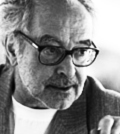
In consideration of Jean-Luc Godard’s prolific output, incomparable importance, and the decisive schism in his career that occurred in 1967/68, we have drawn up two lists covering his work. The first assesses the celebrated early years when
cinephiles around the world awaited each new Godard release with eager anticipation. Cool, audacious, innovative, funny, intellectual and sexy: the films of this period – from À bout de souffle (Breathless, 1960) to Week End (1967) – are still those for which Godard is best known and which have come to define him in the public mind.
10.
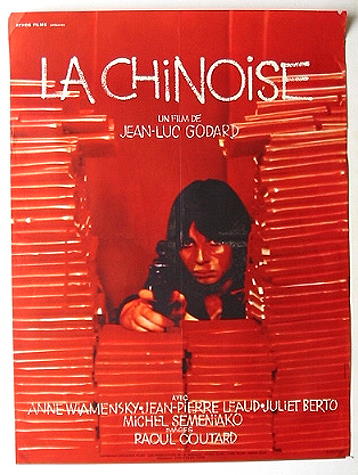
La Chinoise
(1967)
Disillusioned by their suburban lifestyles, a group of middle-class students, led by Guillaume (Jean-Pierre Léaud) and Veronique (Anne Wiazemsky), form a small Maoist cell and plan to change the world by any means necessary. Godard’s spectacularly stylized exploration of revolutionary politics set the tone for the social upheaval to come.
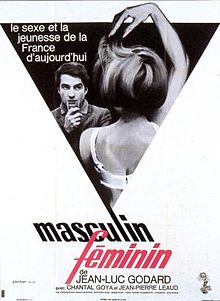
The children of Marx and Coca-Cola come under the spotlight in Godard’s revealing portrait of youth culture in mid-60s Paris. Jean-Pierre Leaud stars as a young idealistic, would-be writer, infatuated by real life Yé-yé singer Chantal Goya. Cinema-vérité-style interviews on the subjects of love, politics and consumerism, punctuate the action.
8.
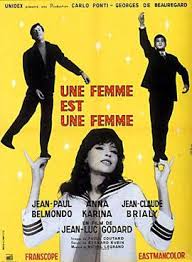
Une femme est une femme
(1961)
Une femme est une femme stars a never-more-captivating Anna Karina as a dancer who decides that she wants to have a child, but, unable to convince her boyfriend of the idea (Jean-Claude Brialy), turns her romantic attentions instead to his best friend (Jean-Paul Belmondo). Comical, playful and stylish, packed with in-jokes and a catchy Michel Legrand score, Godard’s “neorealist musical” is his most irresistibly charming film.
7.
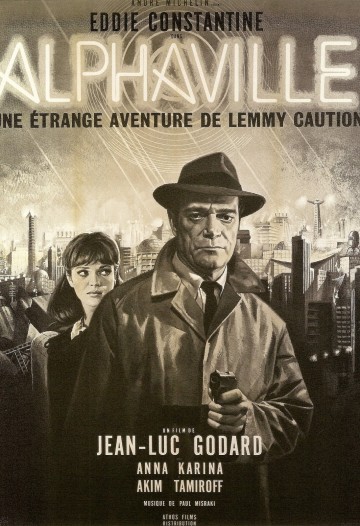
Alphaville
(1965)
Science-fiction and film noir collide in the bizarre city of Alphaville where free thought and individualist concepts like love, poetry, and emotion have been eliminated. Can secret agent Lemmy Caution fulfill his mission to kill Professor Von Braun and destroy the evil computer Alpha 60?
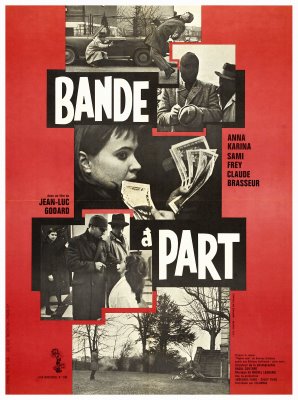
Odile (Anna Karina) teams up with a couple of petty crooks, Franz (Sami Frey) and Arthur (Claude Brasseur), in a plot to steal a stash of money. Described by its director as “Alice in Wonderland meets Franz Kafka”, this freewheeling crime caper, set in and around the streets of Paris, is one of Godard’s most popular movies, full of off-the-cuff invention and memorable set pieces.
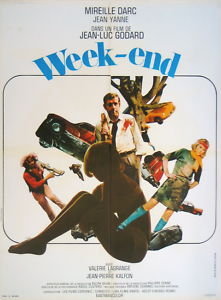
An idyllic weekend trip to the countryside turns into a never-ending nightmare of traffic jams, revolution, cannibalism and murder as French bourgeois society starts to collapse. Week End marked the end of Godard’s extraordinarily productive first period and set the tone for the more politically oriented work to come.
4.
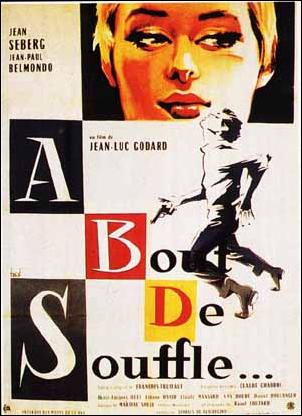
À bout de souffle
(Breathless, 1960)
In one of the most audacious directorial debuts in film history, Godard redefines the rules of cinematic storytelling in this thrilling homage to American gangster flicks which immortalized Jean-Paul Belmondo and Jean Seberg and continues to influence film and fashion to this day.
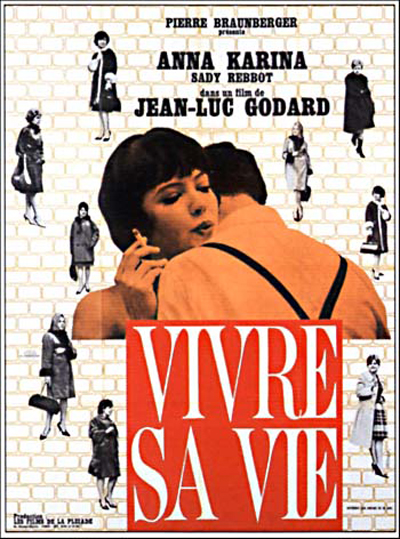
Twelve Brechtian chapters chronicle the life and death of a young woman, beginning as a cinema vérité documentary and ending as a Monogram style B movie. A fierce critique of consumerism in which people become just another commodity to be bought and sold, and a heartbreaking love letter from Godard to Karina.
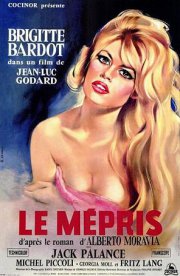
Godard’s emotionally raw account of a marital break up set against the intrigues of the international film industry has been described by one leading film critic as "the greatest work of art produced in postwar Europe.” Brigitte Bardot gives one of her best performances as the wife of a screenwriter (Michel Piccoli) who compromises his integrity for the sake of his career. Filmed in CinemaScope in sumptuous colour, with a sublime musical score by Georges Deleure, Le Mepris has the weight and resonance of classical tragedy.
1.
Pierrot le fou
(1965)
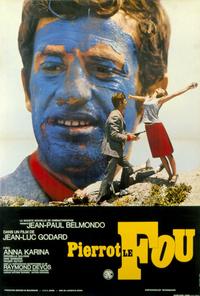
A triumphant summation of everything Godard had so far achieved, this pulp-noir anti-thriller has been described as cinematic Cubism. Shot in dazzling primary colours and loaded with references to literature, painting, other movies and pop culture, Pierrot Le Fou is, amongst other things, about the struggles of the artist, the Vietnam War, and the death of romance.

 .
. .
.

 .
. .
.