1972-1973 America in Crisis:
Nixon, Watergate and the End of the American Dream
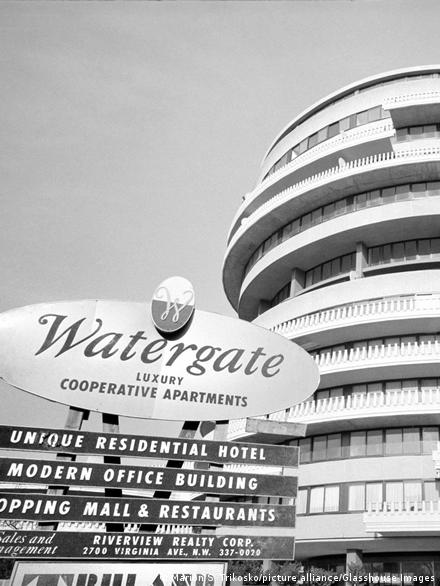
On June 17, 1972, police apprehended five burglars at the office of the Democratic National Committee headquarters in the Watergate complex in Washington, D.C. Four of the five burglars were formerly active in CIA activities against Fidel Castro in Cuba. The fifth was James W. McCord, Jr., who was the security chief of the Committee to Re-elect the President (CREEP). Investigators identified two co-conspirators in the burglary, E. Howard Hunt, Jr, a former high-ranking CIA officer and G. Gordon Liddy, a former FBI agent working as a counsel for CREEP.
Over the following months, further revelations emerged as investigative reporting by The Washington Post's Carl Bernstein and Bob Woodward uncovered a government conspiracy that extended directly to the President's Office in the White House. Initially, President Richard Nixon denied any involvement in the burglary, and in November 1972, he was re-elected, beating his Democrat opponent in one of the largest landslide election victories in American history. However, the scandal would not go away and continued to haunt the president as the investigation into the break-in and the Nixon Administration's involvement grew broader.
The Watergate scandal led to widespread disillusionment and erosion of trust in the government, as it revealed corruption at the highest levels of power. It had a profound impact on American society, sparking widespread protests, demonstrations, and calls for accountability and transparency in government. During this time, there was a significant shift in public perception leading to skepticism and cynicism towards authority figures, including politicians and government institutions. The scandal fuelled a general sense of mistrust, suspicion, and disillusionment among the American public, with many questioning the integrity of the government and the motives of those in power. This mood of disenchantment further influenced popular culture with movies, television shows, music, and literature often reflecting the widespread cynicism and disillusionment of the era.
Journey into Darkness: John Boorman's Deliverance
Following the unexpected success of trailblazing New Hollywood films like Bonnie and Clyde, Easy Rider, and Midnight Cowboy, studio executives grew more open to backing directors and granting them greater creative freedom over both the content and execution of their projects. As Paramount’s vice president of production, Peter Bart, observed: “Everybody was looking for an answer. One answer seemed to be, if you found a brilliant young director with a vision, go with him.”
Warner Bros.' decision to greenlight John Boorman's film adaptation of James Dickey's Deliverance was a case in point. In lesser hands, this tale of four businessmen who encounter hostile locals and are forced to fight for their lives while on a canoeing trip down a treacherous river in rural Georgia might have resulted in a run-of-the-mill action adventure. However, under Boorman's stewardship, it became something extraordinary: a harrowing exploration of masculinity, violence, and the frailty of civilization in the face of nature's raw power.
John Boorman directs Deliverance [1972]
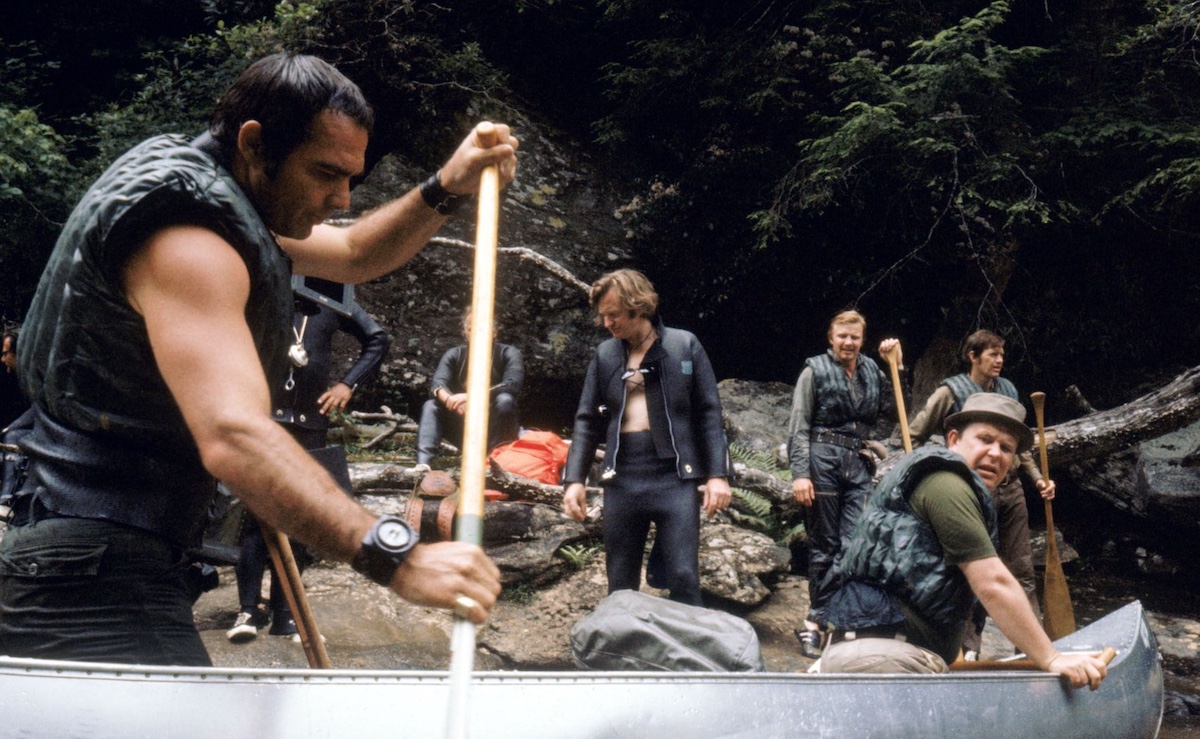 |
Determined to capture the men's experience of the story as authentically as possible, Boorman insisted on filming in sequence on location. This decision presented challenges during production. The cast, including Burt Reynolds, Jon Voight, Ned Beatty, and Ronny Cox, as well as the crew, had to endure harsh weather conditions, including freezing temperatures and heavy rain, while navigating the inhospitable terrain of the Chattooga River and the surrounding forest where the film was shot. Several of the river scenes were shot in dangerous rapids, and the actors performed many of their own stunts, resulting in several injuries during filming.
Boorman further enhanced the sense of authenticity by casting locals from the Appalachian region in supporting and extra roles, a decision that led to the unforgettable, now iconic, duelling banjo scene in which Ronny Cox's character, Drew, and a backwoods boy engage in a musical sparring match. Setting the tone early in the movie, this scene foreshadows the escalating conflict and danger that will soon engulf the group as they venture further into the wilderness.
In the film's most intense and infamous scene, Bobby, played by Ned Beatty, is brutally sexually assaulted by one of the mountain men, a moment that has become one of the most harrowing and controversial in cinematic history. Director John Boorman refused to shy away from the horrifying reality of the act, filming the scene with unflinching realism and allowing it to unfold in real time. This deliberate pacing stretches the tension to breaking point, forcing the audience to grapple with the character's sheer vulnerability and humiliation. Boorman's unrelenting approach heightened the scene’s visceral impact, ensuring it left an indelible mark on viewers.
Deliverance (1972) received widespread critical acclaim and was a significant box-office success, grossing over $46 million against a modest $2 million budget. Critics praised its intense storytelling, gripping performances, and John Boorman's masterful direction. While the film's raw depiction of violence, particularly the controversial assault scene, divided audiences, it was hailed as a powerful exploration of survival and human vulnerability. The film earned three Academy Award nominations, including Best Picture, cementing its status as both a commercial hit and a cultural touchstone in American Cinema.
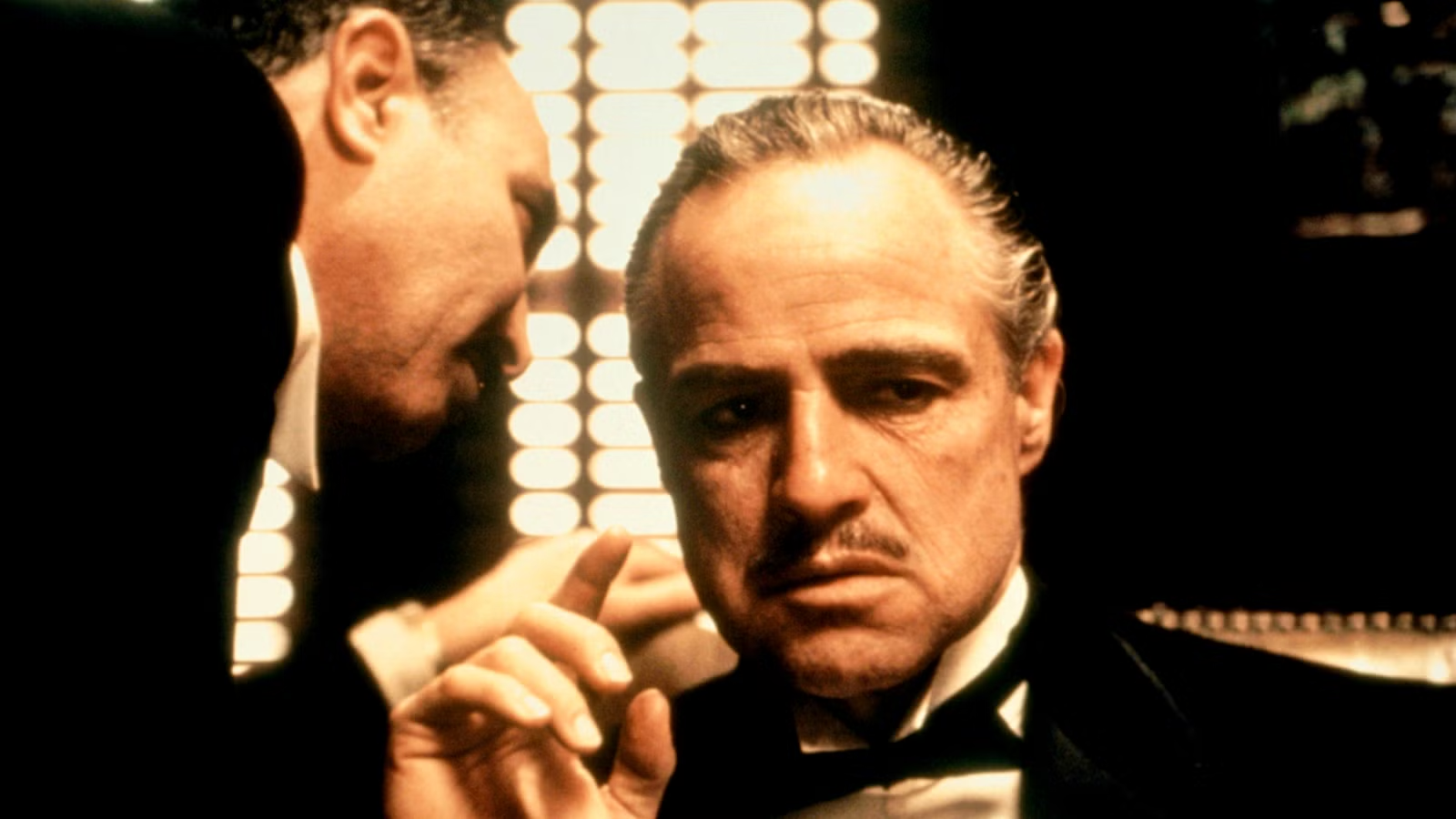
The Godfather – the making of an American masterpiece
While studios were increasingly willing to support a director's creative vision during this era, the old adage that "you're only as good as your last picture" still held true. Few understood this better than Francis Ford Coppola, whose once-promising career and ambitious attempt to run an independent studio, American Zoetrope, had faltered. His film, The Rain People, received a lukewarm response, and his protégé, George Lucas's THX 1138, was a financial failure, leaving Coppola deeply in debt to Warner Brothers and on the brink of bankruptcy. With his prospects looking grim, everything changed when he received an unexpected phone call from Paramount Pictures offering him the chance to direct a film about the Mafia.
In 1968, Paramount's head of production, Robert Evans, purchased the film rights to a 60-page manuscript by Mario Puzo titled Mafia for $12,500. Drawing from his personal experiences, extensive research into organized crime, and a deep fascination with family power dynamics, Puzo crafted a compelling story. His novel, later retitled The Godfather, offered a multi-generational saga delving into the intricate workings of the Corleone crime family. It vividly explores themes of loyalty, honour, and the far-reaching consequences of a life entangled in organized crime. A year later, when the book unexpectedly became an international bestseller, Paramount quickly moved forward with plans to adapt it into a film. Several directors were considered, but Evans was adamant that the project needed an Italian American director to bring authenticity to the story. Evans's assistant, Peter Bart, suggested Francis Ford Coppola, who initially turned down the offer, dismissing the material as "pretty cheap stuff," viewing it as sleazy and overly sensationalized. However, with mounting debts to Warner Brothers, Coppola was eventually persuaded by friends and family to reconsider. Once he agreed, Coppola began to see the story in a new light, reimagining it as not just a crime drama but also a sweeping family chronicle and a powerful metaphor for capitalism in America.
Francis Ford Coppola directs The Godfather [1972]
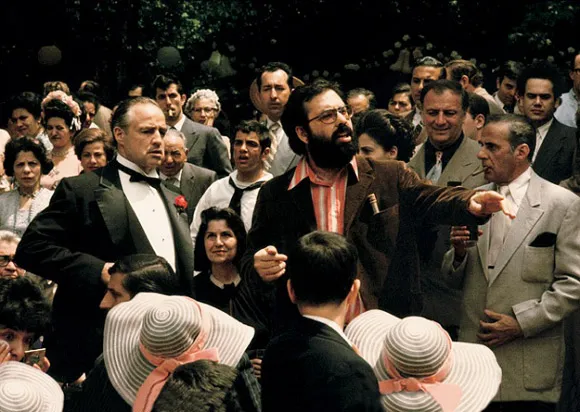 |
The production of The Godfather was fraught with challenges, many of which stemmed from Francis Ford Coppola's battles with Paramount executives. From the outset, the studio doubted Coppola's vision, expressing concerns about his insistence on authenticity, such as filming on location in New York and preserving the 1940s setting, which they deemed too expensive. Paramount also opposed Coppola's casting choices, particularly his insistence on Marlon Brando for the role of Don Vito Corleone and Al Pacino for the role of Michael. Brando's reputation for being difficult and Pacino's lack of star power led to intense pushback from the studio, forcing Coppola to fight relentlessly to secure their involvement. Tensions ran so high that Coppola was nearly fired multiple times during production, with studio executives considering more experienced directors to replace him.
Coppola also faced difficulties on set, where budget constraints and tight deadlines created constant pressure. He had to contend with scepticism from crew members who doubted his ability to handle the sprawling project, as well as disagreements over his directorial style, which favored methodical pacing and subtle character development over conventional action-driven storytelling. Moreover, the film's violent themes drew unwanted attention from real-life organized crime figures, adding another layer of tension to the production. Despite these hurdles, Coppola's vision prevailed, and his meticulous attention to detail—ranging from the iconic lighting choices to the carefully constructed performances—resulted in a film that not only satisfied the studio but also became a groundbreaking cinematic masterpiece.
The Godfather was met with widespread critical acclaim upon its release in 1972 and quickly became a cultural phenomenon. Critics praised Francis Ford Coppola's masterful direction, which balanced operatic drama with intimate character studies, and highlighted the film's rich themes of power, loyalty, and moral corruption. The performances of the cast, particularly Marlon Brando as Don Vito Corleone and Al Pacino as Michael Corleone, were universally celebrated, with Brando's iconic portrayal redefining the gangster archetype. Reviewers also lauded the film's meticulous attention to detail, from its period-accurate production design to its hauntingly atmospheric score by Nino Rota. The film was hailed as a masterpiece almost immediately, with many calling it one of the greatest American films ever made.
At the box office, The Godfather was an unprecedented success, grossing over $250 million worldwide, making it one of the highest-grossing films of its time. Audiences were captivated by its gripping story and complex characters, and its influence extended far beyond the theater. The film became a touchstone for popular culture, inspiring countless parodies, references, and discussions about its portrayal of the American Dream and organized crime. At the 1973 Academy Awards, The Godfather won three Oscars, including Best Picture, Best Actor for Marlon Brando (who famously declined the award), and Best Adapted Screenplay for Coppola and Mario Puzo. Its critical and commercial success cemented its status as a landmark in cinematic history, paving the way for two sequels and solidifying Coppola's legacy as one of the great auteurs of American Cinema.
Rebels with a Vision: The Movie Brats Before They Changed Hollywood
The success of The Godfather was a vindication of Francis Ford Coppola's confidence in his own abilities. This self-belief had propelled him from the start of his career, even when so many had doubted him. In his wake, a close circle of like-minded young filmmakers sought to emulate what their friend and contemporary Coppola had achieved. This second wave of New Hollywood creatives – later to be dubbed "the movie brats" – included Brian De Palma, George Lucas, Martin Scorsese and Steven Spielberg. They were the first generation of filmmakers who hadn't entered the industry through traditional avenues, such as theatre or television, but had studied film as an art form in its own right. Growing up watching movies on TV, they honed their craft in film schools, becoming both technically proficient and steeped in film lore. By 1972, all had achieved some success in their careers, but had yet to establish themselves as bankable players in Hollywood.
In the late 60s, Brian De Palma had become known as a filmmaker with a penchant for experimental and avant-garde techniques. His early works, such as Greetings (1968) and Hi, Mom! (1970), showcased his interest in satire and social commentary. In 1970, at age 30, he left New York for L.A. to make Get to Know Your Rabbit (1972), starring the comedian Tommy Smothers and Orson Welles. The movie's quirky premise (a corporate executive abandons his career to become a tap-dancing magician) and satirical tone may have reflected De Palma's earlier experimental style, but making it proved a dispiriting experience for the director. The studio, Warner Bros., had numerous disagreements with him over the film's direction and tone. This conflict led to De Palma being fired during post-production, with the studio taking over the final editing. The experience was a significant learning moment for De Palma, emphasizing the challenges of maintaining creative control within the Hollywood system.
Kicking his heels in Los Angeles, De Palma began spending time at the rented Malibu home of two young actresses, Margot Kidder and Jennifer Salt. The house they shared was not just a residence but a gathering place for a community of artists, filmmakers, and writers. The house itself, nestled against the backdrop of the Pacific Ocean, embodied the free-spirited ethos of the time. Its doors were always open to friends, colleagues, and collaborators who were drawn to the relaxed, bohemian atmosphere that Kidder and Salt cultivated.
Martin Scorsese and Brian De Palma
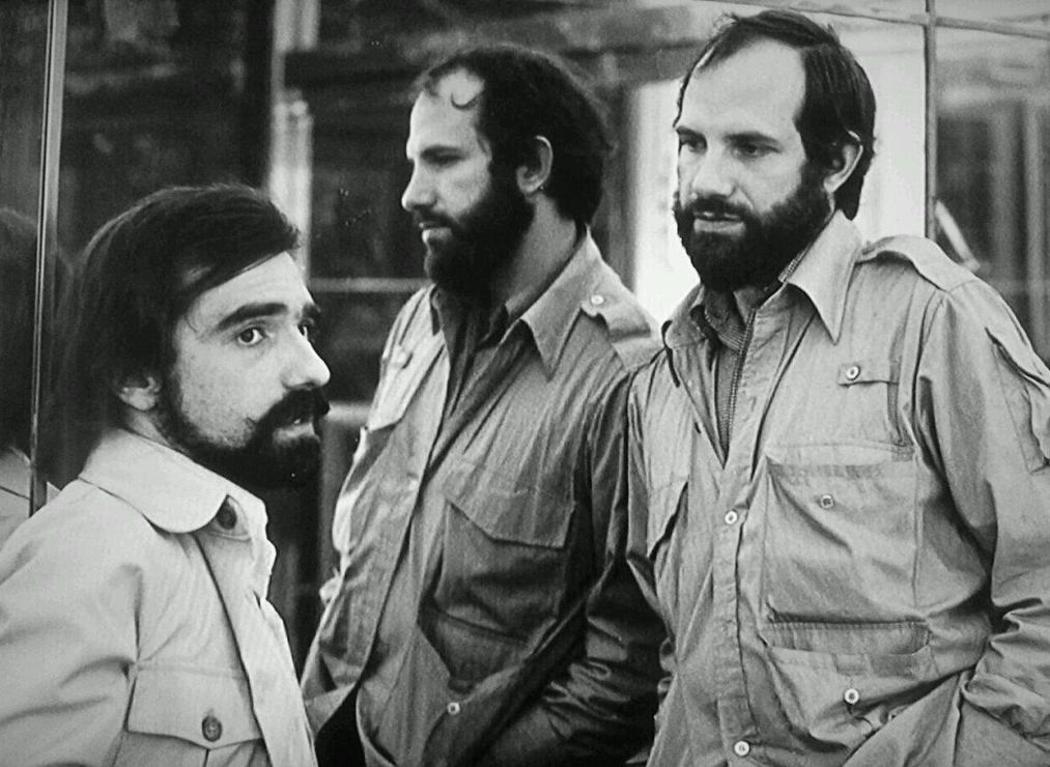 |
Another visitor to the house was Martin Scorsese, who had also relocated to Los Angeles from New York and was looking for a way to transition from the realm of independent filmmaking into the broader, more challenging world of Hollywood. He had completed his feature debut, Who's That Knocking at My Door (1967), which showcased his raw talent and personal style but had so far struggled to find commercial success. He yearned to tell stories rooted in his own experiences, specifically drawing on the Italian-American communities of New York.
In 1971, Scorsese was offered the chance to direct Boxcar Bertha by Roger Corman, the legendary producer known for giving young directors their first big break. Corman admired Scorsese's technical skill and energy, as seen in his earlier work, and brought him on board to direct this low-budget crime drama set during the Great Depression. While the film was competently made and demonstrated Scorsese's eye for vivid, visceral imagery, it ultimately fell into a conventional genre piece, tailored to Corman's formulaic expectations. After its release, Scorsese showed Boxcar Bertha to his mentor and friend, John Cassavetes, a pioneering figure in independent film. Cassavetes criticized the work for lacking personal vision, bluntly advising Scorsese to stop making movies like that and instead create films that came from his heart. This candid advice inspired Scorsese to embark on Mean Streets, a deeply personal project that would define his artistic voice and establish him as a distinctive filmmaker.
Paul Schrader was another frequent visitor to the house. Born on July 22, 1946, in Grand Rapids, Michigan, into a strict Calvinist family, Schrader's upbringing was deeply religious, with his parents adhering to the principles of the Dutch Reformed Church. This conservative, religious environment had a profound impact on Schrader's worldview, instilling in him a strong sense of morality and an acute awareness of sin and redemption—themes that would later become central to his film work. Due to the strictness of his upbringing, Schrader was not allowed to watch movies as a child, and he didn't see his first film until he was 17.
Despite this late introduction to Cinema, Schrader quickly developed a deep passion for film. He attended Calvin College, where he studied theology and philosophy, before moving on to the University of California, Los Angeles (UCLA) to study film. While at UCLA, he became involved in the film community, writing for the influential film journal Cinema and studying under noted critics and scholars like Pauline Kael, who became an important mentor and supporter of his work.
Paul Schrader
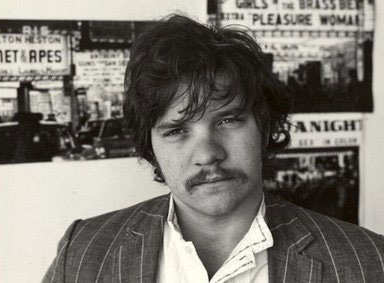 |
Schrader's early career was marked by a blend of academic pursuits and a burgeoning interest in screenwriting. After graduating from UCLA, he wrote his first book, Transcendental Style in Film: Ozu, Bresson, Dreyer (1972), which analyzed the spiritual and stylistic elements in the films of these directors. This work established Schrader as a serious film scholar and critic, but his ambitions were in filmmaking. Desperate to make it by any route possible, Schrader sought out those who could help him. An outsider (film geek neurotic, suffering from nervous tics, ulcers and asthma), he found fellow-feeling with Martin Scorsese and Brian De Palma as he later noted, "I'm basically depressive, cynical, prone to intellectualization. Therefore, I got along with Marty and Brian perfectly."
Schrader also formed a connection with John Milius, one of the most accomplished and influential figures among the regulars at the beach. Born on April 11, 1944, in St. Louis, Missouri, Milius was raised in an affluent Jewish family that relocated to Bel Air during his childhood. The Southern California lifestyle profoundly shaped his interests, particularly his passion for surfing, which would later surface in his creative work. Milius also developed a lifelong fascination with military history and adventure, themes that became signature elements of his storytelling. He drew inspiration from the works of great American novelists such as Hemingway and Melville, as well as the free-spirited ethos of beat writers like Jack Kerouac, infusing his writing and directing with a distinctive blend of rugged individualism and poetic intensity.
Milius's early career was marked by a unique blend of ambition, creative flair, and an unorthodox approach to Hollywood. After studying film at the University of Southern California's School of Cinematic Arts, where he honed his storytelling skills and developed a reputation as a maverick, Milius quickly gained recognition for his bold, adventurous writing style. His fascination with history, particularly military history, and his love of American mythology made his scripts stand out, leading to his first major break when he penned the screenplay for Jeremiah Johnson (1972), a revisionist Western starring Robert Redford. This success was followed by his contributions to Dirty Harry (1971) and Magnum Force (1973), in which his knack for crafting gritty, memorable dialogue and morally complex characters came to the fore. Milius's scripts began to define a new, edgier voice in Hollywood, combining traditional Americana with a modern sensibility.
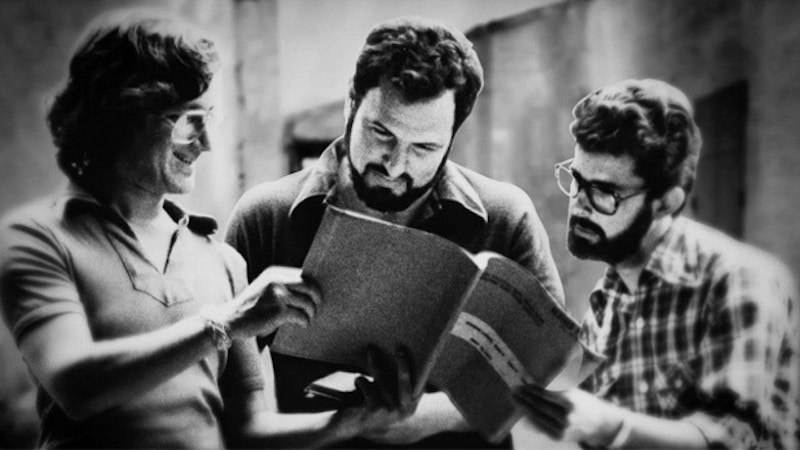
Milius brought along a friend from his USC days, Steven Spielberg, to the gatherings at the Malibu house. Spielberg was born on December 18, 1946, in Cincinnati, Ohio. He grew up in a Jewish family, the eldest of four children. His mother, Leah Posner, was a concert pianist and restaurant owner, while his father, Arnold Spielberg, worked as an electrical engineer. The family frequently moved due to his father's job, living in cities such as Haddon Township, New Jersey, and later in Phoenix, Arizona.
Stephen Spielberg, John Milius and George Lucas
 |
Spielberg's interest in film began at an early age. As a child, he was captivated by storytelling and film, using his father's 8mm camera to shoot home movies. His first productions were simple, often featuring his family members and neighborhood friends. He directed his first short film, The Last Gunfight, at the age of 12. Around the same time, Spielberg joined the Boy Scouts of America and earned a photography merit badge by filming a nine-minute short called The Last Train Wreck, which showed his budding talent.
Despite his passion for movies, Spielberg's early years were marked by challenges. His parents' divorce during his adolescence deeply affected him, and he faced bullying in school, partly due to his Jewish background. These personal experiences later influenced his work, especially his portrayal of outsiders and broken families in his films.
After graduating from Saratoga High School in California, Spielberg applied to several prestigious film schools, including the University of Southern California (USC), but was rejected due to his average grades. He eventually enrolled at California State University, Long Beach, where he studied English while continuing to make short films.
In 1968, Spielberg got his first significant break when he directed a 26-minute short film, Amblin'. The film caught the attention of Sid Sheinberg, an executive at Universal Studios, who offered Spielberg a seven-year contract with the studio, making him the youngest director ever to be signed to a long-term deal by a major Hollywood studio at the age of 22.
Spielberg began his professional career directing television episodes for shows like Night Gallery (1969) and Columbo (1971). He quickly gained a reputation for his innovative and dynamic directing style, even within the restrictive television frameworks. His big breakthrough came in 1971 when he directed the made-for-TV movie Duel, a tense thriller about a man pursued by a relentless truck driver. Duel became a critical success and showcased Spielberg's ability to build suspense and tell compelling stories.
In the years that followed, the so-called “Movie Brats” consolidated and expanded changes that earlier New Hollywood filmmakers had already set in motion. Building on prior breakthroughs in realism and auteur-driven storytelling, directors such as Spielberg, Scorsese, Lucas, Coppola, and De Palma formed a close-knit creative network, supporting one another’s projects and sharing ideas in ways that strengthened their collective impact. Emerging during a period when the studio system was still struggling to recover from industrial and cultural decline, they helped translate New Hollywood’s artistic ambitions into films that resonated powerfully with younger audiences.
Rather than single-handedly dismantling the old system, they accelerated its transformation—redefining genre conventions, embracing formal experimentation, and proving that personal vision and commercial success need not be mutually exclusive. In doing so, they solidified New Hollywood’s legacy and established a model of filmmaker-driven cinema that would shape American film culture for decades to come.
"Drama is easy. Comedy's hard": The Rise and Rise of Peter Bogdanovich
If proof were needed that anything was possible in the New Hollywood era for a young director with talent and guile, then Peter Bogdanovich's career was a case in point. The Oscar-winning success of The Last Picture Show had established him as one of the most prominent filmmakers of his generation. In 1972, Bogdanovich followed up with What's Up, Doc?, a film born out of his love for classic screwball comedies of the 1930s and 1940s, particularly the works of directors like Howard Hawks and Preston Sturges. Collaborating with writers Buck Henry, David Newman, and Robert Benton, Bogdanovich crafted a story centered around mistaken identities, romance, and chaotic misadventures involving four identical suitcases. Barbra Streisand was cast as the unpredictable Judy Maxwell, while Ryan O'Neal took on the role of the strait-laced Howard Bannister, creating a perfect comedic clash. Shot in San Francisco, the film featured elaborate slapstick sequences, including an iconic car chase through the city's hilly streets. The film's box-office success affirmed Bogdanovich's status as a leading director of the era, blending reverence for classic film styles with modern sensibilities.
Peter Bogdanovich directs Paper Moon [1973]
 |
Bogdanovich continued his exploration of American history and culture in his next film, this time turning to the Great Depression for inspiration. Based on the novel Addie Pray by Joe David Brown, Paper Moon tells the story of a con man, Moses Pray (Ryan O'Neal), and a young girl, Addie Loggins (played by O'Neal's real-life daughter, Tatum O'Neal), as they travel across the American Midwest, grifting and scheming. Bogdanovich's decision to shoot Paper Moon in black and white was a defining choice that both captured the starkness of the Depression-era setting and paid homage to the classic Hollywood films he admired, particularly those of John Ford. He worked closely with cinematographer László Kovács to ensure that the visual aesthetic was not just a stylistic preference but a crucial part of the film's tone, giving it an authentic, timeless feel.
Filmed largely on location in Kansas and Missouri, Bogdanovich was meticulous about historical accuracy, from the 1930s cars and costumes to the rural, dusty landscapes that reflected the hardship of the time. Despite the film's serious backdrop, Paper Moon was also filled with humor and charm, largely due to the dynamic between the father-daughter duo at its core. Tatum O'Neal's standout performance as Addie, which earned her an Academy Award for Best Supporting Actress at the age of 10, was key to the film's success, as her sharp, tough, yet vulnerable character perfectly complemented Ryan O'Neal's world-weary con artist.
At this point in his life, Peter Bogdanovich stood at the pinnacle of his career, celebrated as one of the most prominent and influential directors of the New Hollywood era. With a string of critical and commercial successes that included The Last Picture Show (1971), What's Up, Doc? (1972), and Paper Moon (1973), Bogdanovich was hailed as a masterful storyteller and a custodian of classic Hollywood's artistic legacy. His distinctive ability to blend nostalgia with modern sensibilities made him a favorite among critics and audiences alike. However, his personal life and professional choices in the years that followed brought significant challenges. A series of commercial failures, high-profile relationships, and personal tragedies overshadowed his early triumphs. While he continued to work in film and television, his later career struggled to recapture the acclaim of his early work, marking a sharp contrast to the heights of his success in the early 1970s.
A New Take on Noir: Robert Altman's The Long Goodbye
Like Peter Bogdanovich, in the early 1970s, Robert Altman also experimented with genre films, yet while Bogdanovich often engaged with genre as a form of homage, embracing its classical elements to evoke nostalgia and pay tribute to the old Hollywood he revered, Altman approached the genre with a more subversive, deconstructive method. Altman sought to dismantle genre conventions, presenting them through a modern lens that reflected the ambiguities and complexities of contemporary life. These differences reflect the filmmakers' broader perspectives: Bogdanovich's work frequently embraced genre with reverence, while Altman's films were marked by irony, scepticism, and, often, outright critique.
After making the revisionist western McCabe and Mrs. Miller, Altman travelled to Ireland to make the unsettling psychological thriller Images starring Susannah York. While on location, he was sent a screenplay adaptation of Raymond Chandler's The Long Goodbye. The project had begun with producer Jerry Bick, who was intrigued by the idea of bringing Chandler's 1950s story into a modern-day setting. Bick hired Leigh Brackett, co-writer of the classic 1946 adaptation of Chandler's The Big Sleep, to write the script. Altman immediately saw the potential of The Long Goodbye as a vehicle to subvert both the detective genre and audience expectations, transforming the noir detective into a relic lost in an era of freewheeling morals and shifting social codes.
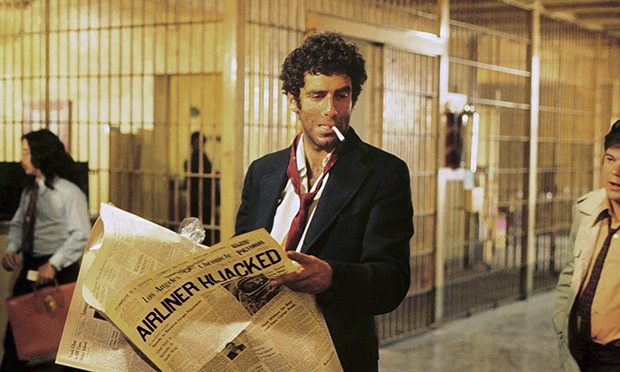
Altman's approach to The Long Goodbye was decidedly unconventional from the outset. He chose Elliott Gould, an actor with an affable, laid-back persona, to play Philip Marlowe—a role traditionally associated with more rugged, world-weary actors like Humphrey Bogart. Altman's vision was to portray Marlowe as a man stuck in a time warp, a 1940s detective transplanted into the 1970s. This "Rip Van Marlowe" interpretation allowed Gould to play the character with a sense of bemused detachment, constantly out of step with the world around him. Altman's Marlowe is a man who still believes in loyalty and friendship but who is woefully out of place in a society driven by cynicism and self-interest.
Elliot Gould as Philip Marlowe in The Long Goodbye (1973)
 |
Altman's directing style was famously loose, and this was reflected in The Long Goodbye. He encouraged improvisation on set, often allowing the actors to deviate from the script. Gould's performance was heavily influenced by this approach, with his rambling monologues and sardonic one-liners giving the film a naturalistic, offbeat tone. Altman also employed his signature use of overlapping dialogue and long takes, creating a feeling of casual realism, even amid the film's darker plot points. Vilmos Zsigmond, the cinematographer behind the film's sun-drenched, hazy aesthetic, used a technique called "pre-flashing" to desaturate the color and soften the overall look, giving the film a dreamlike, almost washed-out quality. This visual style contrasted sharply with the shadowy, high-contrast imagery typically associated with film noir, contributing to the film's sense of alienation and temporal displacement.
The film's tone also departed from traditional noir, blending satire and dark comedy with a sense of melancholy and disillusionment. The juxtaposition of Marlowe's dogged loyalty with the betrayals he uncovers lends the film a bittersweet quality. Gould's laid-back portrayal of Marlowe undercuts the archetypal tough-guy persona, making him seem more vulnerable and human. This vulnerability is most evident in the film's famous final scene, where Marlowe finally takes decisive, violent action—a moment that subverts both the character's passivity throughout the film and the audience's expectations.
Upon its release in 1973, The Long Goodbye received mixed reviews from critics and audiences. Many Chandler purists were unhappy with Altman's reworking of the source material, feeling that his irreverent tone and revisionist approach undermined the hardboiled nature of the original story. Some also criticized the film for being too loose in structure and pacing, especially compared to the tightly wound narratives typical of classic noir. However, over time, critics began to reassess the film, recognizing its bold and deliberate subversion of genre conventions. Altman's take on The Long Goodbye was seen as a commentary on the disillusionment and moral ambiguity of the 1970s, reflecting the era's cynicism toward institutions and traditional values. The film's themes of betrayal and the erosion of personal integrity resonated with a generation coming to terms with the fallout of Vietnam, Watergate, and shifting cultural norms.
You Can't Beat the System
For many Americans who already felt the system was stacked against them, Watergate was less a shock than a confirmation of their suspicions. Some, like Philip Marlowe in Altman's The Long Goodbye, managed to outmanoeuvre the system on their own terms, but most had no choice but to navigate a world that contradicted the ideals they had been raised to believe in. In 1972 and 1973, three remarkable films explored this tension across different facets of American society, depicting individuals who, while operating within established systems, attempted to challenge or reform them—only to discover that their efforts were either futile or compromised. Each film, in its own way, grappled with the clash between idealism and realism, illustrating how political, legal, and military institutions ultimately overpower even the most determined individuals.
The Candidate (1972). Born on November 28, 1938, in Waukesha, Wisconsin, Michael Ritchie's passion for filmmaking was sparked during his years at Harvard University. He began to experiment with documentary filmmaking, setting the stage for his future career. After graduating, he honed his craft as a television director and documentary filmmaker, earning recognition for his work on various educational and television programs. Ritchie's big break came with Downhill Racer (1969), a sports drama starring Robert Redford as an ambitious downhill skier. The film was praised for its realistic depiction of the sport and marked Ritchie's arrival as a director to watch.
Robert Redford in The Candidate [1972]
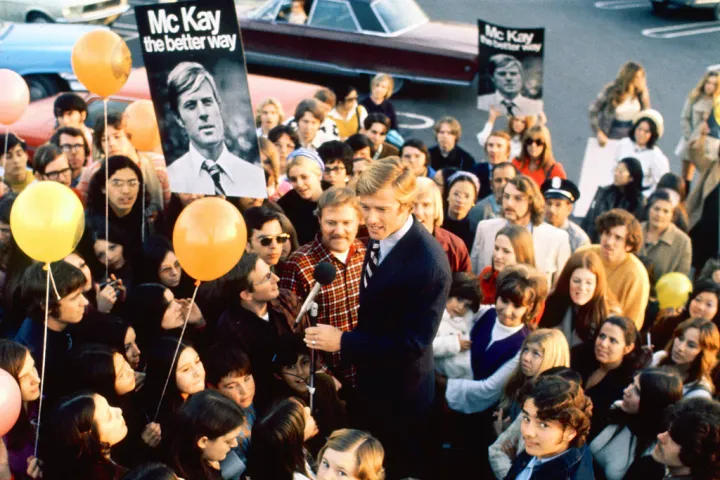 |
In 1972, director Michael Ritchie and actor Robert Redford reunited to create The Candidate, a sharp political drama that dissects the compromises and moral dilemmas inherent in the American electoral system. The film follows Bill McKay, a young, charismatic, and idealistic lawyer who is handpicked by a group of seasoned political strategists to run for the United States Senate against a well-established incumbent. Initially chosen as a symbolic candidate with little chance of winning, McKay is promised the freedom to speak his mind and champion progressive causes. However, as the campaign gains unexpected momentum, he finds himself increasingly entangled in the ruthless machinery of modern politics. Forced to navigate media scrutiny, strategic messaging, and backroom deals, McKay struggles to reconcile his personal convictions with the demands of winning votes. What begins as a campaign driven by principle slowly transforms into a calculated pursuit of victory, leaving McKay to question what—if anything—remains of his original ideals by the time the race is over.
The Candidate's depiction of the political process is a far cry from the glamorous and romanticized portrayal of politics often seen in other films. Instead, it presents a gritty and realistic exposé of the process, focusing on the behind-the-scenes machinations and sacrifices that politicians often make to win. Redford's charismatic performance and the film's sharp, satirical take on the campaign process offer a powerful commentary on the compromises and cynicism inherent in modern politics.
Stylistically, Ritchie employed a documentary-style approach, using handheld cameras and natural lighting to capture the chaos and immediacy of a political campaign. Further enhancing The Candidate's authenticity, scenes were shot in real political locations, such as genuine campaign events and rallies. This decision introduced an element of realism to the film, blurring the line between fiction and reality. This, as well as Redford's performance and the witty biting script, won the film acclaim and earned an Academy Award for Jeremy Larner's original screenplay.
Serpico (1973). Born on June 25, 1924, Sidney Lumet began his career in the 1950s in live television and quickly gained a reputation for his fast-paced, efficient directing style, which carried over to his film work. His feature debut, 12 Angry Men (1957), was a critical success and set the tone for Lumet's career, with its focus on moral complexity and social justice. Throughout the 1960s, Lumet directed a wide range of films, including the Cold War thriller Fail Safe (1964) and the searing Holocaust drama The Pawnbroker (1964), showcasing his ability to handle both tense, psychological material and deeply human stories. Lumet's work as a director was perfectly suited to the New Hollywood era as it emphasized more personal, socially conscious, and morally complex stories. His films, known for their focus on ethical dilemmas, institutional corruption, and character-driven narratives, aligned with the era's shift toward gritty realism and anti-establishment themes.
Al Pacino in Serpico(1973)
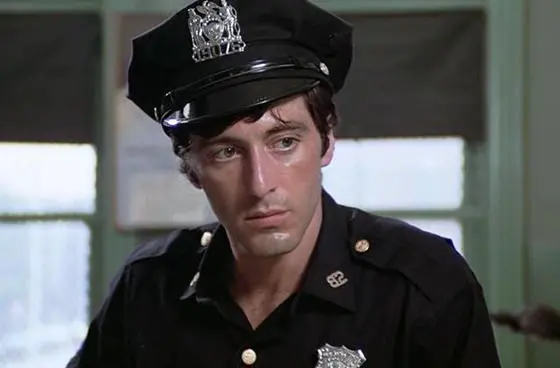 |
In 1973, Sidney Lumet directed Serpico, a gripping biographical crime drama based on the true story of Frank Serpico, the New York City police officer who exposed widespread corruption within the NYPD. Al Pacino delivered one of his most acclaimed performances in the title role, portraying an honest cop determined to maintain his integrity amid bribery, kickbacks, and institutional misconduct. The film traces Serpico’s evolution from idealistic rookie to alienated outsider, as his refusal to participate in corruption isolates him from colleagues and ultimately places his life in danger.
The narrative captures the profound isolation of whistleblowing within a broken system. Serpico’s attempts to report corruption through official channels are met with indifference and resistance, forcing him to seek outside intervention, including journalists and the Knapp Commission. His growing paranoia and vulnerability underscore how deeply entrenched corruption has become and how perilous it is for one individual to challenge it.
Lumet reinforces this tension through a gritty, location-based realism. Shot largely on the streets of New York, the film employs natural lighting and handheld camerawork to create a documentary-like immediacy. Pacino’s layered performance—balancing vulnerability, frustration, and resolve—earned him an Academy Award nomination. Released at a time of widespread distrust in public institutions, Serpico resonated strongly with audiences, functioning not only as a tense crime drama but as a pointed reflection on the personal cost of confronting systemic corruption.
The Last Detail (1973). Directed by Hal Ashby, adapted by Robert Towne from the novel by Darryl Ponicsan, The Last Detail follows two Navy petty officers, Billy "Badass" Buddusky (Jack Nicholson) and Mule Mulhall (Otis Young), who are assigned to escort a young, naive sailor, Larry Meadows (Randy Quaid), to a naval prison. Meadows has been sentenced to eight years for attempting to steal a mere £40 from a charity box, a crime for which the punishment feels disproportionately severe. As the trio embarks on their journey from Virginia to New Hampshire, Buddusky and Mulhall, increasingly sympathetic to Meadows's plight, decide to show him a final taste of freedom. They take him drinking, introduce him to women, and give him experiences he has never had, all the while grappling with the inevitability of his grim fate. Along the way, the film explores themes of authority, camaraderie, and disillusionment with the rigid, often cruel military system, culminating in a bittersweet ending as Meadows is ultimately delivered to prison.
Otis Young, Randy Quaid and Jack Nicholson in The Last Detail [1973]
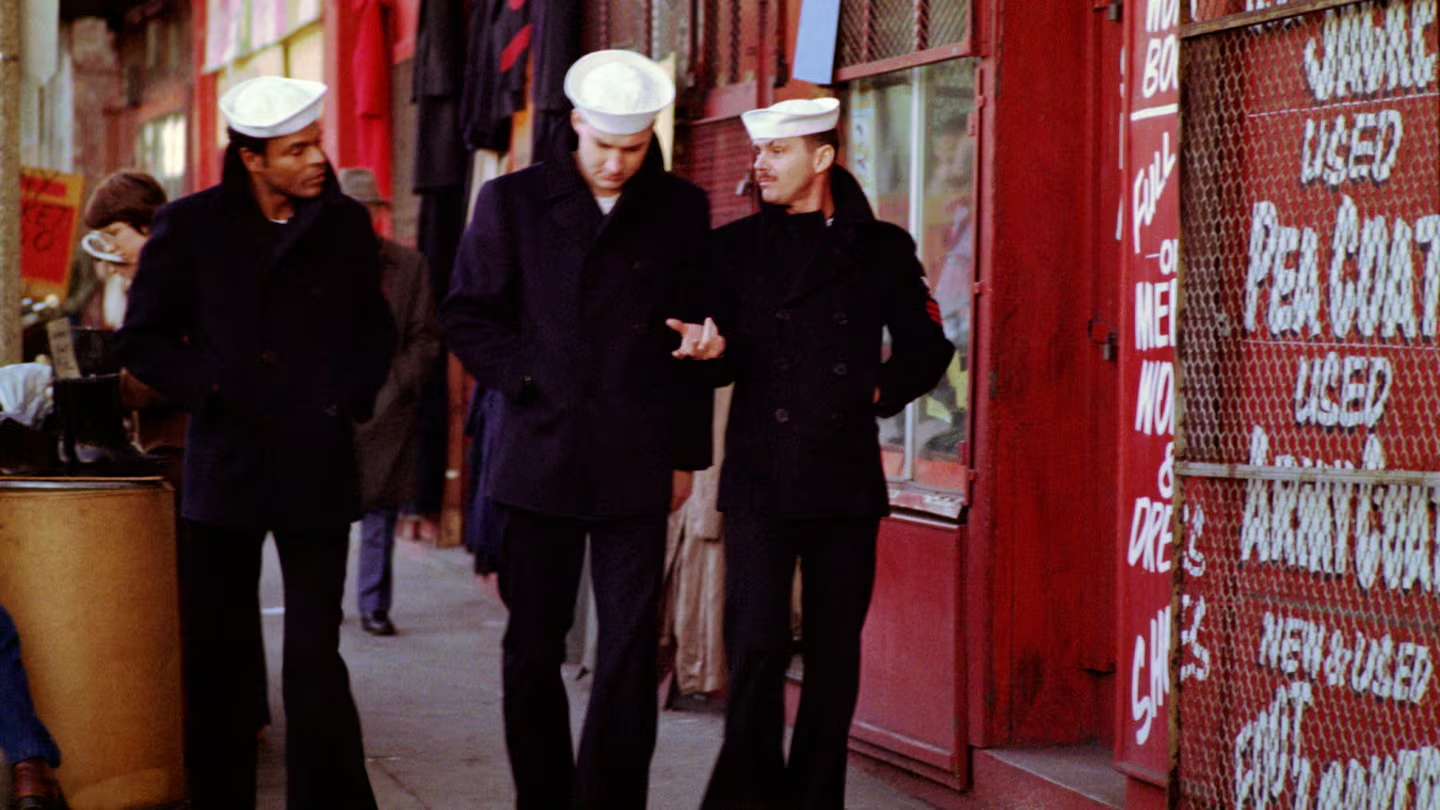 |
At its core, The Last Detail is a film about rebellion against unjust authority, reflecting the broader cultural mood of 1970s America. Buddusky and Mulhall, though lifelong Navy men, become increasingly disillusioned with the harsh, bureaucratic system they serve. Meadows' crime—attempting to steal $40 from a charity box—appears trivial, yet the Navy imposes an excessively harsh punishment, symbolizing the institutional tendency to mete out disproportionate justice. This bureaucratic indifference to human life and morality is a central theme in the film, and the officers' decision to allow Meadows to experience a bit of joy before his sentence indicates their quiet rebellion against the dehumanizing system. The film's critique of authority resonates with a larger cultural moment in the post-Vietnam War era when distrust of institutions like government and the military was at its peak.
The film is also a poignant exploration of friendship, camaraderie, and fleeting human connections. The bond that forms between Buddusky, Mulhall, and Meadows during their journey is central to the film's emotional weight. Buddusky, in particular, becomes a mentor figure to the naive Meadows, showing him a side of life he's never experienced—drinking, bar fights, and women—while Mulhall plays a quieter, more conflicted role in their trio. Their friendship is bittersweet, however, as it is constantly overshadowed by the inevitability of Meadows' grim fate. This dynamic explores the tension between personal loyalty and institutional duty, a key theme that resonates throughout the film. Their camaraderie, though meaningful, is ultimately temporary and cannot escape the reality of Meadows' imprisonment.
Upon its release, The Last Detail was met with widespread critical acclaim, particularly for its sharp screenplay, Ashby's naturalistic direction, and Nicholson's electrifying performance, which earned him a Best Actor award at Cannes and an Academy Award nomination. Towne's script was praised for its raw, profane dialogue and unflinching look at military bureaucracy, while Quaid's and Young's performances added depth to the film's emotional core. Though its coarse language initially sparked controversy, the film's gritty realism and poignant social commentary cemented its status as a classic of 1970s American Cinema, a time when Hollywood was increasingly unafraid to challenge authority and expose institutional failures.
Down and out in America: losers in search of the American Dream
In the 1970s, American Cinema became a powerful reflection of societal disillusionment, with films like The Candidate, Serpico, and The Last Detail exploring how individuals struggled within—and sometimes pushed back against—deeply flawed systems, while other films from the era depicted the futility faced by those entirely excluded from those structures, their pursuit of the American Dream marked by delusion, desperation, and inevitable failure. These contrasting narratives offered a stark critique of American ideals, dismantling the myth of guaranteed success and revealing a society plagued by cynicism and internal contradictions. This shift not only captured the mood of the decade but also reshaped the trajectory of American storytelling, with three character-driven dramas standing out as brilliant exemplars of this introspective and transformative cinematic movement.
Fat City (1972), directed by John Huston, is a gritty and poignant drama that explores the lives of struggling boxers and drifters in Stockton, California. Based on Leonard Gardner's 1969 novel, the film delves into the darker, more human side of the American Dream, focusing on characters who exist on the margins of society. Unlike the glorified images of boxing seen in films like Rocky, Fat City portrays the sport as a gruelling, thankless grind where its participants rarely rise above mediocrity. The film's downbeat realism and melancholic tone reflect a sobering perspective on human aspiration and failure, hallmarks of the New Hollywood movement of the 1970s.
Stacey Keech and Jeff Bridges in Fat City(1972)
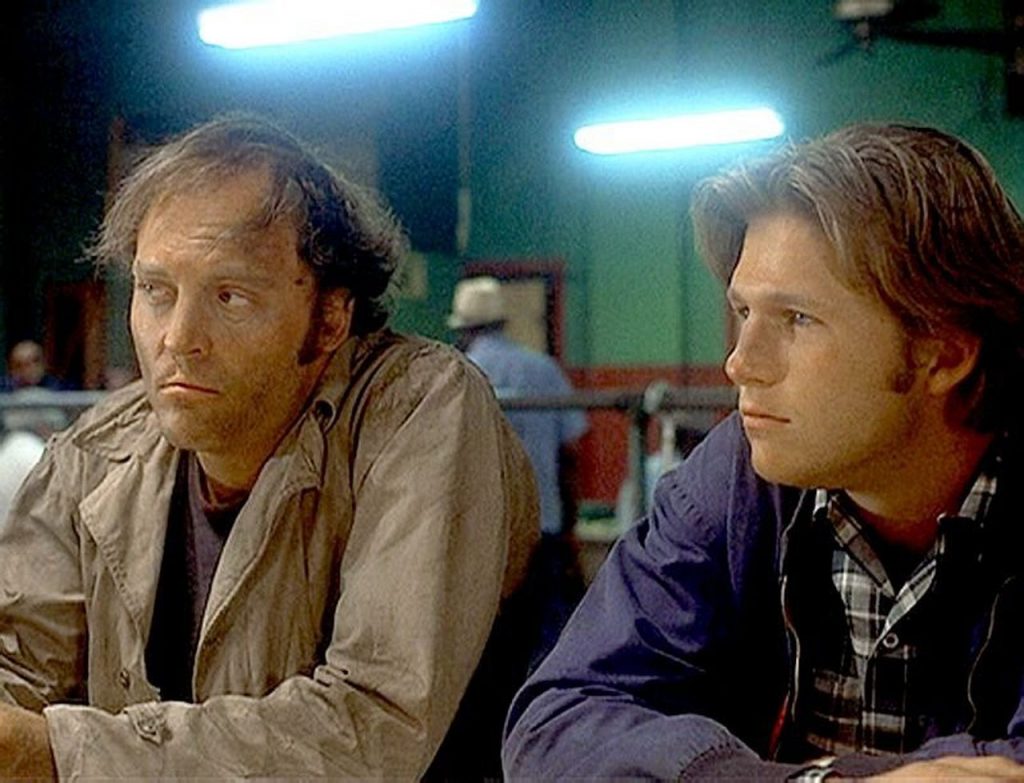 |
At the heart of Fat City are two central characters: Billy Tully, a washed-up former boxer played by Stacy Keach, and Ernie Munger, a young up-and-comer portrayed by Jeff Bridges. Tully, battling alcoholism and regret, struggles to make a comeback in the ring while working odd jobs and drifting through life. Ernie, on the other hand, is just beginning his boxing career but soon faces the disillusionment of his modest talents and the bleak future the sport holds for him. Their relationship is one of fleeting mentorship, where Tully sees in Ernie a reflection of his younger self, and Ernie, in turn, witnesses the potential outcome of a life spent pursuing a dream that remains stubbornly out of reach.
Huston's direction is understated yet powerful, using the drab settings of rundown gyms, cheap bars, and barren landscapes to highlight the grim reality of the characters' lives. Cinematographer Conrad Hall captures the film's mood with a naturalistic style, emphasizing the harsh, unforgiving world the characters inhabit. The fight scenes, though few, are shot with an unglamorous, visceral quality that underscores the physical and emotional toll of the sport. Instead of a choreographed spectacle, we see tired, desperate men throwing punches as a means of survival. The atmosphere of exhaustion and resignation pervades the film, making it a deeply introspective character study rather than a typical sports drama.
Upon its release, Fat City was praised by critics for its raw, honest portrayal of the human condition, though it did not achieve great commercial success. Over time, however, the film has gained recognition as one of Huston's finest works and a standout in the New Hollywood era for its depiction of working-class struggles. Stacy Keach's portrayal of Billy Tully, in particular, is often cited as a career-defining performance, embodying the vulnerability and broken dreams of a man confronting the limits of his own potential. In its themes of disillusionment, persistence, and the fragile nature of hope, Fat City remains a poignant and relevant reflection on the human experience.
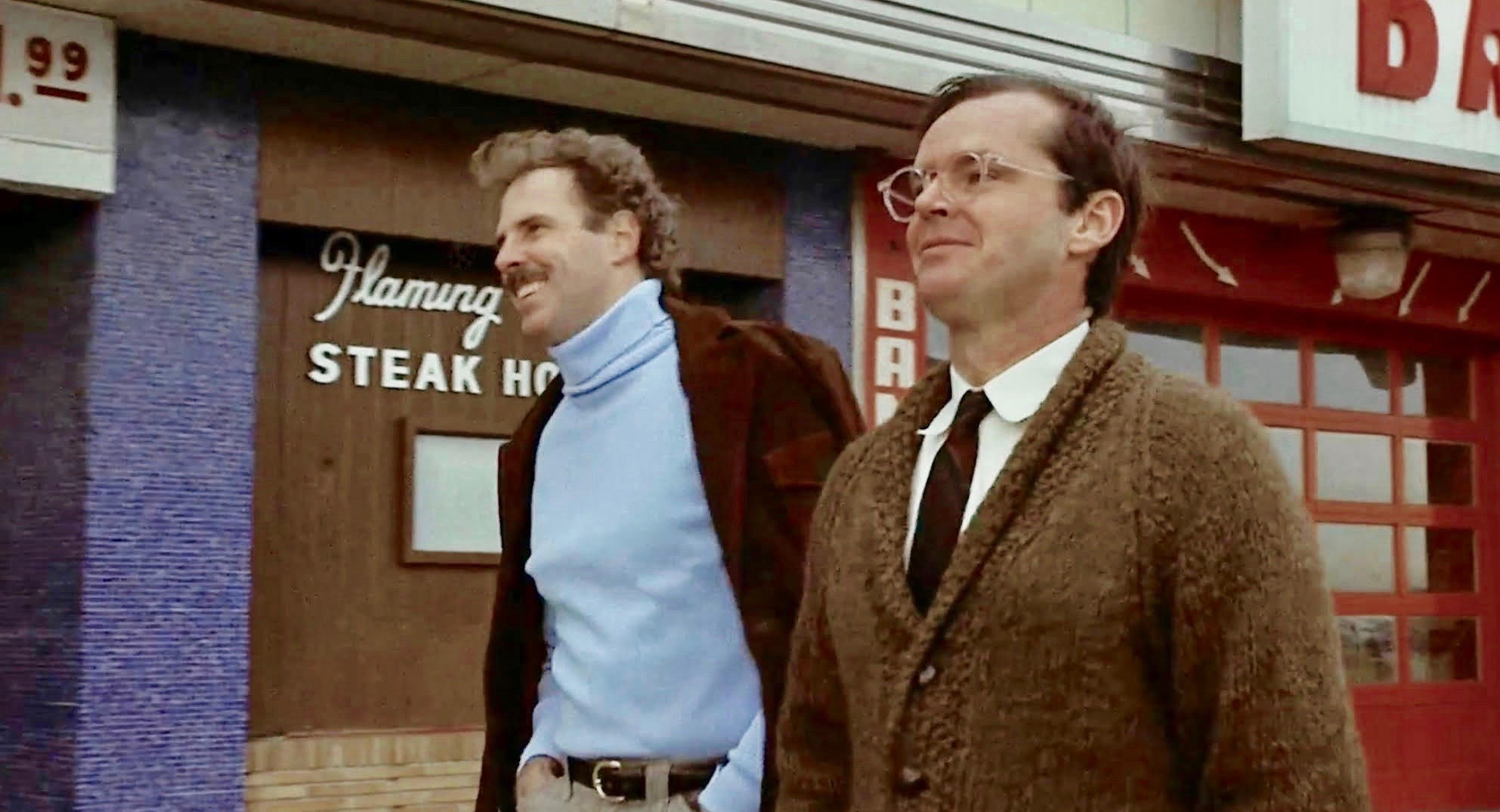
The King of Marvin Gardens (1972), directed by Bob Rafelson, is a poignant reflection of the broken promises and disillusionment that haunt those chasing the elusive American Dream. Set in a desolate Atlantic City, the film centers on two brothers—David, a withdrawn radio host played by Jack Nicholson, and Jason, a charismatic schemer portrayed by Bruce Dern—who find themselves embroiled in a grand but doomed real estate plan. The contrast between Jason's wild ambitions and David's somber realism speaks to the film's central theme: the gap between the fantasy of success and the harsh reality faced by those on society's fringes.
Bruce Dern and Jack Nicholson in The King of Marvin Gardens [1972]
 |
The King of Marvin Gardens epitomises the New Hollywood era’s rejection of traditional Hollywood formulas in favor of more introspective, character-driven stories. The decaying, out-of-season Atlantic City mirrors the internal decay of the characters’ hopes, emphasizing the unfulfilled promises of the American Dream. Rafelson’s film echoes the cynicism of the time, reflecting a society that was increasingly aware of the false ideals and disillusionments of the postwar era, making it a critical part of the movement’s thematic concerns.
However, The King of Marvin Gardens was not a commercial success upon release, and its failure significantly affected both Bob Rafelson’s career and the trajectory of BBS Productions, the company behind the film. BBS had produced several groundbreaking films, including Easy Rider (1969) and Five Easy Pieces (1970), which helped define New Hollywood, but the financial failure of The King of Marvin Gardens marked the beginning of the end for the studio. Rafelson, who had gained acclaim for his earlier work, saw his momentum slow, as his later projects struggled to achieve the same level of critical or commercial success.
The film’s lack of commercial appeal, coupled with its bleak portrayal of American life, signaled a turning point for BBS and Rafelson. While the film has since been appreciated as a thoughtful and daring exploration of disillusionment, its initial reception underscored the risks of New Hollywood’s experimental approach. In hindsight, The King of Marvin Gardens remains a vital entry in the era’s cinematic landscape, capturing the despair of those who couldn’t grasp the American Dream, even if it contributed to the end of a revolutionary moment in film history.
Scarecrow (1973), directed by Jerry Schatzberg and starring Gene Hackman and Al Pacino, exemplifies New Hollywood’s commitment to character-driven, introspective storytelling. The film follows Max, a volatile ex-convict, and Lion, a gentle drifter, who form an unlikely bond as they travel across America in search of opportunity. Framed as a road movie, Scarecrow explores alienation, broken dreams, and the fractured American landscape, reflecting the uncertainty that defined 1970s cinema.
Like many New Hollywood antiheroes, Max and Lion are aimless figures pursuing a version of the American Dream that feels increasingly unattainable. Their journey through desolate highways and struggling towns evokes the moral and economic stagnation of post-Vietnam, post-Watergate America. The tension between Max’s abrasive cynicism and Lion’s fragile optimism captures the era’s uneasy balance between hope and disillusionment.
Stylistically, the film aligns with the movement’s preference for naturalistic performances and location shooting. Hackman and Pacino deliver raw, emotionally exposed portrayals that foreground inner conflict over conventional plot. This focus on flawed, ordinary individuals navigating a landscape of limited prospects was central to New Hollywood’s realism.
Though not a commercial success, Scarecrow has since been recognized as a significant entry in the period’s canon. Its meditation on friendship, failure, and the search for dignity in a diminished world encapsulates the movement’s broader effort to redefine American cinema through honesty, vulnerability, and moral complexity.
Outlaws, Anti-Heroes, and the Supernatural: Genre Films that Shaped Early 1970s Cinema
Within the broader context of the New Hollywood movement, the early 1970s marked a crucial phase in the evolution of American genre cinema. Emerging directors and independent-minded producers reworked established forms, using them as frameworks for social critique and psychological exploration. Crime, Westerns, comedy, and horror—genres once rooted in formula—were reshaped to reflect moral uncertainty, institutional mistrust, and cultural disillusionment. Rather than offering reassurance or escapism, these films foregrounded ambiguity and unease, challenging traditional narratives of heroism and national identity. This shift not only mirrored the ideological tensions of the period but also signalled a broader transformation in cinematic language, as genre films became central to New Hollywood's embrace of realism, personal vision, and mythic deconstruction.
By 1972 and 1973, American crime cinema had entered a darker, more psychologically nuanced phase. Influenced by the gritty realism of late '60s trailblazers, filmmakers depicted crime less as glamour or adventure than as bleak, inescapable reality. Protagonists were no longer clear-cut anti-heroes, but conflicted figures trapped within corrupt systems. Films such as The Friends of Eddie Coyle (1973) and Mean Streets (1973) portrayed criminals as both perpetrators and casualties of their environment, with directors like Peter Yates and Martin Scorsese using naturalistic dialogue and handheld camerawork to heighten authenticity and emotional immediacy.
Following in the wake of The French Connection, Police dramas also reflected this shift, depicting officers not as paragons of justice but as compromised figures navigating broken systems. The Seven-Ups (1973), Badge 373 (1973), and The New Centurions (1972) recast the procedural as a study of personal toll and ethical ambiguity, their urban grit echoing post-Vietnam disillusionment and Watergate-era mistrust.
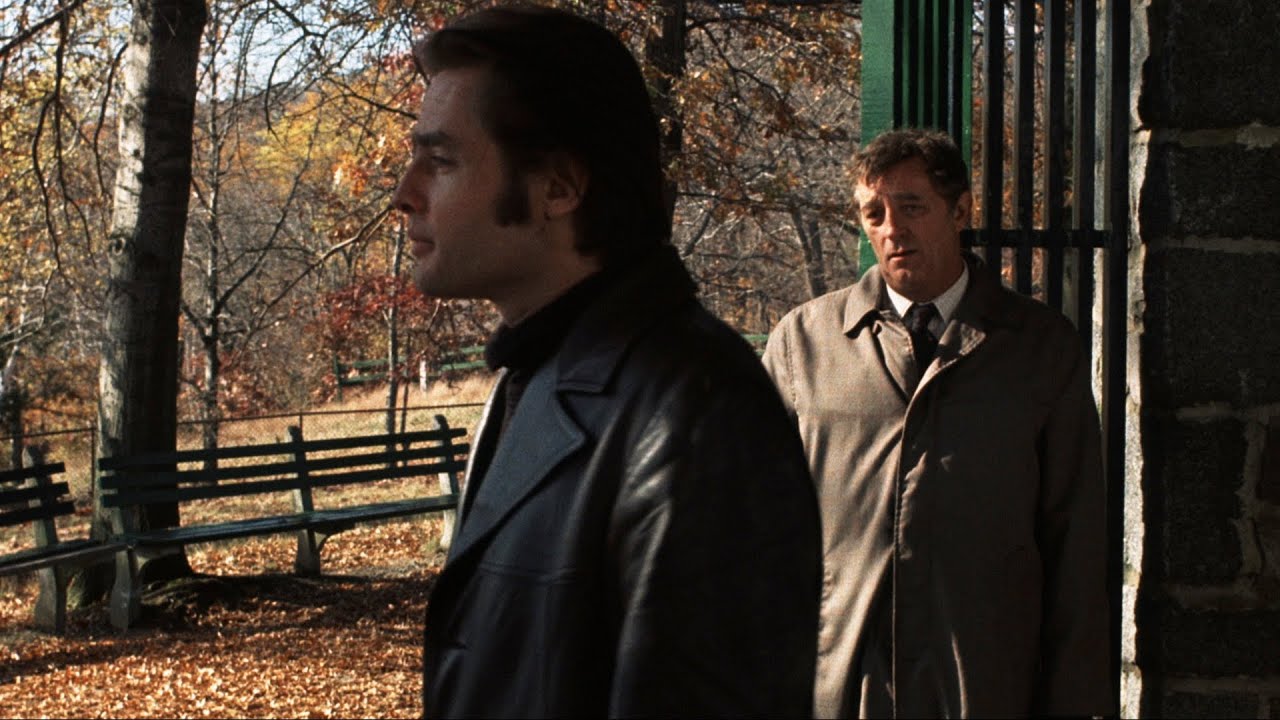
Richard Jordan and Robert Mitchum in Friends of Eddie Coyle (1973)
 |
Period crime films like Dillinger (1973) and The Sting (1973) revisited historical narratives through a distinctly 1970s lens. While set in the past, both echoed contemporary themes of rebellion and mistrust: Dillinger as a violent portrait of outlaw celebrity, The Sting as a stylish metaphor for a society skeptical of appearances and authority.
Together, these developments marked a turning point. Crime films ceased to be mere suspense or spectacle; they became cultural commentary, reflecting the anxieties of a society in transition. Their realism, psychological depth, and moral complexity laid the groundwork for a new kind of American storytelling.
Central to this transformation was Peter Yates’s The Friends of Eddie Coyle (1973). Adapted from George V. Higgins’ novel, the film follows Robert Mitchum’s aging Boston gunrunner, trapped between criminals and law enforcement as he faces an impending prison sentence. Mitchum’s restrained performance conveys a quiet resignation to betrayal and inevitability, while the film’s naturalistic dialogue and subdued tone anchor it in stark realism. Eschewing heroics and moral reassurance, it presents crime as a byproduct of economic desperation and systemic decay. In doing so, it helped redefine American crime cinema, replacing glamour and spectacle with psychological depth and social critique.
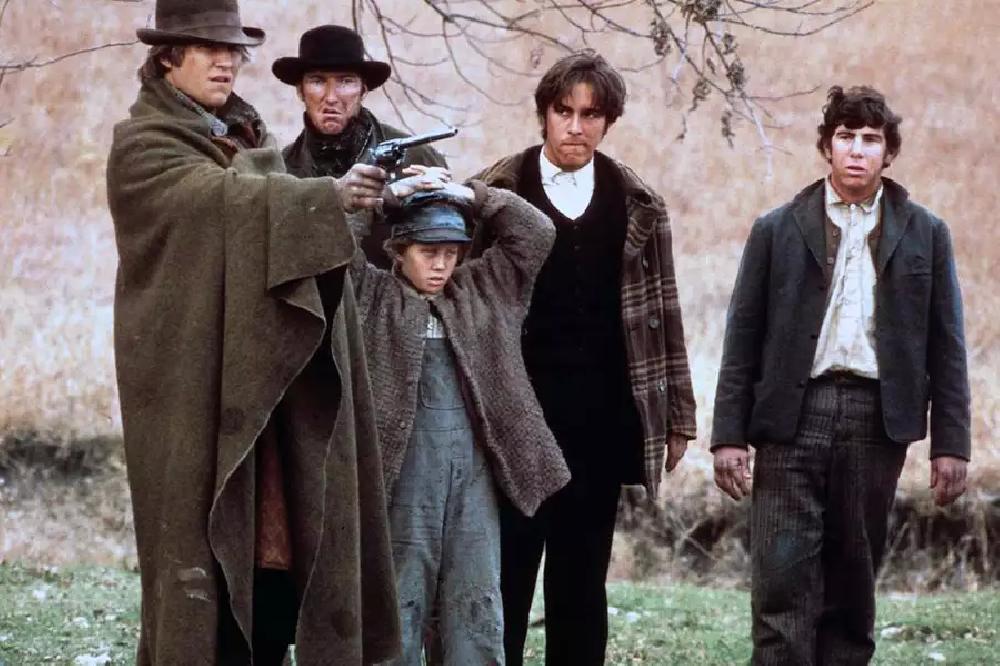
Bad Company [1972]
 |
If crime films exposed corruption in modern America, Westerns revisited the myths of the frontier, dismantling their heroic certainties. By the early 1970s, the genre had already begun to shift, but New Hollywood directors deepened its revisionist turn. Films like Ulzana's Raid (1972) and Jeremiah Johnson (1972) embraced darker, more complex narratives. Robert Aldrich's Ulzana's Raid confronted American imperialism through its brutal depiction of U.S. conflicts with Apache tribes, while Sydney Pollack's Jeremiah Johnson followed a disillusioned mountain man battling not only nature but his own isolation. Both rejected the frontier as a stage for heroism, instead portraying it as a landscape of survival and compromise.
This current continued with Sam Peckinpah's Pat Garrett and Billy the Kid (1973) and Clint Eastwood's High Plains Drifter (1973). Peckinpah reflected on the fading of the Old West through the tragic bond between outlaw and lawman, while Eastwood infused the genre with allegory, his ghostly gunslinger avenging injustice in a corrupt town. Even Junior Bonner (1972), another Peckinpah film, reworked Western themes through rodeo culture, meditating on the erosion of traditional values in modern America.
Robert Benton's Bad Company (1972) pushed the revisionist mood further with irony and grit. Following a draft-dodger and a petty thief during the Civil War, the film replaced adventure with hunger, betrayal, and violence. Its pared-down style, morally ambiguous characters, and dark humor echoed the anti-establishment spirit of the era, reimagining the frontier as a space for questioning authority, exposing human flaws, and dismantling the American Dream.
Comedy, too, turned introspective, blending humor with social critique and psychological depth. Woody Allen emerged as a defining voice, recasting comedy through neurotic self-reflection and candid explorations of intimacy. His Everything You Always Wanted to Know About Sex (But Were Afraid to Ask) (1972) broke taboos with satirical vignettes about sexual anxieties, combining cerebral wit with an unflinching look at human insecurity.
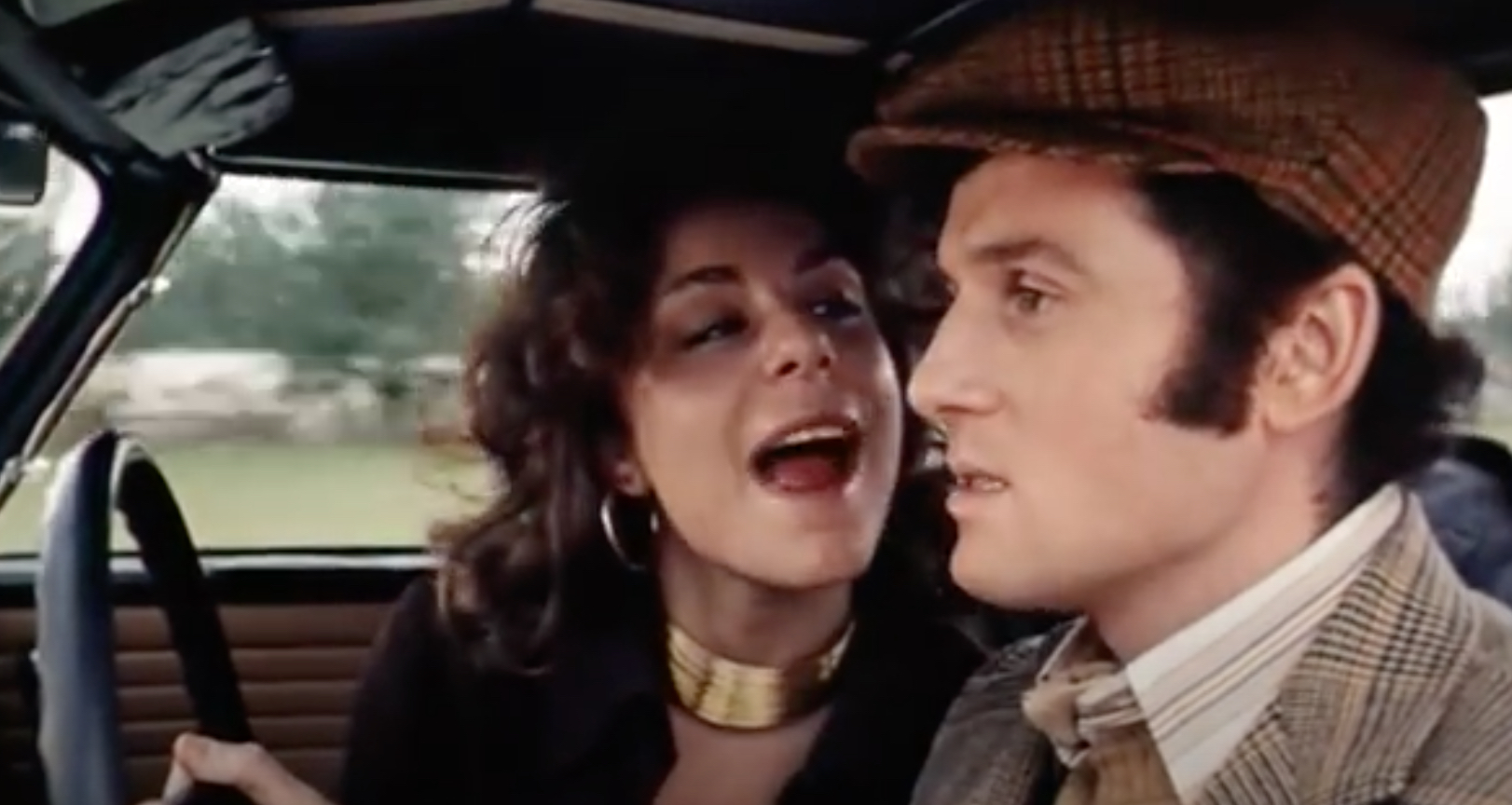
Charles Grodin and Jeannie Berlin in The Heartbreak Kid (1972)
 |
Paul Mazursky's Blume in Love (1973) likewise shifted comedy toward realism and character study. Following a divorce lawyer consumed by guilt after infidelity, the film explored themes of redemption and vulnerability instead of conventional romance. Its humor grew out of flawed, introspective characters, reflecting the uncertainties of modern relationships.
Elaine May's The Heartbreak Kid (1972), written by Neil Simon, epitomized the era's darker, more cynical narratives. Charles Grodin's Lenny Cantrow abandons his wife on their honeymoon to pursue another woman, embodying the selfishness and dissatisfaction of a culture bent on personal fulfillment. May's sharp, uncomfortable humor subverted romantic comedy traditions, ending not in romance but in ambiguity and disillusionment.
Together, these films redefined comedy in the 1970s, replacing slapstick and tidy resolutions with irony, realism, and complex portraits of human imperfection.
Horror, meanwhile, pushed boundaries by grounding terror in social commentary and psychological realism. George Romero, already recognized for Night of the Living Dead (1968), continued to pioneer this approach with The Crazies (1973), a portrait of government mistrust and mass hysteria as a small town collapses under the effects of a military experiment gone wrong. Its vision of neighbors turning on each other mirrored a post-Vietnam, post-Watergate America haunted by institutional failure.
Brian De Palma's Sisters (1972) likewise blurred horror with psychological thriller, drawing on Hitchcock while infusing it with New Hollywood daring. The story of a woman with a murderous twin and the journalist investigating her explored voyeurism, identity, and paranoia in a claustrophobic atmosphere. De Palma's split-screen imagery and Bernard Herrmann's chilling score amplified the sense of fractured reality, while the film's focus on trauma and instability tapped into the decade's fascination with psychological fracture. Though modest at the box office, it earned critical praise and established De Palma's stylistic trademarks.
The Exorcist [1973]
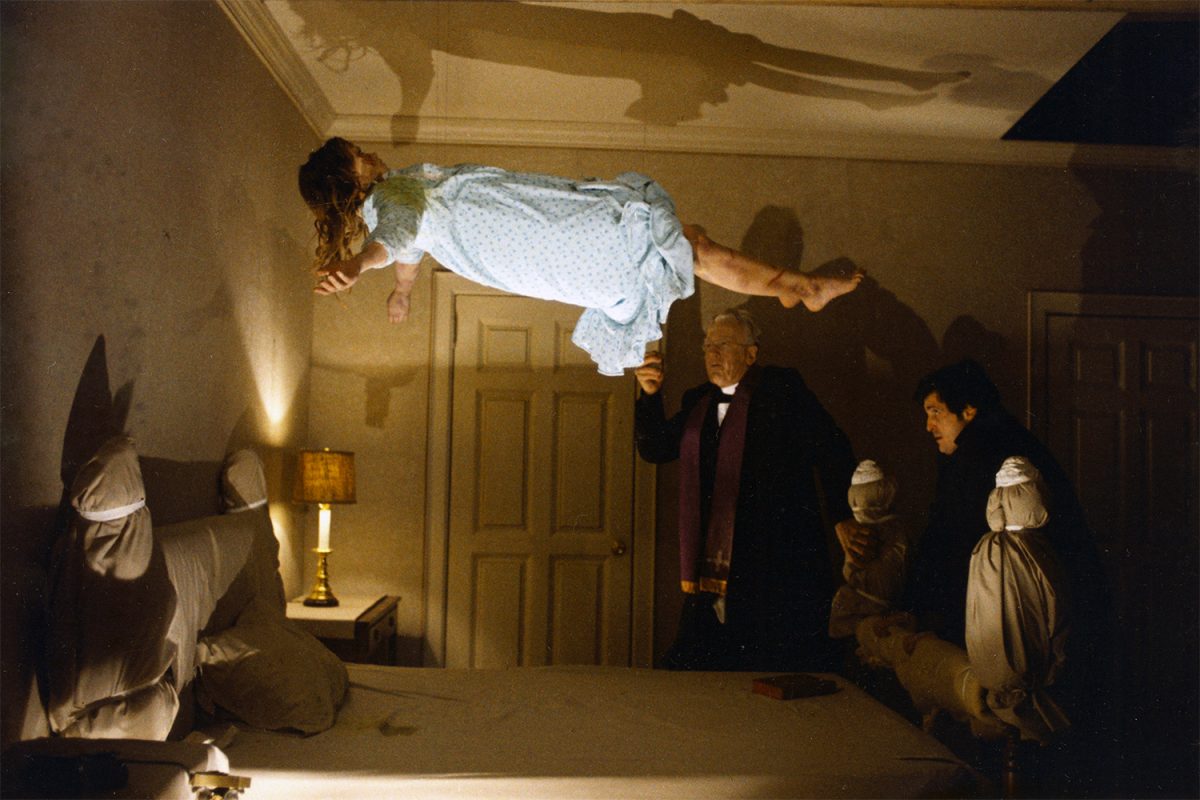 |
The most influential work of the period was William Friedkin's The Exorcist (1973), which elevated horror into both critical and commercial prestige. Its shocking yet realistic portrayal of demonic possession, paired with groundbreaking effects, explored themes of faith, evil, and human suffering with a gravity rarely seen in the genre. The film received multiple Academy Award nominations, including Best Picture, and grossed over $400 million worldwide, becoming a cultural phenomenon. Its success reshaped studio attitudes toward horror, proving the genre could command major budgets and attract star talent while addressing profound cultural fears.
Together, these films redefined horror as more than lowbrow spectacle. By grounding terror in realism and social critique, they transformed the genre into a vehicle for confronting disillusionment, moral ambiguity, and the darker sides of human experience—completing a broader New Hollywood shift in which every genre became a site for cultural self-examination.
Across crime, Westerns, comedy, and horror, New Hollywood reimagined genre as a tool for cultural critique rather than escapist entertainment. Crime films exposed systemic corruption and the bleak realities of urban life; Westerns dismantled the myths of frontier heroism; comedies turned inward to probe the fragility of modern relationships; and horror amplified contemporary anxieties into existential terror. Stripped of certainty and formula, these genres became mirrors of a society in crisis, reflecting the moral ambiguities and cultural upheavals of the early 1970s. Together, they reveal how New Hollywood transformed popular cinema into a vehicle for realism, personal expression, and the interrogation of America's most enduring myths.
From the Streets to the Wilderness: Three Cinematic Landmarks of 1973
In 1973, American Graffiti, Mean Streets, and Badlands emerged as defining films of the New Hollywood era, signalling the arrival of three visionary filmmakers: George Lucas, Martin Scorsese, and Terrence Malick. Representing a second generation of New Hollywood directors, they built upon the groundwork laid by figures like Arthur Penn, Bob Rafelson, and Dennis Hopper, pushing the movement into more introspective, stylistically diverse, and thematically ambitious territory. Each film exemplified the creative freedom and personal storytelling that characterized the era, breaking away from the formulaic studio productions of earlier decades. Lucas's nostalgic yet poignant American Graffiti captured the bittersweet essence of early 1960s youth culture, Scorsese's gritty and raw Mean Streets redefined urban crime dramas with its intimate focus on loyalty and redemption, and Malick's hauntingly poetic Badlands explored violence and alienation with an ethereal beauty. These films not only marked major breakthroughs for their young directors but also reflected the broader cultural shifts of the time, showcasing the daring artistry and innovation that made the New Hollywood era a golden age of American cinema.
American Graffiti (1973)
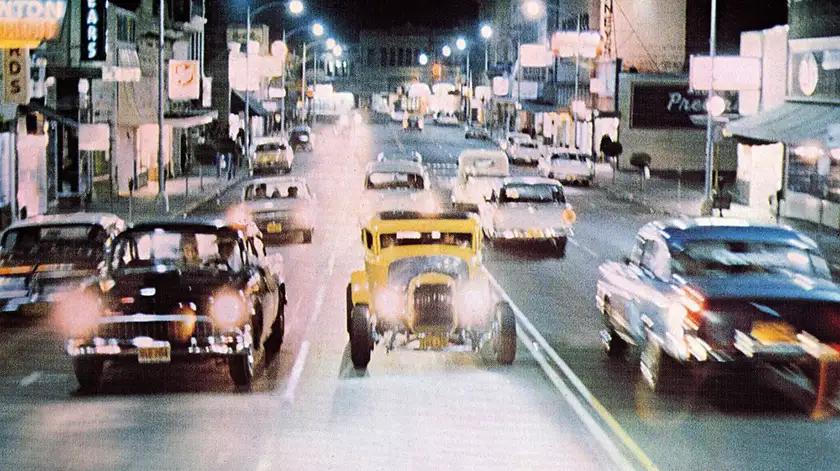 |
American Graffiti (1973) is a landmark film that captures the essence of adolescence and the cultural transformation of 1960s America. Directed by George Lucas, the film is a nostalgic yet incisive look at the lives of teenagers over a single night in Modesto, California, as they cruise the streets, confront their futures, and experience pivotal moments of self-discovery. With its episodic structure and ensemble cast, American Graffiti weaves together multiple storylines, offering a snapshot of youth culture, from the thrill of drag racing to the uncertainty of leaving home. Its rich tapestry of characters and relatable themes struck a chord with audiences, making it one of the most beloved coming-of-age films in cinema history.
One of the film's most distinctive features is its groundbreaking use of music to drive the narrative and evoke a specific time and place. The soundtrack, featuring over 40 rock-and-roll hits from artists like Buddy Holly and Chuck Berry, functions as a character in its own right, providing emotional resonance and underscoring the film's themes of nostalgia and transition. Lucas avoided a traditional score, instead curating a jukebox-style soundscape that immerses viewers in the cultural landscape of 1962. This innovative approach not only set a precedent for future filmmakers but also helped cement American Graffiti as a cultural touchstone.
The success of American Graffiti was a watershed moment for George Lucas, marking his breakthrough as a director and cementing his reputation as a visionary storyteller. With its modest budget and personal tone, the film demonstrated the potential of independent-minded filmmaking during the New Hollywood era, earning critical acclaim and significant box office success. It also introduced several future stars, including Richard Dreyfuss, Ron Howard, and Harrison Ford, while paving the way for Lucas's next project, the groundbreaking Star Wars (1977). More than just a nostalgic reflection on youth, American Graffiti is a deeply resonant work that celebrates the fleeting moments that define our lives and the choices that shape our futures.
Robert De Niro and Harvey Keitel in Mean Streets [1973]
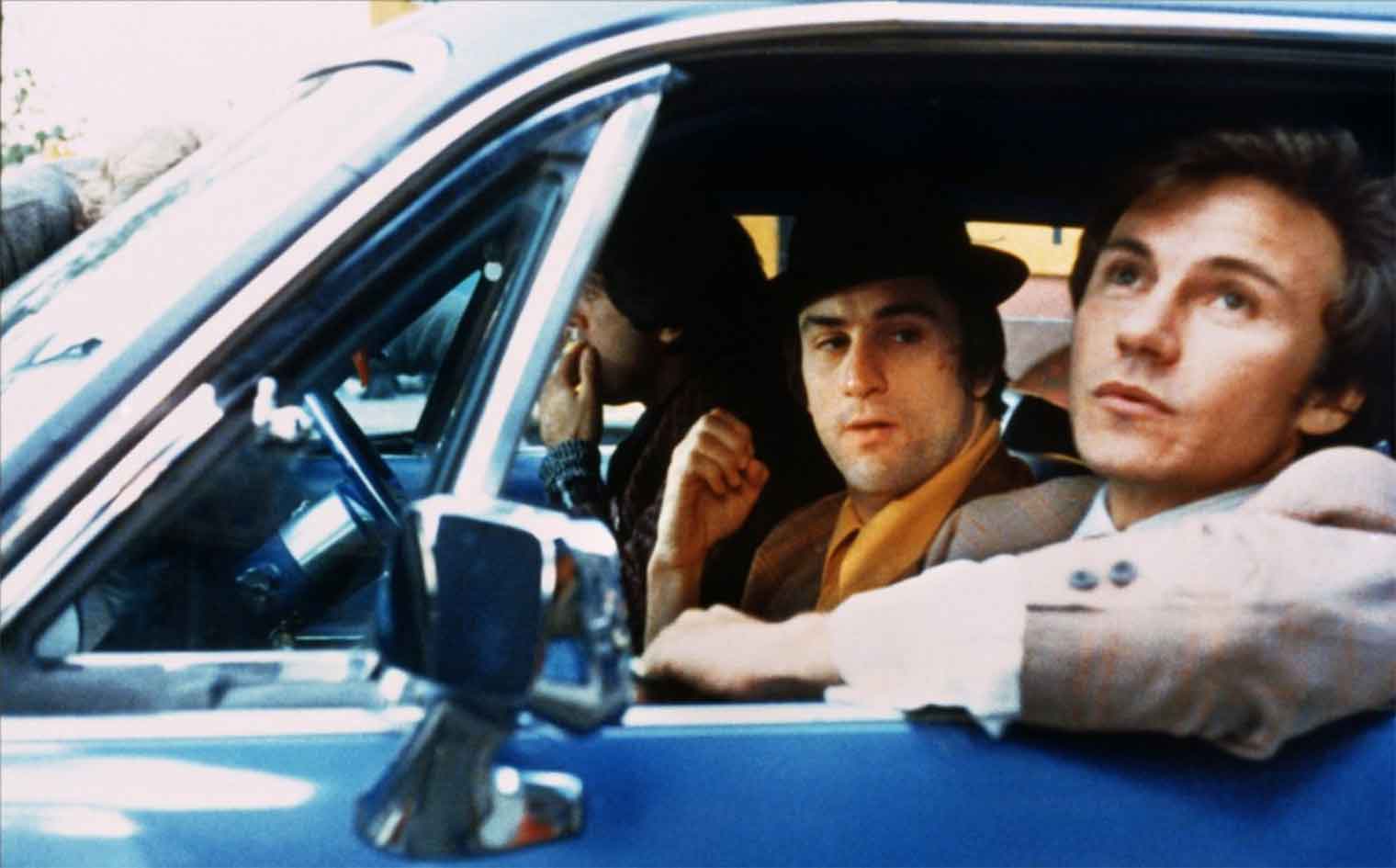 |
Mean Streets (1973) is a raw and electrifying exploration of urban life and moral conflict, marking Martin Scorsese's breakthrough as a director and solidifying his reputation as one of the foremost voices in American Cinema. Set in the gritty neighborhoods of Little Italy, New York, the film follows Charlie (Harvey Keitel), a young man torn between his ambitions, his Catholic guilt, and his loyalty to his reckless friend Johnny Boy (Robert De Niro). With its intimate focus on character and unflinching portrayal of street-level struggles, Mean Streets captures the volatile energy of the urban experience while probing deeper questions about loyalty, sin, and redemption.
Scorsese's direction in Mean Streets is as bold as the story itself, blending kinetic camerawork, naturalistic performances, and a dynamic use of music to create an immersive cinematic experience. The handheld shots and abrupt edits mirror the chaotic lives of its characters, while the eclectic soundtrack—from The Rolling Stones to Italian ballads—adds layers of meaning to the film's vibrant, streetwise atmosphere. Scorsese also infuses the narrative with personal touches drawn from his own upbringing, lending the film a sense of authenticity and emotional weight. The result is a movie that feels both hyper-specific in its depiction of Little Italy and universal in its exploration of moral ambiguity and the struggles of identity.
Mean Streets was not only a milestone for Scorsese but also a pivotal film for its cast, particularly Robert De Niro, whose performance as the unpredictable and self-destructive Johnny Boy earned him widespread acclaim and established his long-running collaboration with Scorsese. The film's success demonstrated the potential of New Hollywood filmmakers to tell deeply personal stories that broke away from traditional studio formulas. By combining autobiographical storytelling with a visceral style, Mean Streets set the stage for Scorsese's later masterpieces, such as Taxi Driver (1976) and Goodfellas (1990), while standing on its own as a powerful meditation on the bonds that tether us to the streets and the inner struggles that define us.
Martin Sheen and Sissy Spacek in Badlands (1973)
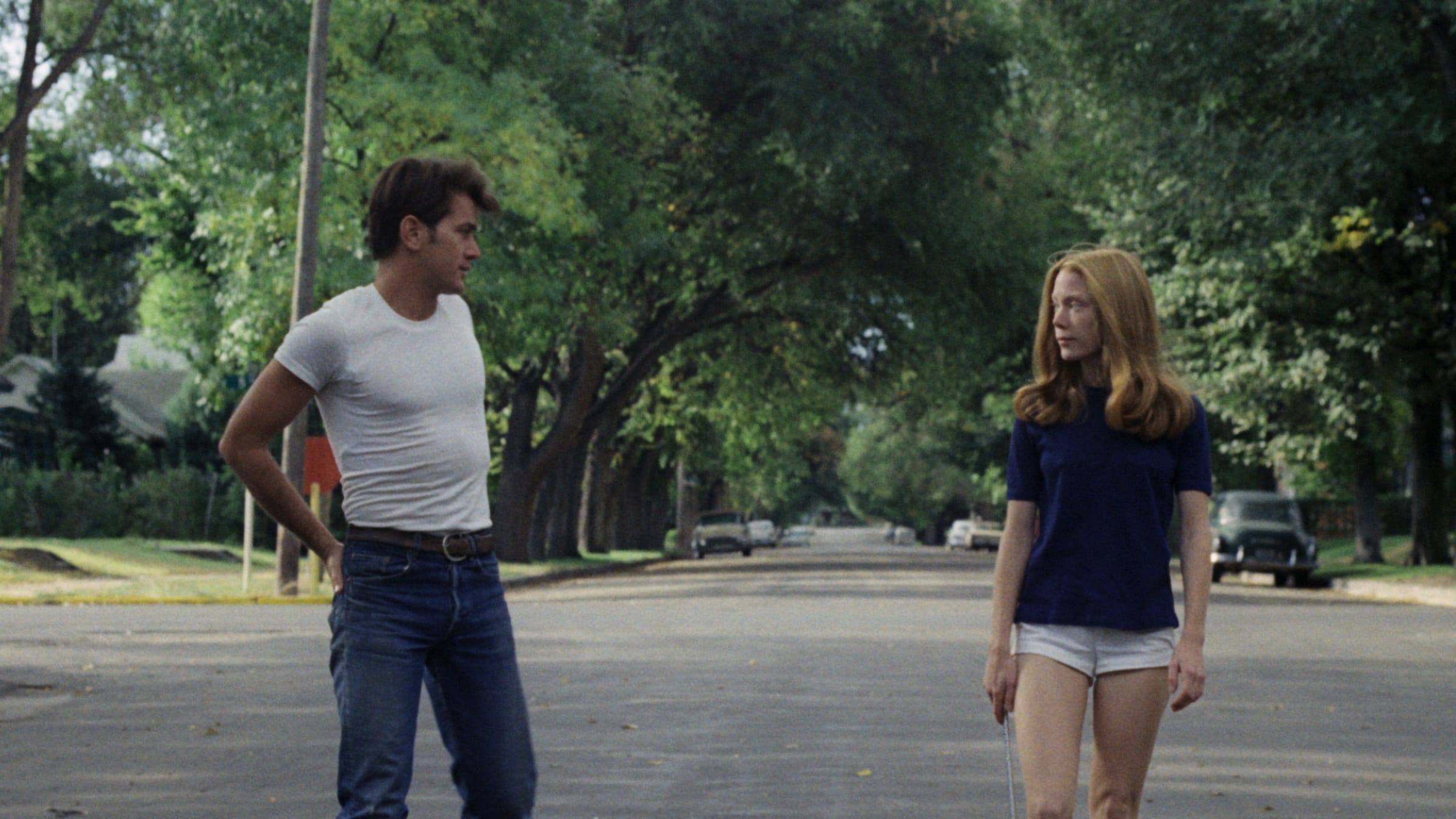 |
Badlands (1973), Terrence Malick's feature debut, is a hauntingly poetic exploration of love, violence, and alienation in 1950s America. Inspired by the real-life killing spree of Charles Starkweather and Caril Ann Fugate, the film follows Kit (Martin Sheen), a brooding young drifter, and Holly (Sissy Spacek), a naïve teenager, as they embark on a murderous road trip across the American Midwest. Despite its grim subject matter, Badlands is strikingly meditative, blending its chilling narrative with a dreamlike tone that reflects Malick's philosophical concerns about human nature, innocence, and the disconnection from society. The juxtaposition of violence and lyrical beauty makes the film both unsettling and hypnotic.
Malick's visual style in Badlands is a defining feature, elevating the film from a conventional crime story to a cinematic work of art. The vast, desolate landscapes of the Midwest serve as a stark backdrop for the couple's journey, underscoring their detachment from the world around them. Cinematographer Tak Fujimoto's use of natural light and wide-open spaces imbues the film with an almost mythical quality, while the delicate score—featuring Carl Orff's Musica Poetica—creates a dissonance that contrasts with the brutality of the characters' actions. This blend of visual poetry and emotional detachment gives the film a timeless quality, turning Kit and Holly's odyssey into a meditation on the darker corners of the American Dream.
Badlands marked the arrival of Terrence Malick as a unique voice in Cinema, introducing his distinct blend of philosophical inquiry, visual lyricism, and narrative restraint. The performances by Martin Sheen and Sissy Spacek, nuanced and deeply human, brought a chilling authenticity to their characters, making their story both compelling and unsettling. Though initially met with mixed reviews, Badlands has since been recognized as a classic, influencing generations of filmmakers with its aesthetic innovation and thematic depth. It stands as a cornerstone of New Hollywood, a film that eschews easy moral judgments in favor of a deeper exploration of the human condition, setting the stage for Malick's later, equally ambitious works.
Together, American Graffiti, Mean Streets, and Badlands exemplified the spirit of the New Hollywood era, showcasing how young filmmakers like George Lucas, Martin Scorsese, and Terrence Malick brought personal vision and innovative storytelling to the forefront of American Cinema. These films not only marked major breakthroughs for their directors but also challenged traditional filmmaking conventions, offering raw, intimate, and visually striking narratives that reflected the cultural and social upheavals of the time. As diverse in style and tone as they are united in ambition, these three masterpieces remain enduring examples of how the New Hollywood redefined the art of Cinema and set the stage for some of the most influential voices in film history.
Coda
Night had fallen on America in the early 1970s, and the movies could no longer look away. In the shadow of Watergate and Vietnam, directors turned their gaze to the cracks in the dream, finding stories not of certainty but of doubt, not of triumph but of survival. For a fleeting moment, Hollywood allowed them to speak in their own voices, and the result was cinema that reflected the unease of the age—restless, questioning, unwilling to offer easy answers. Out of that darkness came a clarity: that the myths which once held America together could just as easily be torn apart, frame by frame.
New Hollywood 1967-1969
New Hollywood 1971-1972
'American New Wave' home |

 .
. .
.

 .
. .
.